

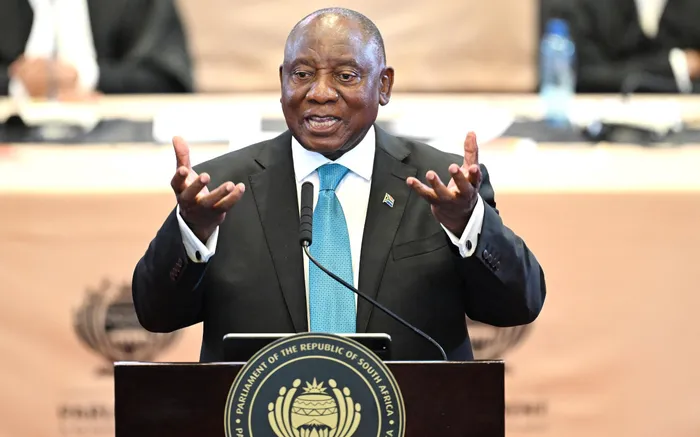
The Agricultural Business Chamber of South Africa (Agbiz) in a statement welcomed President Cyril Ramaphosa's Budget vote speech following an announcement that the Government would be taking steps to release land with title deeds for farmers.
Image: GCIS / Phando Jikelo
The Agricultural Business Chamber of South Africa (Agbiz) has welcomed President Cyril Ramaphosa's commitment to release land with title deeds for farmers.
In his Budget Vote on Tuesday, Ramaphosa said access to productive land is essential to further grow the country's agricultural output, create jobs and lift people out of poverty.
Ramaphosa said the government has acquired around 2.5 million hectares of land over time under the Proactive Land Acquisition Strategy programme.
"As part of our efforts to revitalise rural economies, to strengthen land rights and support the inclusion of black farmers in commercial agriculture, we have embarked on a concerted programme to release this land with title deeds to deserving beneficiaries," he said.
"The Minister of Land Reform and Rural Development will outline the details of the programme to convert agricultural leases to title deeds."
Wandile Sihlobo, chief economist at Agbiz, on Wednesday said Ramaphosa carried vital messages for the long-term growth of South Africa’s agriculture.
Sihlobo said the lack of title deeds has been the major constraint to the progress of inclusive growth in South Africa’s agriculture.
“With the President now signalling the start of the title deeds release process, the industry may start to see some positive action to grow the sector,” he said.
Sihlobo said the step South Africa is taking now is fundamental to achieving the goals that have long been outlined in Chapter 6 of the National Development Plan (NDP) and, thereafter, in the Agriculture and Agroprocessing Master Plan.
“Both documents indicated the potential to grow the sector and create new jobs. In fact, the National Development Plan indicates that the sector and its value chain have the potential to create close to a million new jobs,” he said.
“Part of the prerequisites for those jobs was through strengthening land rights and allocating the land in the government’s books to the deserving beneficiaries.”
Sihlobo added that over time, South Africa’s primary agriculture sector delivered jobs, from 718,000 at the end of 2012, when the NDP was published, to 960,000 in the first quarter of 2026.
“The sector's value chain has also created employment during this period. Still, these job gains were far below the nearly million jobs the NDP envisaged in the sector and its value chain. Part of the constraints on job gains was the slow progress in releasing land with title deeds,” he said.
Sihlobo said that now that Ramaphosa has issued a directive to release this land with title deeds, they see greater opportunities for growth and job creation in the sector.
“The land will be primarily used for commercial farming. This means the financing and training of the new beneficiaries are among the considerations that will be reflected when the Minister of Land Reform and Rural Development releases the details of this process in the coming weeks and months.”
According to Sihlobo, releasing the land will be a powerful step to boosting inclusive growth in agriculture.
“This land is also key to ensuring they finally make progress in implementing the Agriculture and Agro-process Master Plan (AAMP),” he said.
“Importantly, organised agriculture, labour, and agribusinesses, among other key stakeholders, will continue to play a role in boosting inclusive growth in the sector, having been involved in drafting the AAMP.”
Agriculture remains one of the sectors of the economy with potential for growth and job creation, as Sihlobo reflected.
“The President’s important step to strengthen land rights is key to realising this vision and supporting the rural economies. Importantly, this is also a crucial signal that property rights are intact in South Africa and that investment in farming is protected.”
BUSINESS REPORT