

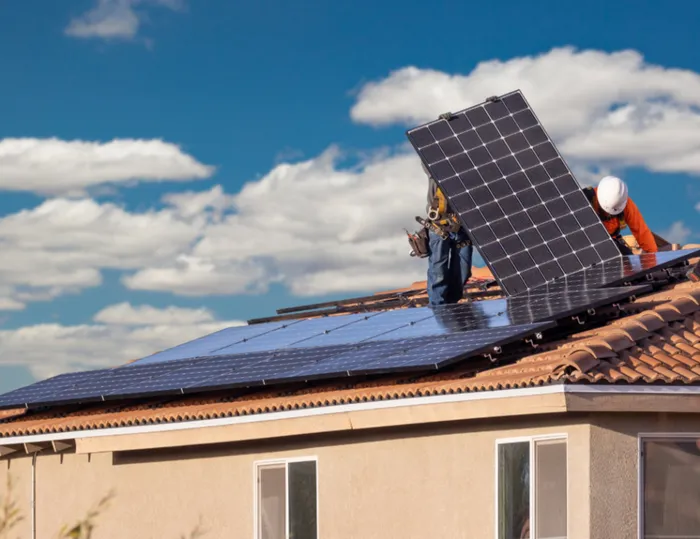
In a transformative moment for South Africa’s energy future, the SAPVIA’s enthusiastic response to the 2026 Budget underlines the urgent need for infrastructure investments and regulatory reforms to enhance solar PV adoption and grid expansion. This commitment not only aims to address current energy demands but also to foster sustainable economic growth through renewable initiatives.
Image: Supplied
The South African Photovoltaic Industry Association (SAPVIA) has expressed shinning support for the focus on infrastructure investment and energy reform outlined in the 2026 Budget Speech presented by Minister of Finance Enoch Godongwana.
With a commitment to invest over R1 trillion in public-sector infrastructure over the medium term, these investments are viewed as a crucial step towards modernising South Africa’s energy and transmission networks.
“We applaud the commitment to invest more than R1 trillion in public-sector infrastructure. Such investments are critical to modernising our energy and transmission network," stated SAPVIA's Technical and Policy Manager, Sim Khuluse.
“The continued emphasis on regulatory reform in the energy sector has demonstrably unlocked significant private investment and accelerated the transition toward a cleaner and renewable energy mix.”
Solar photovoltaic (PV) technology has emerged as the fastest-to-deploy and most cost-competitive source of new electricity generation across South Africa.
However, the expansion of transmission infrastructure remains a pressing need to harness this renewable energy potential effectively.
SAPVIA said it has reaffirmed its support for the Credit Guarantee Vehicle (CGV), essential for mobilising the large-scale investment necessary for enhancing transmission infrastructure.
Khuluse said that grid expansion and modernisation are critical foundations for unlocking further renewable energy development, which is integral to ensuring long-term energy security.
“We also welcome reforms to Public-Private Partnership (PPP) regulations and the continued use of the Budget Facility for Infrastructure to attract private capital. Solar PV and battery storage projects are ideally suited to blended finance and PPP models and should be prioritised within infrastructure pipelines,” he added.
SAPVIA underscored that renewable energy investments are vital for economic growth.
Expanding targeted tax incentives for rooftop and embedded generation, coupled with support for local manufacturing of balance of plant, will be pivotal in stabilising electricity prices and mitigating long-term fiscal risks.
Additionally, SAPVIA highlighted a notable allocation of R27.7 billion towards performance-linked reform of metro trading services. This funding presents municipalities with an invaluable opportunity to modernise distribution networks and collaborate with private developers in securing clean, affordable solar power.
“Solar PV is more than just an energy solution; it is a vital economic catalyst for job creation, industrial development, and long-term competitiveness,” Khuluse stated.
“SAPVIA is dedicated to partnering with National Treasury and all key stakeholders to accelerate solar deployment and ensure a resilient, affordable, and sustainable energy future for South Africa,” Khuluse said.
Follow Business Report on Facebook, X and on LinkedIn for the latest Business and tech news.