

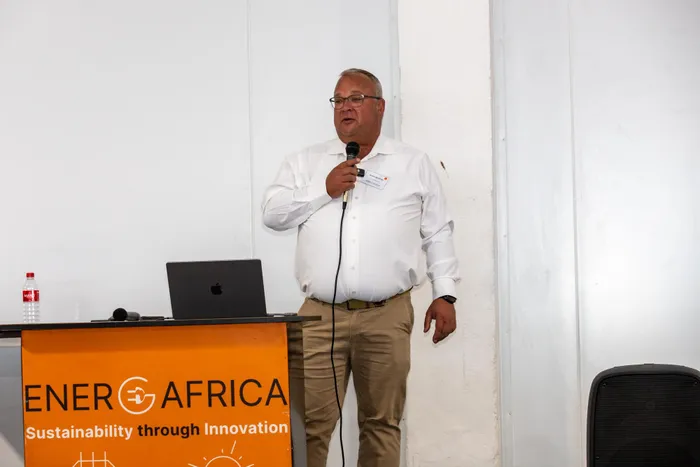
Ener-G-Africa chief executive Andre Moolman. As the world grapples with evolving energy demands and climate change, South Africa stands on the brink of a revolution in its electricity landscape. With emerging opportunities for businesses and consumers alike, the country is poised to embrace a diverse and competitive energy future.
Image: Supplied.
For decades, buying electricity in South Africa has been a straightforward process with little room for choice.
Consumers received a bill from Eskom or their local municipality, paid it, and had limited alternatives.
That long standing model is now beginning to shift, opening the door to a more competitive and dynamic energy marketplace.
According to energy analyst Chris Yelland, South Africa is undergoing a structural transformation that could fundamentally change how electricity is bought and sold.
“We’re moving away from a vertically integrated Eskom monopoly and geographic municipal electricity distributor monopolies towards a far more diversified, competitive and unbundled market,” Yelland said at a recent industry showcase hosted at the Ener-G-Africa solar manufacturing facility in Paarl.
This shift, he explained, extends beyond generation and signals the emergence of a competitive retail energy sector, something South Africa has not historically experienced.
To illustrate the transition, Yelland compared the future of electricity to the way South Africans purchase airtime.
Consumers can buy airtime through multiple channels including banks, retailers and small shops, despite the complexity of the underlying infrastructure.
Electricity, he noted, has not operated in this way in the past.
However, as regulatory reforms advance and distributed generation grows, the market is expected to open up.
“We are likely to see the emergence of a competitive retail energy sector, with experienced retailers entering alongside dedicated energy traders,” Yelland said.
He added that in time, supermarkets, financial institutions and specialist energy companies could begin offering tailored electricity products to different customer segments.
The transformation is taking place against the backdrop of rising electricity costs and increasing pressure on households and businesses.
Ener-G-Africa chief executive Andre Moolman said recent tariff decisions by the National Energy Regulator of South Africa (Nersa) point to further price increases in the years ahead, intensifying the need for alternative energy solutions.
“South Africa’s energy system is evolving at the same time that cost pressures are intensifying,” Moolman said.
“Recent tariff decisions from Nersa have confirmed further electricity price increases in the coming years. For households and businesses already grappling with rising input costs, this reinforces the need for reliable and economically viable alternatives.”
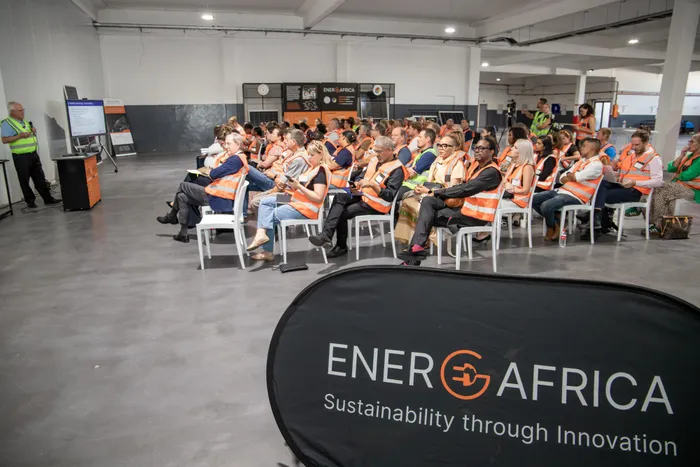
As the world grapples with evolving energy demands and climate change, South Africa stands on the brink of a revolution in its electricity landscape. With emerging opportunities for businesses and consumers alike, the country is poised to embrace a diverse and competitive energy future.
Image: Supplied.
At the same time, distributed generation is rapidly gaining ground.
Rooftop solar installations, commercial systems and behind the meter solutions are no longer seen as niche additions but are becoming central to the country’s energy mix.
“We are not simply adding renewable capacity to an old system. We are reshaping the system itself,” Moolman said.
Yelland believes distributed generation has often been underestimated in official projections, adding that the current environment presents significant opportunities for businesses operating in residential and commercial energy solutions.
As the market evolves from a centralised monopoly to a competitive environment, the definition of value is also changing.
“In a competitive marketplace, value becomes multi dimensional,” Moolman said.
He pointed to a framework shared by Yelland, which highlights factors such as quality, responsiveness, service, delivery time and pricing as key components of customer value.
“Reduce delivery time, improve responsiveness and increase quality, and overall value rises, even if price is not the absolute lowest. This resonates deeply with our own experience,” he said.
Moolman noted that Ener-G-Africa’s origins as an installer shaped its understanding of these dynamics.
“We lived through the frustration of inconsistent supply, long lead times and limited accountability. When a project is delayed or a component fails, it’s the installer who stands in front of the customer. In that context, value is not theoretical. It is reputational.”
As competition intensifies, he expects installers and energy traders to prioritise reliable partners who can provide local stock, technical support and efficient after sales service.
In the emerging energy marketplace, supply chains are becoming a critical differentiator.
“Installers and energy traders will need partners who can respond quickly, hold stock locally, provide technical support and resolve warranty issues without weeks of delay,” Moolman said.
He added that Ener-G-Africa’s strategy is focused on reliability and strong relationships rather than scale alone.
“Our ambition is to be a reliable, relationship led partner for installers and distributors operating in a dynamic market. We have invested in real infrastructure and people because we believe the future energy marketplace will reward businesses that combine quality with responsiveness.”
Looking ahead, Yelland emphasised that South Africa’s future energy mix will not be defined by a single source. Instead, a combination of coal, gas, wind, solar, storage and distributed generation will collectively power the system.
“There are many energy sources. The solution lies in how they work together,” he said.
For industry players, this signals a broader shift beyond technology alone.
“The energy transition is not only a technical shift. It is a commercial and structural one,” Moolman said.
Follow Business Report on Facebook, X and on LinkedIn for the latest Business and tech news.