

Explore how South Africa's just energy transition is reshaping the lives of millions of workers and the urgent need for a balanced approach that prioritises both climate action and worker justice.
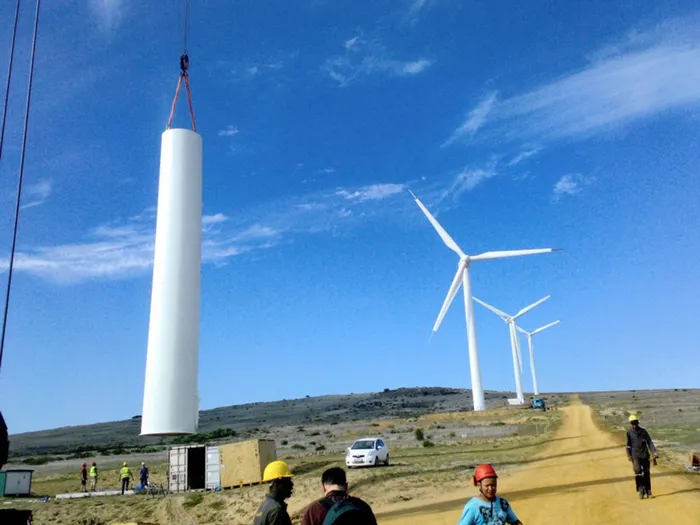
Image: File.
South Africa’s just energy transition is already reshaping investment decisions, supply chains, skills demand and regional economies. It is the current reality for the millions of workers whose livelihoods depends upon impacted industries.
In 2026, the more urgent question is not whether the transition will happen, but whether it will be managed in a way that strengthens economic stability or deepens existing fragmentation, inequality, joblessness, poverty and risk.
Too often, workers are framed as casualties of change: statistics in job loss projections or passive beneficiaries of climate mitigation plans.
That framing is economically naïve and politically dangerous. Workers are not peripheral to the transition. They are central to whether South Africa’s just transition succeeds.
South Africa enters this period of restructuring with two defining realities.
We remain one of the most carbon-intensive economies in the world and one of the most unequal. The sectors under pressure—energy, mining, logistics and heavy manufacturing—are also the backbone of employment, exports and regional development.
If the climate transition proceeds without deliberately anchoring workers at its centre, the result will not be progress. It will be instability and an injustice.
Regions built around single industries, particularly coal-dependent areas, face declining investment, ageing infrastructure and uncertain demand due to the energy transition.
Without credible pathways for reskilling, industrial diversification and income protection, the transition could hollow out entire local economies.
The cost of failure will not be borne by workers alone. It will surface in weaker productivity, social unrest, declining investor confidence and rising instability.
Worker-centred transitions are not acts of charity concession.
They are conditions for economic continuity. Countries that manage climate structural change must align climate objectives with labour-market reform, industrial policy and skills development. Those that do not pay twice: first through job losses, then through the social and socio-economic costs of exclusion.
The real opportunity lies in reframing the transition as a political-economy project. Climate action is already reshaping global competitiveness through carbon border adjustment mechanisms, supply-chain standards and investor scrutiny. South African companies will not compete on cheap energy or weak regulation.
They will compete on productivity, skills, reliability and the quality of work embedded in their linkages to global value chains.
This is where workers must be at the centre of planning and decision making. Trainings must be about more than the numbers alone.
They are about preparing artisans, technicians, operators and engineers for new technologies and industrial processes.
They are about ensuring the green economy produces stable, productive work with long-term and sustainable jobs rather than precarious employment masquerading as innovation. They are also about ensuring workers share in productivity gains instead of carrying disproportionate risk.
Excluding labour from this process carries clear consequences.
When workers experience transition as something done to them rather than with them, resistance hardens, and trust erodes. Dialogue weakens, implementation slows and policy coherence fractures. The result is neither a just transition nor an efficient one.
By contrast, when workers are treated as co-architects, transitions gain legitimacy and momentum. Collective bargaining, workplace planning and sectoral coordination become tools for innovation rather than obstacles.
This is why social compacting matters. It creates a mechanism to align government policy, business investment and labour participation around measurable outcomes: skills development, industrial diversification and employment quality.
Skills must align with industrial strategy rather than operate in isolation. Training in renewable energy, grid maintenance, battery manufacturing, green logistics and water management should be treated as economic infrastructure. Inclusive finance models must ensure new industries do not replicate old exclusions, particularly for young people and women still locked out of industrial employment.
There is also a regional dimension that cannot be ignored. Diversification is not an abstract national goal; it must be anchored in place-based strategies reflecting existing workforces and local economies.
Transition planning that ignores geography will fail on both fairness and efficiency.
As a partner within the Presidential Climate Commission, organised labour has consistently raised these issues not as ideology, but as practical insight drawn from workers lived experience.
The Commission’s work has helped shift the national conversation from targets and timelines to implementation questions that matter: who bears the cost, who captures the value and how risk is managed over time.
That shift is essential if the transition is to reinforce, rather than undermine, South Africa’s social contract.
Ultimately, the just transition is a test of economic maturity. It asks whether South Africa can modernise without discarding the people who built its economy. It asks whether progress will be measured only in megawatts and emissions reductions, or also in livelihoods protected, skills gained and communities stabilised.
This is not a choice between climate ambition and worker justice – its is about balance.
If South Africa gets it right, workers will be remembered not as victims of transition, but as its engine, driving productivity, resilience and renewal.
Waheed Hoosen is the Commissioner at the Presidential Climate Commission and vice president for development at FEDUSA.

Waheed Hoosen is the Commissioner at the Presidential Climate Commission and vice president for development at FEDUSA.
Image: Supplied.
Follow Business Report on Facebook, X and on LinkedIn for the latest Business and tech news.