

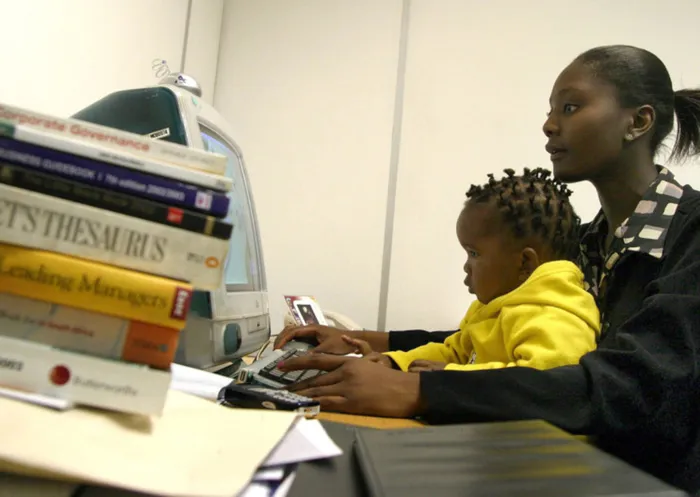
You could also look at it like this: women still did about 1.7 times as much housework as men in 2012. Photograph: John Hogg You could also look at it like this: women still did about 1.7 times as much housework as men in 2012. Photograph: John Hogg
London - The rise in modern technology liberated huge numbers of us from commuting, freeing up time to work flexible hours and combine raising a family with a job.
Home working for both sexes has risen exponentially in Britain over the past decade, but it’s taken a mom to stick her head over the parapet and say the unsayable: workers get more done at work.
Marissa Mayer, chief executive of technology company Yahoo!, outraged staff by issuing a dictat that from June, everyone must come into the office.
Cynics say her decision is based on costs, not ethics, a need for the ailing company to reduce staff and save money.
Mothers are complaining because Mayer had a nursery built next to her office for her new baby, Macallister.
But no one can accuse the woman of shirking. She was back three weeks after giving birth and has gone on record as saying that being a mother “isn’t that hard”.
How can women work from home with small kids running around their feet? Surely, everyone suffers. Moms end up working at night when their babies are asleep and must find it hard to concentrate during the day.
What’s really needed is adequate free childcare close to workplaces, something I hope Yahoo! plans to provide.
Other high-profile women agree with Mayer – broadcaster Jenni Murray admits she loathes working from home, and Alexandra Shulman, editor of British Vogue, refuses to allow it.
As a freelancer, I’m lucky enough to be able to split my working week 50/50. I write from home, but go into television and radio studios regularly for production meetings and recordings.
I value the time I spend each week talking to other people in formal meetings; at home it’s easy to prioritise the wrong stuff – paying bills, ordering rubbish on the internet, reading fluff online, cooking supper. I’ve always hated being told what to do, so part of me rebels against the idea of turning up at the same time and place every day, but – and I hate to admit this – the discipline is really important. And what’s wrong with that?
We have a generation of unemployed school leavers, many of whom have no concept of the necessity of turning up at work or for job interviews on time, correctly dressed, rested and ready to be productive.
Unless they get the message that working means sticking to rules (that you don’t necessarily agree with), we will never get them off benefits and into work and young people coming into this country from abroad will continue to pick up the jobs they could be doing.
Home working is a bit like a Master’s degree; something to progress to when you’ve proved you have the required focus.
Why should women – who carp they are overlooked for promotion – campaign for home working as if they are a special case? Meeting your boss face to face can send all sorts of positive messages about your ability to move up the ladder.
Time in the workplace means time chatting, and in that “off-agenda” few minutes, you’ll spark ideas or start a line of conversation that can be really productive.
Obviously, some jobs can easily be done off-site, but the most are best carried out in the office.
As a world-class expert in procrastination and fridge-raiding, I know unless I go out to work, I will turn into an anti-social weirdo who can’t hold a conversation.
Another reason to force people back to work: it’s where you make friends and meet people. Some days, the parking attendant might be the only person I’ve spoken to for 24 hours, and that’s not good, is it? – Daily Mail