

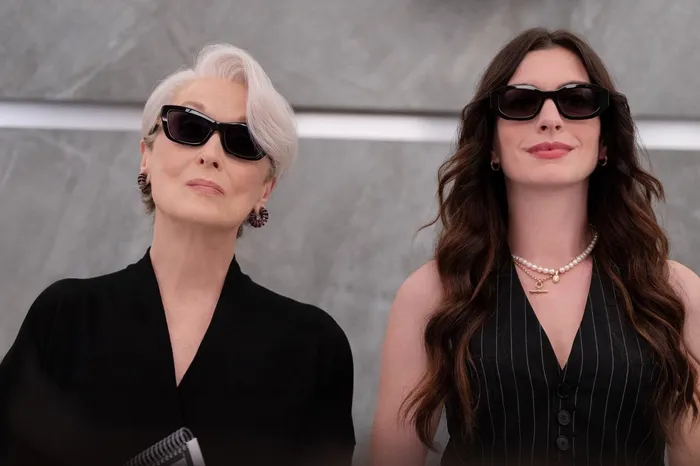
Meryl Streep and Anne Hathaway in 'The Devil Wears Prada 2.'
Image: X
This week, my two-decade wait for the sequel to my all-time favourite movie, “The Devil Wears Prada”, finally came to an end. I attended the South African premiere of “The Devil Wears Prada 2” in Johannesburg and, together with some of Mzansi’s biggest stars, including Bonang Matheba, we were treated to an exclusive pre-screening at Ster-Kinekor at Eastgate Mall.
But did the second installment of this fan-favourite flick live up to all the hype?
To answer that, I would like to put a disclaimer out that “The Devil Wears Prada 2” is less makeover montage fantasy and more media industry politics. And while it is still fashion-heavy, the new movie is far more reflective, as it echoes themes of power and survival.
Released in 2006, the original film centred around aspiring journalist Andy Sachs (Anne Hathaway) as she survives a demanding job as assistant to high-fashion magazine editor Miranda Priestly (Meryl Streep) at “Runway” magazine. And while this relationship dynamic is relatable to several, it largely portrayed a fashion and media world which no longer exists in that way.
The sequel, which is helmed by David Frankel, who also directed the original, while remaining true to its roots in some ways, takes a different approach as it reflects the current state of the media industry at large, which is facing intense pressure from dropping circulation, shrinking newsrooms and new digital voices such as influencers dominating the fashion scene.
And instead of the boss-versus-assistant storyline from the first movie, the focus is now on legacy power vs new money and modern influence.
One of the main reasons this works for the sequel is because of the epic return of the star-studded cast, with Meryl Streep back as Miranda Priestly, Anne Hathaway once again stepping into the stilettos of Andy Sachs, Emily Blunt returning as Emily Charlton, and Stanley Tucci also back as Nigel.
This is amplified in the new movie by a diverse addition of new faces, including Simone Ashley, Lucy Liu and Justin Theroux, with guest appearances by Winnie Harlow, celebrity stylist Law Roach, as well as several designers such as Donatella Versace.
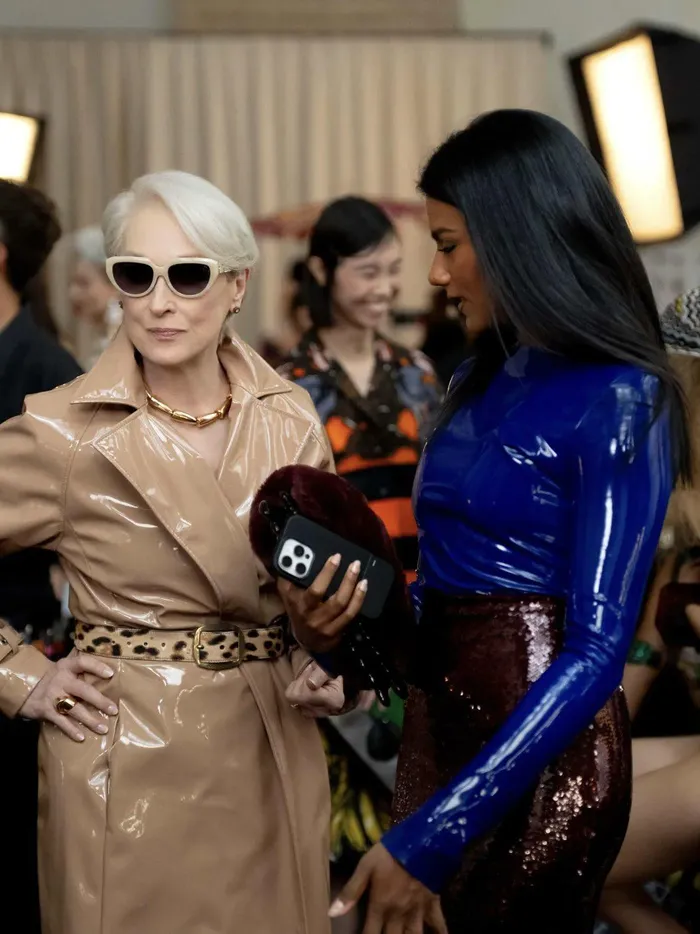
Meryl Streep and Simone Ashley in 'The Devil Wears Prada 2.'
Image: X
“The Devil Wears Prada 2” begins with an immediate reference to its predecessor as Andy, like in the first film, opens the credits with a montage of her morning routine. We are then introduced to a far more refined version of the character we initially met in the first movie. While she is not decked out in full glam and loud logos, you can tell that her time at “Runway” has impacted her personal style, opting for fitted and tailored garments as she steps out onto the busiest streets of New York City. After 15 years after leaving the publication, she is now an award-winning hard news journalist.
We then learn that Miranda has also faced significant change over the years. Near retirement, she is struggling to keep “Runway” relevant in a collapsing print world. One of the other biggest changes is that the Boss Lady is no longer untouchable. In the original movie, Miranda decided what mattered in fashion. But in the sequel, it is now influencers, social media and brand deals which have replaced that authority. She is now facing existential dilemmas around her identity in a troubled industry, as well as whether someone who built on exclusivity can survive a world of accessibility.
She is still fortunate enough to have her loyal right-hand man Nigel by her side, and in this sequel I was delighted to once again enjoy his witty and dry sense of humour. Time has also done him well, as now Nigel - still deeply knowledgeable about fashion - is more independent and self-assured, and less willing to sacrifice everything for “Runway”.
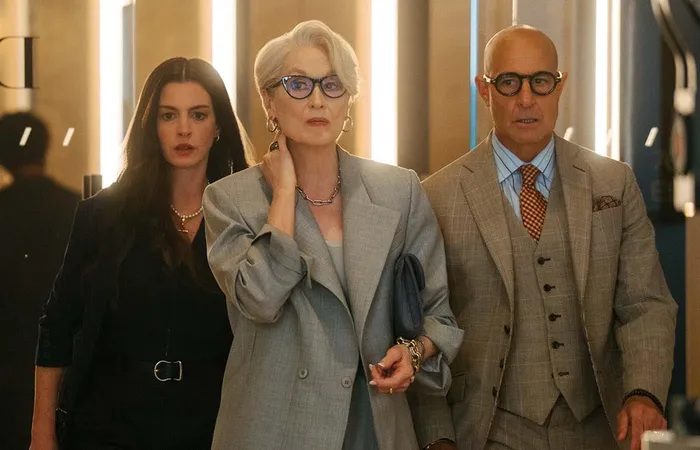
Anne Hathaway, Meryl Streep and Stanley Tucci in 'The Devil Wears Prada 2.'
Image: X
Back to the sequel - after Andy is retrenched from her newspaper job, she sees herself reuniting with Miranda and Nigel in a fantastic twist of fate. Hired as the new features editor, she is tasked with bringing in more context, culture and influence beyond just the fashion which “Runway” has been serving for years.
One of my favourite scenes is Miranda - true to her emotional restraint, which makes her both intimidating and fascinating - forgetting that Andy was her assistant. This opens up old wounds around validation for the budding journo, who once again is determined to impress Miranda.
But things escalate further when the trio are desperate for the help of Emily, who is no longer the stressed-out assistant we saw in “The Devil Wears Prada”. Now working as a high-level fashion executive in the luxury world, she’s completely stepped into power and is no longer serving Miranda. Emily is now a luxury industry powerhouse controlling ad budgets, which Miranda desperately needs.
One of the biggest challenges of this sequel is how she flips the script and finds herself competing with Miranda for influence and money. Emily is actually one of the most transformed and interesting characters in the sequel, and she also returns with her trademark bluntness.
Together, the trio forms an uneasy but compelling alliance where history, ambition and survival constantly collide. What makes their dynamic so engaging is that none of them are operating from a position of simplicity anymore, and every interaction is layered with past grudges, unfinished business and shifting power balances.
Meanwhile, fans will be delighted to know that fashion is still a major character, but is more than just aesthetic montages and more about influence and leverage. Regardless, as the sequel is shot in both the Big Apple as well as Milan in Italy, there are scores of high-fashion moments to enjoy, including Miranda in high-end couture evening gowns, Andy’s quiet luxury moments and Emily’s more confident take on fashion. There are also some fun high-fashion cameos, including from major designers.
Ultimately, “The Devil Wears Prada 2” succeeds not because it tries to recreate the magic of the original, but because it evolves it. It trades spectacle for substance, swapping the glossy fantasy of fashion’s surface for a more complex meditation on power, relevance and reinvention.
* I give it 3 out of five stars.