

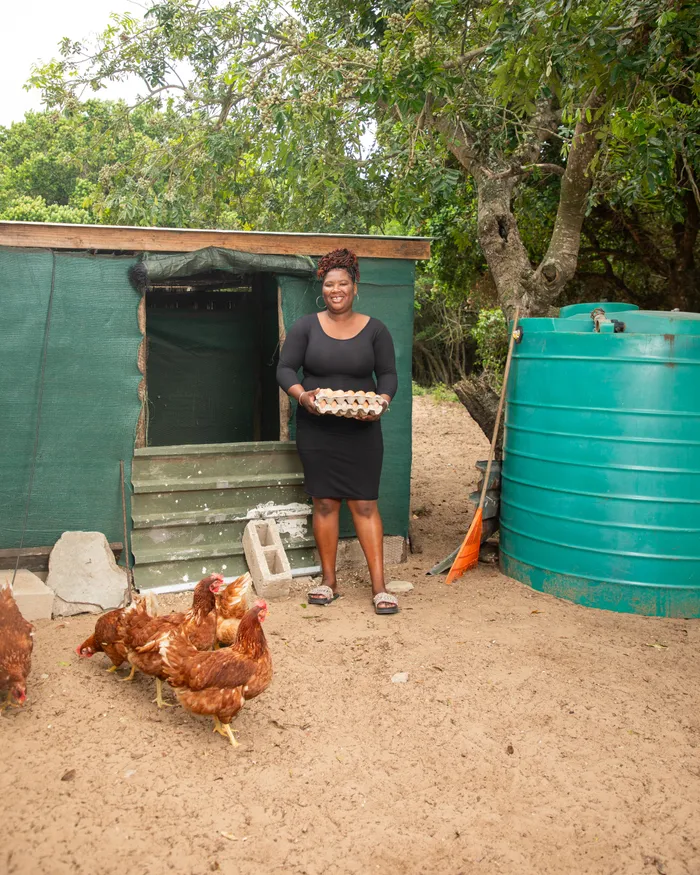
Nosihle Ngubane the founder of Ashelelayo Trading, sourcing, packaging and delivering eggs
Image: Supplied.
Communities surrounding the iSimangaliso Wetland Park World Heritage Site in northern KwaZulu Natal are among the most vulnerable in South Africa to the combined pressures of climate change and food insecurity.
The region’s rural setting and high levels of socio economic inequality mean many households rely directly on natural resources for food and income.
As climate patterns shift and ecosystems face increasing strain, these communities are finding innovative ways to build resilience while protecting the environment.
“These intersecting challenges make climate resilient and ecosystem based solutions essential for strengthening livelihoods and long term community resilience in the region,” said Nozi Mthembu from WILDTRUST.
Through initiatives led by WILDTRUST and Indalo Inclusive, several women entrepreneurs are now building climate smart enterprises that aim to strengthen food production while protecting fragile ecosystems.
One of these entrepreneurs is 21 year old Nokuthula Msweli, founder of Thule’s Poultry Farm in the community of KwaDapha.
Motivated by both opportunity and necessity, she launched the enterprise to address the shortage of affordable protein while building economic independence for herself and her family.
Her business model was shaped by an Ecosystem based Adaptation approach introduced through the iSimangaliso Marine Protected Area project.
Instead of relying entirely on expensive commercial feed, Msweli began cultivating worms as an organic protein source for her broiler chickens.
“Commercial poultry feed is one of the highest expenses in broiler production,” she explained.
“By producing my own worm based protein source I can lower operational costs and make the business more sustainable.”
The approach has reduced expenses while also lowering the environmental impact of the enterprise by relying on natural and locally available resources.
Other women entrepreneurs in the programme have also found innovative ways to adapt to both economic and environmental pressures.
Nosihle Ngubane runs an egg sourcing, packaging and delivery enterprise that connects producers with retailers and wholesalers.
Before receiving support from WILDTRUST and Indalo Inclusive, she faced challenges related to financial planning, business formalisation and securing reliable market access.

Thobile Shange of Liyana Layer Farm, producing free-range eggs.
Image: Supplied.
“While demand existed, building long term relationships with e tailers and wholesalers and scaling operations sustainably required mentorship and strategic guidance,” she said.
Similarly, Thobile Shange, founder of Liyana Layer Farm, struggled with the rising cost of commercial feed which directly affects egg production.
Drawing on her academic background in agriculture, she began exploring natural alternatives and eventually identified invasive aquatic plants as a potential feed solution.
“High feed costs were one of the biggest challenges affecting egg production,” Shange said.
“Using invasive aquatic plants helps lower input costs while also addressing an environmental problem.”
Invasive plants often disrupt local ecosystems, reduce water quality and threaten biodiversity. By repurposing them as feed, her business contributes both to environmental restoration and improved economic sustainability.
To support these entrepreneurs, WILDTRUST and Indalo Inclusive introduced the Indalovator and Indalogrow programmes, which provide mentorship, technical coaching and enterprise development support.
The programmes help entrepreneurs strengthen business strategies, improve financial planning and develop practical skills needed to run climate resilient enterprises.
“Through tailored coaching and ecosystem based adaptation guidance, entrepreneurs moved from informal start up stages to more structured and market ready operations,” said Mthembu.
Beyond financial support, mentorship and leadership development have played a crucial role in building confidence among participants.
“Mentorship helped the entrepreneurs gain practical guidance on managing day to day operational challenges and making informed business decisions,” Mthembu added.
“Leadership training also empowered them to build self belief and position themselves as community role models.”
Financial planning support has also helped participants manage costs and plan for long term growth.
Together, these interventions have enabled entrepreneurs to move from uncertainty toward greater independence and resilience.
Women’s economic empowerment is central to the programme’s approach to climate adaptation in coastal communities.
“Women are often at the heart of household food security, community livelihoods and natural resource stewardship,” said Mthembu.
“By supporting women led enterprises we strengthen local adaptive capacity while promoting sustainable use of environmental resources.”
The programme also extends beyond agriculture.
Jane Mthembu, a widow and mother of five, recently joined the renewed Small Scale Fishers initiative as a Small Scale Fisher Monitor.
After years of unstable employment, the initiative has provided both financial stability and a renewed sense of purpose.
“The opportunity has brought security to my household and hope for the future,” she said.
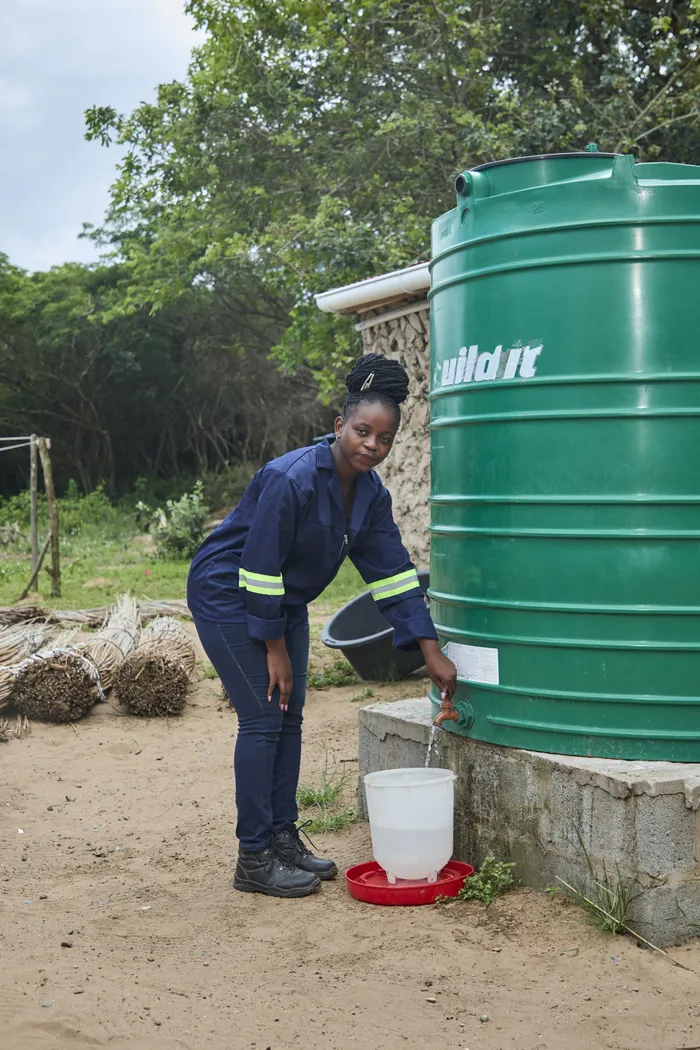
Nokuthula Msweli, owner of Thule’s Poultry Farm that sells chickens.
Image: Supplied.
Professionally, the role allows her to support responsible fishing practices and strengthen communication between fishers and authorities while protecting coastal ecosystems.
Looking ahead, programme leaders believe the long term success of women led climate smart enterprises lies in building businesses that are both economically viable and environmentally responsible.
“Continued support in advanced business mentorship, market access and climate smart technology will be essential,” said Mthembu.
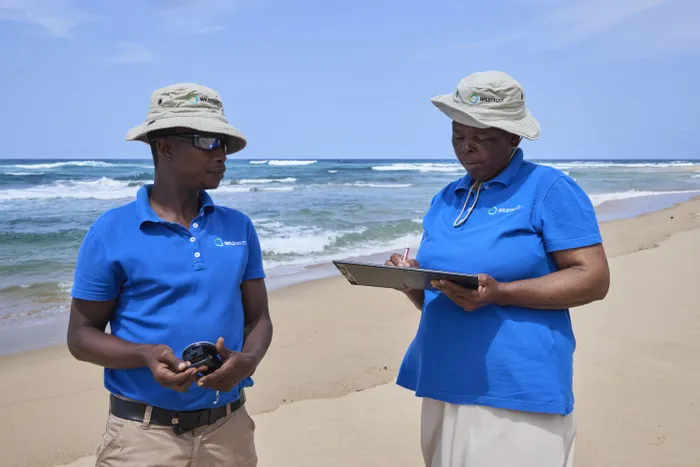
Jane Mthembu with her colleague capturing data on Bhanga nek Beach
Image: Supplied.
“Strengthening networks between entrepreneurs, buyers and development partners will help ensure these enterprises can scale sustainably while maintaining their environmental and social impact.”
Follow Business Report on Facebook, X and on LinkedIn for the latest Business and tech news.