

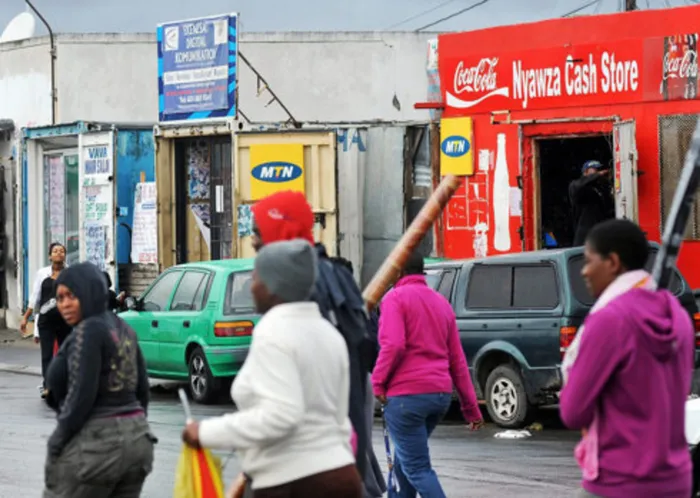
Nearly three decades into democracy, South Africa grapples with a critical question: how can we ensure economic participation for all? This article explores the barriers to access and the urgent need for systemic change to unlock the potential of entrepreneurs across the nation.
Image: Independent Newspapers Archives
Economic freedom remains one of the most unresolved questions in South Africa today.
Nearly three decades into democracy, political rights have been secured. Yet economic participation, access to opportunity, income generation and the ability to build a livelihood, remains unevenly distributed.
Human rights frameworks have historically prioritised civil and political freedoms, and rightly so. However, in a country shaped by deep structural inequality, dignity is inseparable from economic participation. Access to opportunity, income and livelihoods is not merely an economic outcome; it is a condition for meaningful inclusion in society. For many South Africans, that condition remains unmet.
There is no shortage of entrepreneurial potential. Across the country, individuals are starting businesses in townships, cities, rural communities and emerging innovation hubs. Micro, small and medium enterprises (MSMEs) contribute an estimated 34% of GDP and around 60% of employment, underscoring their importance to the economy.
Yet most small businesses do not survive beyond their early years. Estimates suggest that between 60% and 80% of MSMEs fail within the first five years. This reality is often framed as a failure of entrepreneurs. It is not.
What we are witnessing is not a failure of entrepreneurship, it is a failure of access.South Africa does not have a shortage of entrepreneurs, it has a shortage of access.
There is a structural disconnect between entrepreneurial potential and economic participation, what I refer to as the economic participation gap. At one end lies potential, ideas, talent, ambition and drive.
At the other lies participation, businesses that access markets, generate revenue, create jobs and contribute meaningfully to the economy.
Between these two points sits a gap shaped not by scarcity, but by structure. Opportunities exist, but they are not visible. Networks exist, but they are not accessible. Capital exists, but it is not reachable. Support exists, but it is not coordinated. Markets exist, but they are not open. These barriers compound. Limited networks constrain access to capital. Poor visibility delays opportunity. Fragmented support undermines readiness for growth. Potential is gradually eroded by a system that makes participation difficult.
Entrepreneurship is often framed in economic terms such as growth, revenue and job creation. At its core, however, it is about agency, the ability to shape one’s economic reality and participate meaningfully in society.
Beyond economic outcomes lies dignity.
The ability to build something of one’s own, to contribute and to sustain oneself and others.
For many South Africans, entrepreneurship represents one of the most accessible pathways to empowerment.
Yet it cannot thrive without an enabling system. Addressing this gap requires a shift in thinking.
Not more programmes, but infrastructure. Not physical infrastructure, but economic infrastructure that connects entrepreneurs to opportunity in a structured, visible and accessible way.
In much the same way that roads connect people to markets, economic infrastructure connects entrepreneurs to funding, networks, services and customers. Integrated ecosystem platforms can play an important role, not as tools, but as coordination layers that reduce fragmentation, increase visibility and enable participation at scale.
The challenge is not the absence of opportunity; it is the difficulty of accessing it. Closing this gap requires coordinated action. Government must strengthen MSME policy frameworks and reduce barriers to participation.
Corporates must expand procurement and supplier development pathways. Financial institutions must innovate funding models that serve businesses across different stages. Universities, incubators and mentorship networks all contribute to building entrepreneurial capability. The opportunity lies in alignment, not more programmes, but better connected systems; not more initiatives, but stronger infrastructure.
South Africa continues to face one of the highest unemployment rates globally, with overall unemployment above 30% and youth unemployment exceeding 40%. At the same time, an estimated 2.4 to 3.5 million small businesses are operating across the country, many attempting to create livelihoods under significant constraint.
This is the contradiction at the heart of the economy.
High unemployment exists alongside high entrepreneurial activity, yet too few businesses are able to grow, scale and absorb labour. The question is not whether potential exists. It is whether the system is designed to unlock it. If dignity includes the ability to build a livelihood and create opportunity for others, then economic participation must form part of the broader human rights conversation. Entrepreneurship alone cannot solve every challenge. When supported effectively, however, it can expand opportunity at scale.
South Africa does not have a shortage of entrepreneurs; it has a shortage of accessible pathways to participation.
The next phase of economic development will not be defined by how many businesses are started, but by how many are able to grow and sustain themselves. This requires a shift from programmes to systems, from support to access, and from fragmentation to infrastructure.
The promise of human rights was never only about political freedom. It was about full participation in society. Until economic participation becomes accessible to the many, not the few, that promise of freedom remains unfinished.
Noma Ngubane, KUMII Product Lead, Powered by 22 On Sloane.
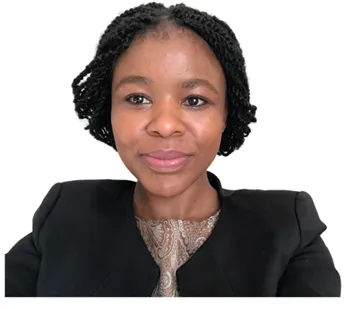
Noma Ngubane, KUMII Product Lead, Powered by 22 On Sloane.
Image: Supplied.
Follow Business Report on Facebook, X and on LinkedIn for the latest Business and tech news.