

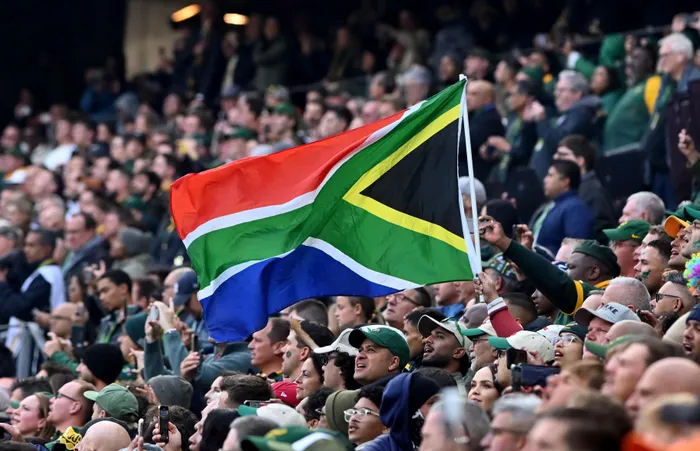
Discover how entrepreneurship not only embodies the spirit of Freedom Day in South Africa but also serves as a vital pathway for economic empowerment and inclusion in a challenging landscape.
Image: Ayanda Ndamane Independent Media
Each year, South Africans commemorate Freedom Day as a reminder of the country’s journey toward democracy, dignity, and the right to choose one’s path.
The 2026 theme, “Freedom and the Rule of Law: Thirty Years of Democratic Citizenship,” invites deeper reflection.
It shifts the conversation beyond political liberation to the systems that sustain it, and the role citizens play in shaping the country’s future.
In this context, freedom extends beyond the right to vote.
It includes the ability to participate meaningfully in the economy, to exercise agency, and to build sustainable livelihoods.
This reframing is especially urgent in South Africa, where the official unemployment rate remains above 31%, and youth unemployment exceeds 46%, leaving millions excluded from formal work despite democratic rights.
Within these conditions, entrepreneurship becomes more than an economic activity; it becomes a practical expression of democratic citizenship.
By creating work where none exists, it enables participation, restores dignity, and advances self-determination.
This aligns with the National Development Plan 2030, which positions small and medium enterprises as central to job creation and inclusive growth, with most new jobs expected to come from this sector.
Choosing entrepreneurship over traditional employment is rarely straightforward.
It requires more than a viable idea; it demands a fundamental shift in mindset.
Formal employment offers structure, predictability, and defined progression. Entrepreneurship removes that safety net, introducing uncertainty, risk, and a level of accountability that can be both demanding and isolating.
Yet it is within this uncertainty that a different kind of freedom begins to take shape.
At its core, entrepreneurship is about ownership, not only of a business, but of decisions, direction, and outcomes. It allows individuals to move beyond predefined roles and organisational limits, creating space to pursue ideas, allocate time intentionally, and align work with personal values.
However, this freedom is not absolute. It is shaped by the strength of institutions and the rule of law.
A functional legal and regulatory environment enables entrepreneurs to operate with confidence.
It protects property rights, enforces contracts, and creates a level playing field.
Without it, entrepreneurship becomes fragile, exposed to unpredictability, and often limited to survival rather than growth.
This reality is particularly evident in South Africa. For many, entrepreneurship is driven less by opportunity and more by necessity.
Structural barriers, including limited access to funding, markets, and networks, continue to define the landscape. In this environment, freedom is not guaranteed; it is constrained.
Experience from enterprise development and scale-up initiatives further highlight this complexity.
As entrepreneurs gain access to wider markets, new challenges emerge. Increased demand, particularly through digital and e-commerce channels, often outpaces production capacity.
Without sufficient working capital, infrastructure, and operational support, many MSMEs struggle to convert opportunity into sustainable growth.
This reinforces a persistent gap between market access and long-term viability.
Democratic citizenship therefore extends beyond rights; it includes active participation in strengthening the systems that enable economic inclusion.
Entrepreneurs are not only economic actors; they are stakeholders in the broader ecosystem.
Their ability to build and scale businesses is directly linked to how effectively institutions function, how policies are implemented, and how inclusive the economy becomes. In this sense, entrepreneurship is both an outcome of freedom and a contributor to it.
National policy discourse increasingly reflects this reality. South Africa’s long-term job creation prospects depend not only on the number of businesses started, but on how many are able to grow, formalise, and endure.
Economic freedom, in this context, is sustained through scale, capability, and supportive systems, not entrepreneurial activity in isolation.
Despite these constraints, the potential remains significant.
Entrepreneurs who navigate these challenges successfully create more than financial returns.
They generate employment, open new markets, and contribute to local economic development. Over time, their businesses become platforms for innovation and inclusion, expanding access for others.
In South Africa, this role is critical. Entrepreneurship has the capacity to address deep structural challenges such as unemployment and economic exclusion, enabling individuals not only to participate in the economy but to actively shape it.
The connection to Freedom Day becomes clear within this framework.
Freedom Day represents the right to participate, to be protected by the rule of law, and to define one’s future.
Entrepreneurship gives practical expression to these principles. It reflects a shift from waiting for opportunity to actively creating it within the framework of a democratic system.
Ultimately, entrepreneurship is not simply about leaving employment.
It is about exercising agency within systems that enable fairness, accountability, and opportunity.
It marks a transition from passive participation to active contribution.
As South Africans reflect on the significance of Freedom Day, the conversation must move beyond what freedom represents to how it is sustained.
Entrepreneurship offers one of the clearest pathways for translating democratic rights into economic outcomes.
True freedom is realised not only through participation but through ownership, supported by systems that enable individuals to build, grow, and contribute meaningfully to the economy.
Nomfundo Mdluli is the programme manager at 22 On Sloane.

Nomfundo Mdluli is the programme manager at 22 On Sloane.
Image: Supplied.
Follow Business Report on Facebook, X and on LinkedIn for the latest Business and tech news.