

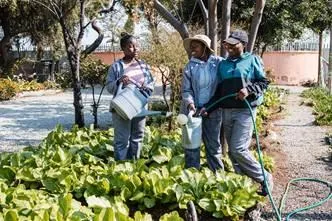
A new pilot programme in Diepsloot is helping young South Africans launch micro farming businesses using solar powered agricultural systems designed to tackle both unemployment and food insecurity.
Image: Supplied.
As South Africa’s youth unemployment crisis deepens, a new agricultural pilot is testing whether small scale farming entrepreneurship can provide a sustainable solution to both joblessness and food insecurity.
Recent Statistics South Africa figures showed unemployment among South Africans aged 15 to 24 has risen sharply from 57% three months ago to 60.9%, while unemployment among those aged 25 to 34 now stands at 40.6%.
Against this backdrop, Afrika Tikkun, with funding and support from E Squared Investments, has launched the Green Acres Hydro Coop programme in Diepsloot, Johannesburg, aimed at developing unemployed youth into micro farming entrepreneurs.
The initiative is equipping 20 young participants, including 19 women and one young man with a disability, with the tools, training, and infrastructure needed to run income generating agricultural businesses.
Using compact solar powered Hydro Coop systems, participants are producing both poultry and vegetables through sustainable farming methods designed to operate in urban, rural, and remote environments with limited infrastructure.
The programme began in February and combines practical agricultural training with live business operations, enabling participants to move directly from learning into entrepreneurship.
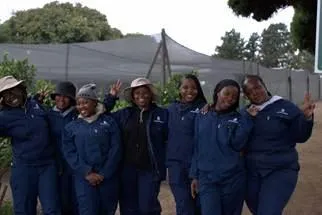
A new pilot programme in Diepsloot is helping young South Africans launch micro farming businesses using solar powered agricultural systems designed to tackle both unemployment and food insecurity.
Image: Supplied.
Participants have undergone training in hydroponics, farm management, and entrepreneurship while simultaneously launching their own micro enterprises.
According to Marc Lubner, the programme is focused on turning agriculture into a long term economic opportunity for young people.
“When skills development is combined with long term mentorship, farming stops being just a chore and becomes a sustainable career,” said Lubner.
“These youth aren't just farming for today; they are building the businesses of tomorrow, and it’s up to us to make sure that path remains accessible for them.”
The Hydro Coop units combine poultry farming with hydroponic vegetable production and use significantly less water than conventional farming systems. The compact structures are movable, solar powered, and designed to support biodiversity friendly farming practices.
If the pilot meets its projected targets, the 20 enterprises are expected to produce 22,400 chickens, 60,000 vegetables, and around 228,000 meals annually, while saving up to 1.5 million litres of water.
Beyond farming production, participants are also being introduced to the commercial side of the agricultural sector.
Afrika Tikkun has partnered with Garden Fresh at Nine Yards and other retail outlets where participants will gain practical experience in sales and customer service through a dedicated retail space designed for the programme.
Lubner said the initiative was intentionally structured as an almost entirely female cohort to address inequalities in access to employment and entrepreneurship opportunities.
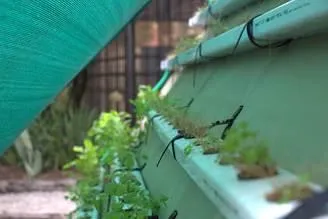
A new pilot programme in Diepsloot is helping young South Africans launch micro farming businesses using solar powered agricultural systems designed to tackle both unemployment and food insecurity.
Image: Supplied.
“This focus reflects a wider economic reality,” he said.
“Women, particularly younger women, face higher unemployment rates, lower business ownership levels and weaker access to startup capital than their male counterparts.”
Rather than positioning participants for temporary employment, the programme focuses on ownership and long term income generation.
“Agriculture can be a powerful engine for jobs, entrepreneurship and community growth,” Lubner said.
“By giving young people access to infrastructure, practical training and market opportunities, we are helping them build viable businesses and long term income. At the same time, we are strengthening local food security and creating a model that can be scaled to reach many more young people in the years ahead.”
One of the programme’s success stories is Debra Dagada, who completed an NQF Level 2 qualification in Plant Production through Afrika Tikkun before launching her own farming operation with support from the organisation.
Dagada later secured her own land at Northern Farm in Diepsloot, transitioning from trainee to independent farmer.
The programme also draws on expertise from UrbanFarm Africa, which says it has implemented 271 smart farming projects, trained more than 7,500 people, and helped participating farmers generate R250 million over the past five years.
Zakiya Khan, Impact Investment Manager at E Squared Investments said the initiative demonstrates how practical entrepreneurship models can create meaningful economic participation for young people.
“We believe in backing solutions that are both practical and enduring,” said Khan.
“What stands out in this model is its focus on enabling young people to participate meaningfully in the economy, not just through skills development, but through ownership and the ability to generate income over time.”
Afrika Tikkun said it plans to introduce another cohort of 20 participants in 2027 as part of its broader goal to scale the programme into more communities across South Africa.
Follow Business Report on Facebook, X and on LinkedIn for the latest Business and tech news.