

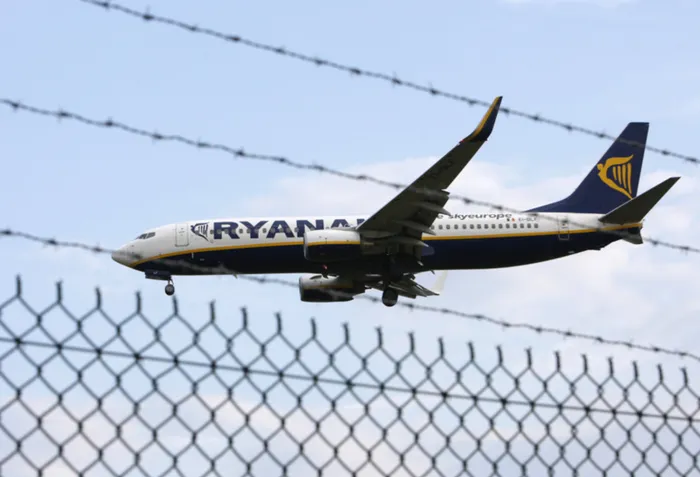
File picture: Reuters File picture: Reuters
London - Ryanair, Europe’s biggest discount airline, raised its full-year profit goal because of strong summer ticket sales at “higher than expected” fares, the second carrier in the region to boost its forecast this month.
Ryanair jumped the most in 10 months in Dublin trading after saying that profit after tax for the 12 months to March 31 will be in a range of 1.175 billion euros ($1.31 billion) to 1.225 billion euros, compared with a previous target of 940 million euros to 970 million euros. The Dublin-based carrier also increased its full-year traffic target 1 percent to 104 million passengers.
Under Chief Executive Officer Michael O’Leary, Ryanair has sought to broaden its customer appeal by toning down his sales pitch and offering a range of paid-for extras to entice more business passengers and families. The strategy, dubbed Always Getting Better, as well as the strength of the British pound and the UK’s wettest August in a century, helped bolster summer sales, Chief Financial Officer Neil Sorahan said.
“The Always Getting Better plan is continuing to deliver better customer numbers,” Sorahan said in a phone interview. The Dublin-based carrier expects average fares in the third quarter to remain largely unchanged. It had previously predicted a decline of 4 percent to 8 percent.
EasyJet forecast
EasyJet, Europe’s second-biggest discount airline, increased its fiscal-year forecast on September 3, citing demand from UK holidaymakers heading to beach destinations.
Ryanair rose as much as 9.9 percent, the biggest intraday gain since November 3, and was trading up 9.4 percent at 14.20 euros as of 8.07am. The stock has gained 51 percent this year.
Flights from Britain were encouraged by a damp summer that saw some weather stations in the south-coast holiday counties of Sussex, Hampshire and Dorset report record August rainfall, according to the UK Met Office. The coastal region of Cornwall, which gets 5 million annual visitors, was the wettest in 65 years.
Full-year results remain “heavily dependent” on sales through the fiscal third and fourth quarters, Ryanair said. Additional capacity and lower fuel prices are likely to generate a fare war as carriers fight to attract passengers, Sorahan said.
BLOOMBERG