

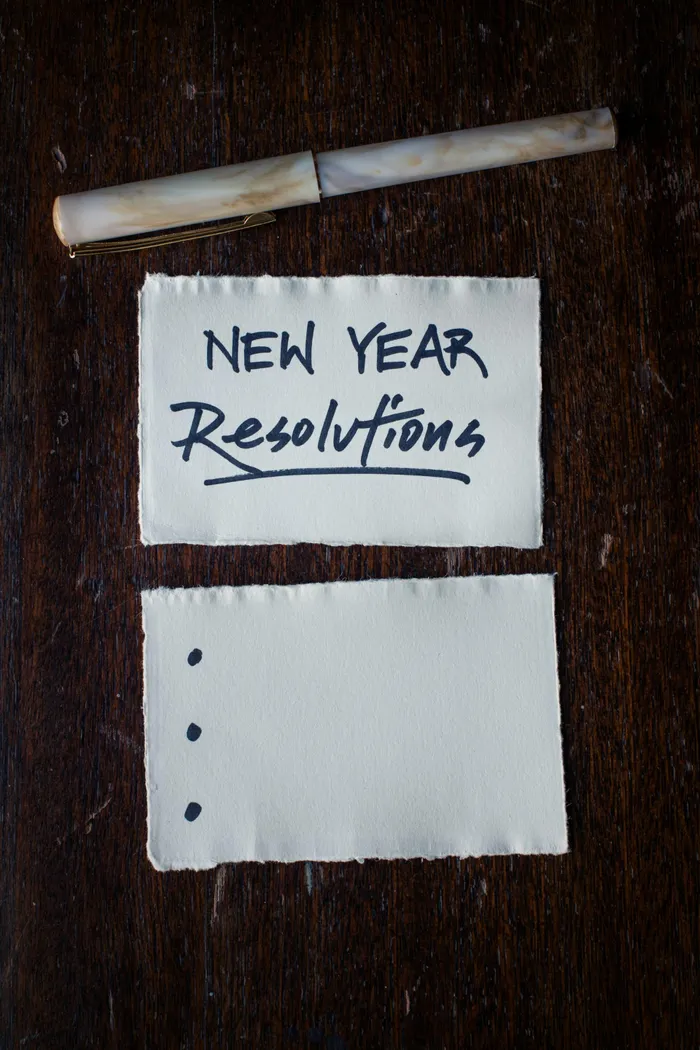
Set realistic New Year's resolutions to avoid disappointment.
Image: Tim Mossholder / Unsplash
January has a way of making us feel like we need to fix everything at once.
Eat better, move more, drink less, save money, be more productive.
It all sounds great on paper, but the pressure to overhaul your entire life in one month can be exhausting before the year has even properly begun.
By the time February arrives, reality usually kicks in. Motivation dips, routines slip, and those once-exciting resolutions start to feel more like chores than goals.
For many South Africans, this is made even harder by the realities of January itself.
Budgets are tight, schools are reopening, work is ramping up again, and there is very little mental space left for extreme lifestyle changes.
“New Year’s resolutions are meant to inspire us, not overwhelm us,” says Candice Sessions, Tetley Marketing Manager.
“With everything people juggle in January, such as tight finances, back-to-school pressure, and getting back into routine, it’s not surprising that resolutions are often short-lived. That’s why we’re encouraging South Africans to swap out extreme New Year's resolutions for small but meaningful habits that will support long-term well-being.”
The idea of starting fresh at the beginning of the year is deeply ingrained in human history.
Thousands of years ago, ancient Babylonians marked the new year by making promises tied to farming, debt and loyalty.
The Romans later associated the start of January with Janus, the god of beginnings, while early Christian traditions emphasised reflection and renewal.
Fast forward to today, and the context has changed, but the struggle has not.
Modern resolutions are typically focused on self-improvement, particularly in areas such as health, fitness, and weight loss.
Yet studies consistently show that fewer than 10 per cent of people stick to their resolutions for the full year.
The problem is not a lack of discipline, but the way these goals are set in the first place.
Dietitian and Tetley Partner Dietitian, Mbali Mapholi, says many New Year’s goals are built on unrealistic expectations rather than practical planning.
“Most resolutions fail because they're built on pressure, not planning. People aim for dramatic change when what actually works is simple, sustainable progress. The ‘all-or-nothing’ mindset also trips people up because one missed gym session or one treat leads to a crash, and people simply give up. At the end of the day, consistency matters far more than perfection.”
She explains that January often becomes a month of extremes.

Avoid setting unrealistic goals.
Image: Cottonbro Studio / Pexels
People expect immediate results, push themselves too hard, and then feel defeated when life inevitably gets in the way.
Financial strain also plays a big role. Gym contracts, expensive wellness plans and rigid food rules are difficult to maintain when money is tight.
There is also the mental load of trying to do everything perfectly.
One off day can feel like total failure, especially when social media is filled with highlight reels of other people’s so-called perfect routines.
Instead of motivating change, resolutions end up creating stress, guilt and burnout.
Rather than scrapping the idea of self-improvement altogether, Mbali encourages a shift in mindset. Instead of dramatic resolutions, she suggests focusing on habits that feel achievable and supportive.
“Healthy change isn’t about reinventing yourself on 1 January, it’s about creating a balance and making wellness a manageable and enjoyable part of your routine.”
That means thinking smaller and thinking long term. Movement does not have to mean daily gym sessions.
It can be a few walks a week, a stretch at home, or simply being more active where you can.
Wellness rituals should feel grounding rather than restrictive, whether that is a calm morning routine or taking a few minutes to pause during a busy day.

Create a balance and make wellness a manageable.
Image: Misbah / Pexels
Consistency is far more important than perfection. Missing a workout or enjoying a treat does not undo progress.
What matters is returning to habits that make you feel good, again and again.
Checking in with yourself regularly, instead of waiting until the end of the year to reflect, also makes it easier to adjust goals before they become overwhelming.
As the pressure of January fades, there is an opportunity to approach the year differently.
By letting go of extreme resolutions and focusing on small, meaningful changes, well-being becomes something that fits into real life, not something that competes with it.