

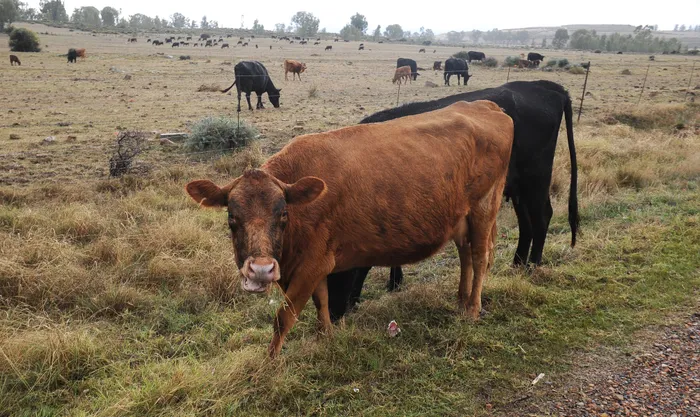
President Cyril Ramaphosa officially declared the Foot and Mouth Disease (FMD) outbreak a national disaster during his State of the Nation Address (SONA).
Image: File.
The current livestock crisis in South Africa has left many parents anxious, but a major part of that fear comes from a simple case of name confusion: foot and mouth disease (FMD) vs hand, foot and mouth disease (HFMD).
Following President Cyril Ramaphosa’s declaration of a National State of Disaster on February 13, the government is fighting a massive outbreak of FMD in cattle across all nine provinces, with KwaZulu-Natal as the epicentre.
The similar names have caused a health panic, leading some families to avoid meat and dairy or worry their children will catch "the cow disease".
To clear the air, Dr Temba Hadebe, a clinical executive at Bonitas Medical Fund, explains why you don't need to panic.

Clearing the confusion: Dr. Temba Hadebe explains why the current livestock outbreak isn't a risk to your family’s health.
Image: Supplied.
According to Hadebe, the livestock outbreak is an economic problem, not a medical one for humans.
“When a disease affecting animals shares part of its name with a human illness, it is easy for people to assume the worst. The current FMD outbreak affects livestock only and does not pose a risk to human health.
"Clarifying this helps families respond appropriately and prevents unnecessary worry or medical visits."
"FMD affects cloven-hoofed animals such as cattle, sheep and pigs. It is a highly contagious viral disease within animal populations and is managed through veterinary controls, movement restrictions and vaccination programmes. Its impact is agricultural and economic, not human," he says.
"Hand, foot and mouth disease, by contrast, is a viral infection that affects people, most often young children. Typically caused by coxsackievirus, it spreads through close contact in settings such as homes and schools.
"Symptoms may include mild fever, mouth sores and a rash on the hands and feet. Most cases are self-limiting and resolve with supportive care," shares Hadebe.
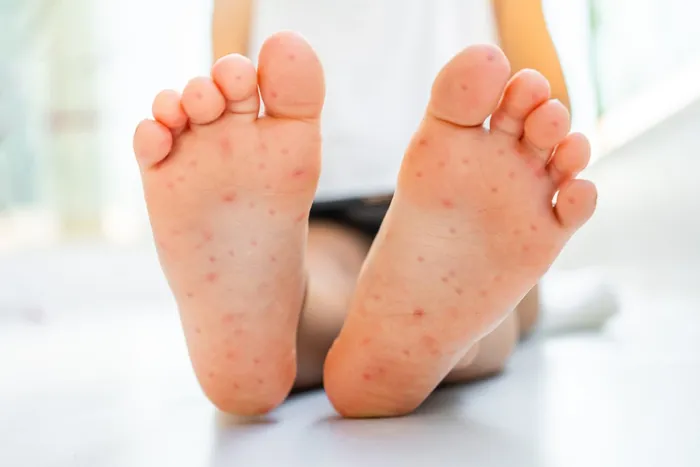
Common symptoms in Hand, Foot and Mouth Disease are fever, sore throat, tiredness, loss of appetite and small blisters on the inside of the mouth, sides of the tongue, palms of the hands and soles of the feet.
Image: File.
While you don't need to visit a doctor just because of the news headlines, you should still watch your children for standard symptoms of the human virus.
“Heightened media coverage has contributed a lot to the uncertainty, especially in an environment where information circulates rapidly across social platforms.
"Parents and caregivers should seek medical advice if a child develops symptoms consistent with hand, foot, and mouth disease, especially persistent fever, signs of dehydration or unusual lethargy. However, precautionary medical visits are not necessary in response to the livestock outbreak alone.
"While the FMD outbreak remains a serious issue for the agricultural sector and the broader economy, it does not constitute a human health emergency," ends Hadebe.