

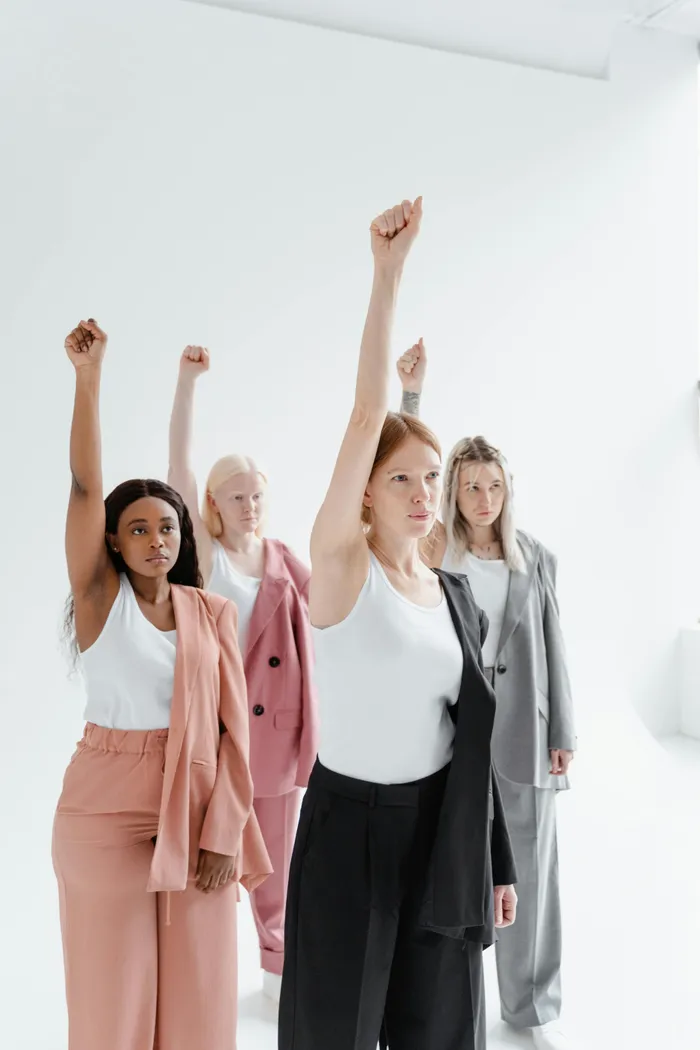
Beyond the dating scene, a major shift is hitting the world, that marks the start of a whole new economic era.
Image: Pexels.
There’s a shift happening in our living rooms and boardrooms that’s about more than just dating; it’s about a new economic era.
A major study by Morgan Stanley, titled "Rise of the SHEconomy", projected that by 2030, nearly 45% of women (ages 25 - 44) in the US will be single and child-free.
"What’s driving this trend? For starters, more women are delaying marriage, choosing to stay single or divorcing in their 50s and 60s. Women are also delaying childbirth or having fewer children than in the past," says the report.
This trend is expected to stimulate economic sectors where single women traditionally allocate a larger portion of their spending, particularly on apparel and footwear, personal care products, dining out, and luxury goods.
And South Africa is shifting in the same direction.
While the research focuses heavily on the macroeconomic shift, it also sparks debate about modern dating culture.
From the streets of Sandton to Cape Town, South African women are looking at the math of modern life and deciding that "happily ever after" might look a little different than it did for their mothers.
This isn't a simple choice between a job and a home; it's a calculated move to navigate soaring living costs, the career setbacks that often follow motherhood, and the risks of an unstable household.
The trend isn't necessarily about a lack of desire for love; it’s about a refusal to accept traditional roles that don't offer a fair trade-off in the modern world.
According to the research, the numbers are shifting due to:
The degree dividend: Women are now out-pacing men in obtaining university degrees. This often leads to women prioritising career stability in their 20s, which pushes marriage and children further down the timeline.
The end of "marriage for survival": Historically, marriage was a financial safety net. Today, as women become primary breadwinners, they don’t need a provider; they want a partner. If the partnership doesn't add value, they're happy to stay solo.
The invisible labour gap: Even in 2026, women still do the lion’s share of housework and emotional mental load. Many are opting out because the work of maintaining a traditional household feels like a second, unpaid job.
The cost of kids: With inflation and the skyrocketing costs of housing and education, the financial math of having children is becoming a deterrent for many who want to maintain a specific quality of life.

For 42% of South African women, being the "Head of House" isn't just a title, it's a shield. They are choosing the stability of their own solo income over the potential financial drain of an unequal partnership.
Image: Pexels.
Aside from this, the trend is even more pronounced due to our specific social climate.
Marriage is on the decline: Stats SA reported last year that there has been a nearly 30% drop in civil marriages over the last decade. This confirmed that the traditional South African dream of a white wedding is being replaced by more pragmatic, modern arrangements like cohabitation. The national fertility rate has dropped from 2.78 children per woman in 2008 to 2.21 in 2025.
The safety factor: In South Africa, gender-based violence has been declared a national disaster. For many women, the statistics aren't just numbers; they are lived realities or stories from close friends. Recent sociological studies show that many young, educated women are hesitant to marry due to the high prevalence of GBV, infidelity and the emotional toll of patriarchal expectations.
Female-headed households: In South Africa, the rise of the female-headed household is a cornerstone of the "sheconomy" story. According to the Stats SA General Household Survey 2024, roughly 42.4% of households are now headed by women. For many, being single isn't just a lifestyle choice; it's a response to the fact that they are already the primary providers and caregivers. Adding a partner who doesn't contribute equally is seen as a financial and emotional risk.
In Mzansi, the shift isn't just about "career vs family". It is a pragmatic response to high living costs, the "motherhood penalty" and a high rate of domestic instability.
Many women are choosing to be single and child-free (or single and one-child) because they find that solo independence offers more peace and financial security than the traditional marriage math.