

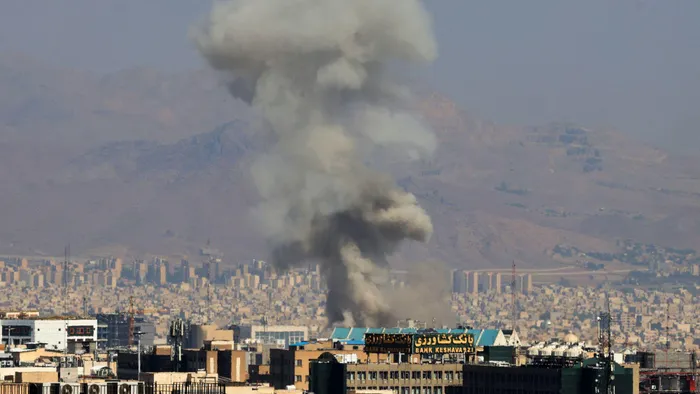
As the Middle East is engulfed in a full-scale military conflict, financial markets tremble. Discover the latest developments in a world on edge and the implications for global stability and local economies.
Image: Atta Kenare / AFP
The weekend saw a dramatic escalation in tensions between the US, Iran, and Israel, culminating in a full-scale military conflict that has spread beyond the borders of the involved nations into Qatar, the United Arab Emirates, and Oman.
This heightened state of discord was precipitated by the assassination of Iranian supreme leader, Ayatollah Ali Khamenei, an act that has ignited fierce calls for retaliation from Tehran and heightened fears of a broader war in the region.
The Iranian regime's response to Khamenei's death is expected to be aggressive, with military forces on high alert and nations across the region bracing for potential fallout.
Bianca Botes, Director at Citadel Global said that military analysts warned that the situation could spiral further out of control, igniting a wider conflict that would have profound implications not just for Middle Eastern stability but for global geopolitics.
As the dust settles on the battlefields of the Middle East, financial markets around the world reacted swiftly and severely.
"In Asia, early trading on Monday reflected a sharp decline, compounding the losses seen in the previous Friday’s market. Investors have turned cautious amid fears of prolonged instability which threaten to impact global economic growth. In China, investors are turning their attention towards the imminent announcement of the government’s new five-year plan, amidst political uncertainty and expectations of strategic changes in policy. The focus remains on how these developments will affect not just the Asian markets but the global economic landscape," Botes said.
She added that across the Pacific, Wall Street futures have slumped significantly, echoing the anxiety surrounding the Middle East conflict, which has dashed risk appetites among investors.
"This volatility has had immediate repercussions on commodity markets as well. Brent crude oil prices surged nearly 6% this morning, now trading at $77 per barrel, as concerns about supply escalated. Meanwhile, safe-haven assets like gold saw an uptick of 1.6%, driven by a discernible ‘flight to safety’ sentiment among traders," Botes said.
She added that the US Dollar Index also showed strength this morning, reflecting investors' shift towards safer currencies amid the tumultuous geopolitical landscape.
"Closer to home, the South African rand, despite witnessing losses, is trading within its recent range, starting the day at R16.03 against the dollar and regaining some ground after trading as low as R16.13/$ earlier. Analysts suggest that volatility in the currency is likely to persist as the situation continues to evolve," Botes said.
"With diplomatic efforts hanging by a thread and the potential for further escalation looming large, the international community watches closely, hoping for de-escalation while preparing for the worst in this increasingly fraught geopolitical environment," Botes said.
Follow Business Report on Facebook, X and on LinkedIn for the latest Business and tech news.