

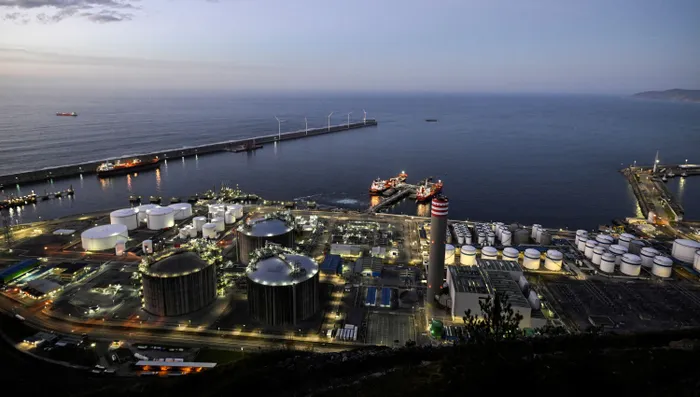
Amid escalating tensions in the Middle East, economist Professor Raymond Parsons warns of a potential surge in global oil prices, posing significant challenges for South Africa's economy.
Image: Ander Gillenea / AFP
The escalating conflict in the Middle East has raised fresh concerns about global energy markets and the economic consequences for oil dependent countries such as South Africa.
According to Raymond Parsons, economist at the North-West University Business School, the intensifying confrontation involving the United States, Israel and Iran has heightened the risk of a prolonged crisis that could drive oil prices significantly higher.
“The recent escalation in the US and Israeli war with Iran has now injected new urgency into assessing the economic and business implications for countries like South Africa,” Parsons said.
Brent crude opened the week above $100 a barrel, a level that signals growing anxiety in global markets as the conflict shows few signs of ending quickly.
“As expectations of a swift end to the fighting recede, the future price of oil is expected to rise further,” he said.
Parsons warned that the longer the crisis continues, the more severe the economic consequences could become for economies heavily dependent on oil imports.
“We know that the longer the Middle East crisis continues, the greater the economic impact on heavily oil dependent economies like South Africa through higher transportation costs and other supply chain disruptions,” he said.
One of the biggest concerns for global markets is the vulnerability of the Strait of Hormuz, a critical shipping route through which a large portion of the world’s oil supply flows.
“The latest developments confirm that the Strait of Hormuz remains the biggest single bottleneck to the free flow of shipping, as well as being a decisive factor now driving both military and market considerations,” Parsons said.
Bianca Botes, Director at Citadel Global said that this week all eyes will be on the Federal Reserve and what decision it will take regarding interest rates in the US.
She added that on Monday morning, futures for the S&P 500 showed signs of recovery.
She said, "This follows a week of volatility that concluded with Wall Street ending softer on Friday. The tumultuous market conditions serve as a reminder of the uncertainty that persists as inflationary pressures grow, primarily fuelled by rising oil prices."
"Oil prices are a critical concern for investors, as they maintain upward pressure, impacting inflation forecasts. This morning, oil has climbed 1.29% to $104 per barrel, exacerbating anxieties as the war rages on. Furthermore, the gold market is feeling the strain, with prices down and hovering around $5,000 per ounce, continuing to be affected by a stronger dollar. The US Dollar Index has now firmly settled at 100, illustrating robust dollar performance," she added.
"This week, all eyes will be on the Federal Reserve’s Federal Open Market Committee (FOMC) meeting. With interest rate cuts officially off the table, the focus will be on the Fed's forthcoming outlook, which is expected to reflect concerns over the rallying oil prices. Fed forecasts regarding the interest-rate trajectory could prove to be critical in shaping market dynamics moving forward," Botes said.
“If the Strait is closed for a long period, market experts believe the global oil price may surge to $150 a barrel,” Parsons further warned.
While South Africa sources a significant share of its crude oil from West Africa, Parsons said the country would still be exposed to the broader impact of rising global oil prices.
The Central Energy Fund has already projected a significant increase in petrol and diesel prices in the coming weeks.
“In the expectation of an imminent price shock, the Central Energy Fund is already projecting a substantial rise in both petrol and diesel prices per litre on April 1,” Parsons said.
Higher fuel prices are expected to ripple through the broader economy, pushing up costs for agriculture, transportation and air travel.
“Fertiliser costs are also rising for agriculture and transport cost increases will permeate other sectors of the economy. Air fares have risen,” he said.
These pressures could weaken South Africa’s inflation outlook and growth prospects at a time when the country had begun to see signs of improvement in the business cycle.
“It is therefore not good news for either the country’s inflation outlook or growth prospects at a hitherto otherwise favourable turning point in South Africa’s business cycle,” Parsons said.
“As the economy experiences a severe supply side shock the economic pain is inevitable.”
Parsons noted that rising energy costs could also influence monetary policy decisions by the South African Reserve Bank.
“It is now also unlikely that the SARB’s Monetary Policy Committee will continue its interest rate easing cycle at its meeting on March 26,” he said.
Higher global prices for precious metals such as gold and platinum could provide some support for the economy.
“The economy also gains from the concomitant boost in the prices of precious metals, such as gold and platinum,” Parsons said.
In addition, increased shipping traffic around the southern tip of Africa as vessels reroute away from conflict zones could offer a limited benefit.
“The shipping now likely to be rerouted around South Africa is also a positive development, although the anticipated increase in traffic would be a serious challenge to the country’s existing limited port infrastructure,” he said.
Parsons stressed that the key to managing the shock will be clear policy direction and better coordination between government and business.
“To deal effectively with the situation now requires a more coordinated policy response and better communication,” he said.
Follow Business Report on Facebook, X and on LinkedIn for the latest Business and tech news.