

Tensions rise as markets react to the unfolding Iran conflict, soaring oil prices, and the potential for increased interest rate hikes later this year. Discover how these factors are shaping financial outlooks across Asia and beyond.
Image: Philip FONG / AFP
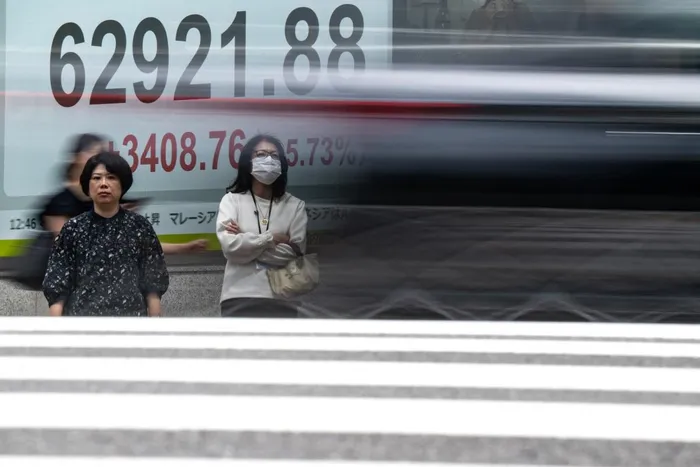
Market sentiment remains fragile as geopolitical tensions surrounding the Iran war escalate, leading to a notable sell-off across global equities.
Bianca Botes, Managing Director at Citadel Global said on Monday that the worries of an extended impasse between the United States and Iran, coupled with soaring oil prices, have left investors anxious and wary of further interest rate hikes later this year.
"In early trading, Asian markets reflected this unease, with the region suffering an average decline of 0.8%. The decline follows a tumultuous Friday, where the S&P 500 in the US closed 1.24% down, sending a ripple of concern throughout global trading floors. Only the Shanghai Composite Index in China and South Korea's KOSPI bucked the trend, stabilising after positive movements from tech giant Samsung Electronics," Botes said.
She further said that the JSE All Share Index is set to face headwinds as it comes into the trading day following a 2.4% loss on Friday.
"With mood softening and futures indicating a further drop of 0.55%, traders are cautiously bracing for the impact of sustained high oil prices and the associated inflationary pressure that they bring." Botes added.
Oil prices have surged dramatically, now hovering at $111 per barrel, a stark indication of the market's reaction to the stalling nuclear discussions with Iran and an unstable ceasefire, heightening fears of potential military actions that could disrupt supply chains globally.
In contrast, gold prices have not fared well amidst this volatile backdrop, having fallen 2.3% over the past week to settle at $4,544 per ounce.
Meanwhile, the US Dollar Index has resumed its stronghold, appreciating over 1% as traders flock to safer assets amidst uncertainty.
The South African rand has also come under significant pressure.
On Monday morning it was trading at R16.73 against the dollar, R19.45 against the euro, and R22.28 against the pound, the rand's performance is a reflection of the broader market's demand for stability.
"As investors navigate through these turbulent waters, the delicate balancing act of risk management and opportunistic positioning remains paramount. With every tick of the oil price and every shift in geopolitical landscapes, the focus now shifts to securing gains while anticipating further economic implications that could arise from the current global conundrum," Botes said.
Follow Business Report on Facebook, X and on LinkedIn for the latest Business and tech news.