

This latest series of events highlights the delicate balancing act that emerges in international trade and economic policy. As tariffs loom and financial markets fluctuate, the focus on global cooperation and diplomacy becomes more crucial than ever in an interconnected world.
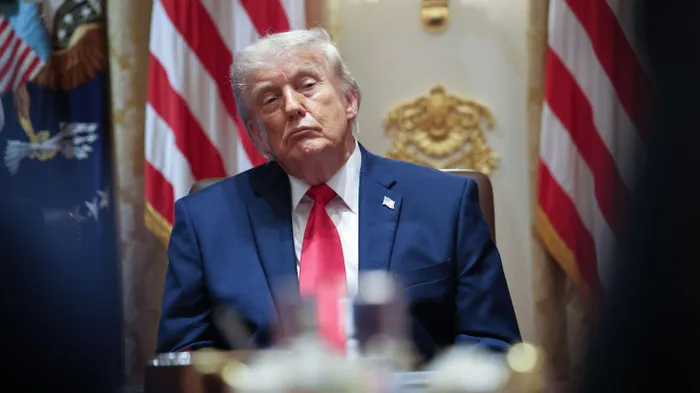
Image: Win McNamee / Getty Images via AFP
In a decisive move that underscores the ongoing geopolitical tensions, the United States has proposed imposing tariffs of at least 10% on imports from a majority of its significant trading partners.
This development stems from a recent investigation into goods associated with forced labour and signals President Donald Trump's intent to reinstate sweeping tariff measures aimed at protecting American interests.
Bianca Botes, Managing Director at Citadel Global said that while the geopolitical landscape remains relatively unchanged, the announcement has reinvigorated discussions surrounding international trade and its implications on the global economy.
"Analysts warn that tariffs could further strain relations between countries that are already facing trade disagreements, and could lead to reactions that may serve to escalate tensions rather than alleviate them," Botes said.
Despite these looming uncertainties, Wall Street exhibited resilience, with the tech-driven rally propelling the S&P 500 to achieve a modest gain of 0.1%.
This record day reflects strong investor sentiment in the technology sector, which continues to draw significant interest amid lucrative advancements and innovative developments.
Notably, Asian equity markets echoed this positivity, with the MSCI Asia Pacific Index rising 0.7%, hitting a fresh record high.
Technology stocks played a pivotal role in this uplift, suggesting a robust appetite for investment in tech-centric ventures across the region.
Meanwhile, the energy market experienced a third consecutive day of gains, buoyed by stagnant negotiations between the United States and Iran, alongside rising tensions in the Gulf region.
Brent crude saw an increase of 0.9%, trading at $96 per barrel, illustrating the complex interplay between geopolitical dynamics and global oil prices.
On the other hand, gold prices faced a slight decline of 0.5%, settling at $4,462.93 per ounce. Investors are closely monitoring key economic data from the US, highlighting an atmosphere of caution as markets prepare for the latest financial reports and ongoing developments in the Middle East.
In local currency markets, the South African rand remains steady against the US dollar at R16.24, against the euro at R18.89, and the British pound at R21.87. This stability in the rand may provide comfort to investors and traders navigating the complexities of the global economic landscape.
Follow Business Report on Facebook, X and on LinkedIn for the latest Business and tech news.