

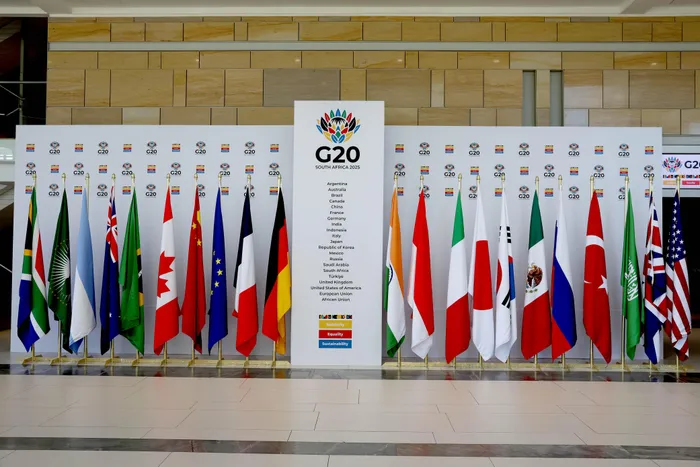
The global spotlight is on South Africa due to this weekend's G20 Leaders’ Summit.
Image: Supplied
When President Cyril Ramaphosa calls the G20 Leaders' Summit to order in Johannesburg at the weekend, the world will watch to see if South Africa can achieve what no previous G20 presidency has managed: turning grand promises into tangible action.
Every nation that assumes the G20 presidency wants to shine and “show off”—Brazil showcased its environmental leadership, India highlighted its technological prowess, Japan emphasised its innovation.
These presidencies delivered eloquent communiqués and photo opportunities with world leaders—but how many delivered structural change that improved ordinary people's lives?
The G20 has long been a stage for grand promises—debt relief, climate finance, trade equity—yet its history is marred by inaction. Year after year, G20 members made promises, yet each presidency has retreated without pulling the trigger. South Africa stands at a crossroads.
For this nation, this is not merely about hosting a prestigious international gathering—this is Africa's moment to awaken global consciousness to a philosophy that could reshape how the world addresses its most urgent crises. But there is a critical prerequisite: South Africans themselves must first truly understand what Ubuntu means if they are to make this G20 presidency anything more than another diplomatic talkshop.
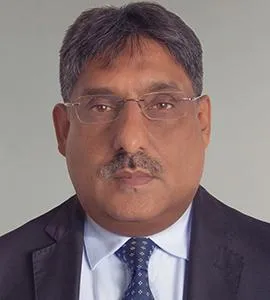
Sanjith Hannuman says South Africa's G20 presidency represents a historic opportunity to demonstrate Ubuntu's practical relevance on the world stage.
Image: Supplied
Success won't be measured by the number of communiqués issued or photo opportunities arranged. It will be judged by whether lives improve, economies grow more inclusive, and the planet moves closer to sustainability.
The difference between success and failure lies not in South Africa's diplomatic skills but in whether the nation—and through it, Africa—can demonstrate that Ubuntu is not a marketing slogan but a transformative framework for global cooperation. This is Africa's time. Not to mimic the showmanship of previous presidencies, but to offer something the world desperately needs and cannot find elsewhere: an African philosophy that addresses the interconnected crises of our age.
South Africa's presidency, ending on 30 November 2025, is the final act in a cycle of Global South leadership before the US resumes the helm.
What South Africa does in these pivotal months will determine whether the Global South's voice continues to be heard or fades back into the margins of global decision-making.
Ancient Roots, Timeless Wisdom
The term Ubuntu is a Zulu/Xhosa/Ndebele/Sesotho word referring to the moral attribute of a person, though its linguistic reach extends across the African continent. The term "Ubuntu" itself is derived from the Nguni languages of southern Africa, with variations such as "Botho" in Tswana, "Unhu/Hunhu" in Shona, and "Utu" in Swahili.
Ubuntu has been in existence in orature and in the culture of Bantu peoples, appearing in South African written sources from as early as the mid-19th century. The word "ubuntu" literally means "humanness." To have ubuntu is to be a person who is living a genuinely human way of life, whereas to lack ubuntu is to be missing human excellence.
The philosophy finds its most eloquent expression in the Nguni proverb “Umuntu ngumuntu ngabantu”—a person is a person through other people. This simple yet profound statement encapsulates a worldview fundamentally different from Western individualism: our humanity is not self-generated but emerges through our relationships with others.
The term has gained significant philosophical attention in Zimbabwe and South Africa, especially in the early twenty-first century, as both countries needed home-grown philosophies to move forward following political disturbances caused by liberation war and apartheid respectively. From the 1970s, ubuntu began to be described as a specific kind of "African humanism," offering an alternative ethical framework rooted in African experience rather than imported Western paradigms.
The Mandela Legacy: When Ubuntu united the world
The last time Ubuntu captured global imagination was during Nelson Mandela's presidency—over thirty years ago. This is crucial context for understanding why South Africa's 2025 G20 presidency represents Ubuntu's second chance at global recognition. In 1990, Nelson Mandela was released from his 27-year prison sentence to much global praise. What followed was nothing short of miraculous.
After whites had systematically oppressed his country and stolen decades of his life, Mandela refused to seek revenge against his oppressors. Instead, he worked to build a new South Africa based on the principles of equality and reconciliation.
In 2006, Mandela explained the African spiritual ethic: “A traveller through a country would stop at a village and he didn't have to ask for food or for water. Once he stops, the people give him food, entertain him. That is one aspect of Ubuntu.”
He continued, emphasising that Ubuntu compels people to consider whether their actions enable the community around them to improve, demonstrating that true enrichment aligns naturally with the duty to act towards the spiritual growth of one's community.
Archbishop Desmond Tutu, who chaired South Africa's Truth and Reconciliation Commission (TRC), brought Ubuntu into global consciousness through his work on restorative justice. In his book No Future Without Forgiveness, Tutu described the TRC as an attempt to balance “justice, accountability, stability, peace, and reconciliation” while setting out a public account of apartheid's horrors.
Tutu defined Ubuntu as “I participate, I share,” drawing on these principles to guide South Africa's reconciliatory approach to apartheid. Tutu claimed that "Ubuntu (and so restorative justice) gives up on no one. No one is a totally hopeless and irredeemable case" because to give up on anyone is to give up on interdependence and community.
This philosophy challenged the conventional Western approach to justice, prioritising healing and restoration over punishment and retribution.
At Nelson Mandela's 2013 memorial, United States President Barack Obama spoke about Ubuntu, saying, “There is a word in South Africa—Ubuntu—a word that captures Mandela's greatest gift: his recognition that we are all bound together in ways that are invisible to the eye; that there is a oneness to humanity; that we achieve ourselves by sharing ourselves with others, and caring for those around us.”
That moment—Obama invoking an African philosophy to honour an African leader before a global audience—was the pinnacle of Ubuntu's international recognition. But what happened after that memorial service? The world moved on. Ubuntu became another inspirational concept referenced in yoga studios and corporate retreats, divorced from its transformative potential. South Africa itself descended into political scandals, state capture, and economic stagnation.
The philosophy that guided the nation’s peaceful transition seemed forgotten. Now, in 2025, Ubuntu has a second chance at global recognition. But this time, it cannot be about one man's heroic example. It must be about structural change, measurable outcomes, and Africa's collective assertion that it is ready to shape, not just respond to, global affairs.
Ubuntu at the G20: South Africa's Challenge
South Africa's 2025 G20 presidency has placed Ubuntu at the centre of international dialogue in unprecedented ways. Deputy President Paul Mashatile stated, “Under the guiding principle of Ubuntu — the profound belief that 'I am because you are' — we are reminded of the interconnectedness of humanity. It is this principle of Ubuntu that underpins South Africa's leadership and vision for our G20 Presidency.”
This is not mere symbolism—but here lies the central challenge: can South Africa translate these beautiful words into concrete action? South Africa will address urgent challenges by building partnerships across all sectors of society, acting in the interests of our shared humanity. In the spirit of Ubuntu, we recognise that individual nations cannot thrive in isolation.
The question is whether South Africa's leadership can deliver on this commitment or whether Ubuntu remains rhetoric without results. For Ubuntu to work at the G20, South Africans themselves must first embrace its meaning. This is not about slogans painted on government buildings or phrases in presidential speeches.
It requires a fundamental shift in how South Africa approaches this presidency. South Africa's 2025 G20 presidency is a vital opportunity to turn rhetoric into tangible outcomes, delivering debt sustainability, climate finance, and green industrialisation. Consider the concrete initiatives already underway. The Ubuntu Initiative, rooted in the African philosophy of “I am because you are” aims to strengthen inter-African collaboration on major infrastructure projects and has become a central pillar of South Africa's G20 Presidency.
The innovative initiative sets out an Africa-led framework to translate the G20 Toolkit for Cross-Border Infrastructure into a programme of action, addressing the continent's development needs through collaborative frameworks. This is Ubuntu operationalised: not waiting for external saviours but creating African-led solutions that invite genuine partnership.
In agriculture, Minister John Steenhuisen called on G20 nations to embrace the South African philosophy of Ubuntu as a guiding principle to tackle shared global challenges facing agriculture, food security and rural livelihoods, emphasising that no country can tackle these crises alone.
The September 2025 ministerial meeting resulted in a consensus on the Ubuntu High-Level Principles during South Africa's G20 Presidency, which will be officially brought into the global framework at the November summit in Johannesburg. The G20 Interfaith Forum held in Cape Town in August 2025 gathered over 500 global leaders under the banner “Ubuntu in Action: Solidarity, Equality, Sustainability” to translate shared values into concrete initiatives supporting vulnerable communities.
From climate resilience and food security to debt relief and financial reform, Ubuntu principles are being operationalised across every working group of South Africa's presidency.
No More Talkshops: What Ubuntu Demands
The difference between this G20 and all others that came before must be accountability over announcements. The 'Reform Gun'—loaded with pledges like International Monetary Fund quota reform and World Bank restructuring—remains unfired. Ubuntu says enough.
It is time to fire that gun. Debt relief for African nations cannot be discussed for the hundredth time without action. Climate finance cannot remain a vague promise. Empty rhetoric erodes trust and makes future cooperation more difficult. If wealthy nations want to maintain credibility in Africa, they must demonstrate that their obligations are more than mere performative gestures.
The continent must move beyond receiving global pledges and secure concrete financial commitments using political processes to ensure that climate finance is not only mobilised at scale and affordable cost, but also effectively deployed. This requires clear key performance indicators to track implementation. Ubuntu is about relationship and responsibility—both require accountability mechanisms that previous G20 presidencies avoided.
Africa's Awakening: The Silent Force Rises
For too long, the world has seen Africa through the lens of poverty, conflict, and disease. These realities exist, but they are not the totality of Africa's story. Africa is also resilience, creativity, and philosophies that have guided human communities for millennia. The world needs to see Africa not as a problem requiring their solutions, but as a source of wisdom for shared challenges. Steve Biko, South African revolutionary and anti-apartheid activist, once stated, "The great powers have transformed the world industrially, but the great gift still must come from Africa." That gift is Ubuntu. Not as a trendy concept but as a practical framework for restructuring global institutions, rethinking development paradigms, and reimagining human relationships.
The era of relying on external saviours is over. We have little choice but to look inward for development financing and strategically position ourselves as preferred investment destinations. The path forward requires a deliberate and unified shift from rhetoric to implementation. This is not about Africa begging for its place at the table. It is about Africa standing up and saying: we have something the world needs. In an age of rising nationalism, climate catastrophe, and widening inequality, Western models of development have manifestly failed to create sustainable, equitable prosperity. The individualistic, extractive capitalism that drove the Global North's rise now threatens planetary survival. Ubuntu offers an alternative.
Not a naive return to pre-industrial communalism, but a philosophy that can guide 21st-century development: economic growth that uplifts communities, not just individuals; environmental protection rooted in recognising our interconnectedness with nature; global cooperation based on mutual respect rather than domination.
The sun may be setting on South Africa's historic G20 Presidency, but a new dawn is breaking for African agency on the global stage. African Union participation as a full member was not merely a symbolic gesture; it was a hard-won seat at the table where the rules of the global economy are shaped. Ubuntu does not ask for handouts; it demands structural reform that recognises Africa's equal standing.
The silent force of Africa is awakening. Not with aggression or resentment, but with a philosophy that could heal a fractured world—if the world is ready to listen and act.
Ramaphosa's historic opportunity to correct global perceptions
President Ramaphosa has a historic opportunity. Where Mandela showed the world what Ubuntu looks like in one person's life and one nation's transition, Ramaphosa can demonstrate what Ubuntu looks like as a governing principle for global economic relations.
This is the moment for Cyril Ramaphosa to correct all the wrongs the world has seen not only in South Africa, but across Africa. The world must see Africa as a silent force that is waking up and is slowly demonstrating that we exist—not for the wrong reasons but wanting to be part of global economics through genuine partnership.
South Africa situates its presidency within the “overlapping and mutually reinforcing crises” that calls for a paradigm change to address: climate change, underdevelopment, inequality, poverty, hunger, unemployment, technological changes, and geopolitical instability. These crises cannot be solved by any national one. Ubuntu offers a model for genuine multilateralism—not the kind where powerful nations dictate terms, but where all participants recognise their mutual vulnerability and shared destiny.
This 2025 G20 presidency is not just a chance for South Africa to host a summit; it is an opportunity, and a responsibility, for the country to help reshape global economic governance, address systemic inequalities and create pathways for the inclusive, sustainable development that Africa, and the world, so desperately need right now. But it will only succeed if South Africans themselves understand the depth and power of what Ubuntu represents. It cannot be performative. It cannot be half-hearted.
South Africa approaches its Presidency of G20 with the spirit of Ubuntu. This African philosophy emphasises the interconnectedness of individuals within a broader communal, societal, environmental and spiritual context. But understanding this philosophy deeply—not superficially—is what will separate success from failure.
The Measurement of Success
When delegates gather in Johannesburg tomorrow, they will be watched not just by diplomats and economists but by ordinary people across Africa and the Global South who are tired of broken promises.
They will be watched by future generations who will judge whether this generation chose cooperation or continued on the path toward climate catastrophe and widening inequality. South Africa's success or failure at this G20 will not be determined by how impressive the summit looks or how eloquently ministers speak.
It will be determined by one simple measure: did things actually change? Did debt relief happen? Did climate finance flow? Did trade rules become fairer? Did African voices shape outcomes or merely observe them? India's 2023 G20 presidency tracked domestic recognition through citizen awareness surveys and sentiment analysis.
South Africa should set similar benchmarks including percentage of South Africans aware of the presidency, tone of African and global media coverage, and extent to which engagement group initiatives continue after handover. Ubuntu's effectiveness must be evaluated through concrete improvements in people's lives, not just philosophical affirmation.
The world has seen Africa's struggles. Now it is time to see Africa's strength—not the strength of military might or economic domination, but the strength of a philosophy that recognises our fundamental interdependence. Ubuntu is Africa's contribution to solving problems that Western individualism created but cannot solve alone.
Ubuntu in Practice: From Philosophy to Policy
Ubuntu principles align with the United Nations' 2030 Agenda for Sustainable Development, which calls for inclusive and sustainable economic progress that protects the planet and ensures prosperity for all.
In South Africa, the application of Ubuntu principles has led to community-driven conservation projects that integrate traditional knowledge with modern environmental management practices, fostering both biodiversity conservation and community resilience.
With the UN's 2030 Agenda just five years away, South Africa's G20 timing sharpens focus on urgent global hurdles like climate change, poverty, and inequality, with Ramaphosa's team drawing from Ubuntu to push for solutions that benefit everyone, especially the Global South. The business world has increasingly recognised Ubuntu's potential to transform organisational culture and management practices.
The Ubuntu philosophy proposes collaboration, inclusion and equity as fundamental principles, helping transform human relationships within organisations and between organisations and the communities in which they operate. This vision suggests that Ubuntu need not oppose commercial success but can instead redefine its purpose toward collective flourishing.
Using Ubuntu effectively without compromise
For Ubuntu to fulfil its transformative potential without becoming diluted or commodified, several principles must guide its application:
Authentic Engagement, Not Appropriation
Ubuntu cannot be reduced to a branding exercise or marketing slogan. While South Africa's G20 presidency demonstrated narrative discipline anchored in Ubuntu, ensuring messaging alignment across engagements, several gaps emerged, with most South Africans feeling the presidency was distant and the impact of G20 outcomes on daily life remaining abstract. Effective use requires genuine commitment to changing power structures, not merely adopting the language of community while maintaining hierarchical practices.
Balancing Individual and Collective
Ubuntu imposes a sense of moral obligation regarding responsibility for others even before thinking of oneself, yet it does not mean people should not address themselves but asks whether they do so in order to enable the community around them to improve. This balance—honouring both individual dignity and collective responsibility—is essential for Ubuntu's relevance in modern contexts.
Measurable Impact
Ubuntu's effectiveness must be evaluated through concrete improvements in people's lives. This means tracking whether debt relief materialises, whether climate finance reaches communities that need it, whether food security improves, and whether economic opportunities expand for ordinary Africans—not just whether diplomatic language sounds inclusive.
Global Relevance in an Age of Division
In an era of rising nationalism, climate crisis, and widening inequality, Ubuntu offers a philosophical foundation for reimagining global cooperation. Countries that attempt to prosper alone amid widespread poverty and underdevelopment contradict the essence of Ubuntu and our collective humanity.
Ubuntu's message resonates far beyond South Africa's borders because it addresses a fundamental truth that the pandemic made visible: we are all interconnected. When disease spreads across borders, when climate change affects all nations, when economic crises ripple globally, the illusion of isolated prosperity collapses. Ubuntu has always understood what the modern world is painfully learning: individual nations cannot thrive in isolation.
Conclusion: Ubuntu's Second Chance
Thirty years ago, Nelson Mandela introduced the world to Ubuntu through his extraordinary example of forgiveness and nation-building. The world was inspired—and then it forgot. Now Ubuntu has a second chance. But this time, it cannot depend on one man's moral authority. It must be embedded in institutions, policies, and measurable outcomes. As the world grapples with interconnected crises—pandemics, climate change, conflict, and inequality—Ubuntu offers more than an African cultural artifact.
It presents a radical reimagining of human relationships and global governance, grounded in recognition of our fundamental interdependence. South Africa's G20 presidency represents a historic opportunity to demonstrate Ubuntu's practical relevance on the world stage. The true test will not be rhetorical but practical: Can Ubuntu principles translate into debt relief for struggling nations? Can they reshape trade relationships to be more equitable? Can they inspire climate action rooted in collective responsibility rather than national self-interest?
Ubuntu is neither a political programme nor a religious doctrine but a social consciousness about mutual responsibilities towards each other and the environment. In a world increasingly fragmented by walls—physical, ideological, and economic—Ubuntu reminds us of an ancient yet urgently contemporary truth: our humanity is not diminished by sharing; it is completed through connection.
South Africa holds the key to whether this awakening translates into lasting change or becomes another missed opportunity. The choice is clear: make Ubuntu real, or watch it fade into history as another beautiful idea that the world was not ready to embrace. This is not just about South Africa's reputation or Africa's seat at the global table. This is about whether humanity can learn to live by the principle that our fates are intertwined—that I am because we are. In Ubuntu, Africa offers the world not charity or competition, but partnership rooted in our shared humanity.
The question is whether the world—and critically, whether South Africa itself—is ready to accept the gift. The answer will emerge not from words spoken in Johannesburg this November, but from actions taken in the months and years that follow. Africa's silent force is awakening. The world must now decide whether it will listen, learn, and act—or let this moment slip away like so many before it.
| Hannuman is a Director at AVIB and a seasoned financial adviser advising on retirement fund matters. He holds an MBA from UKZN, is an FSA of the Financial Planning Institute of South Africa, a Human Values Practitioner, and a Behavioural Life Coach.