

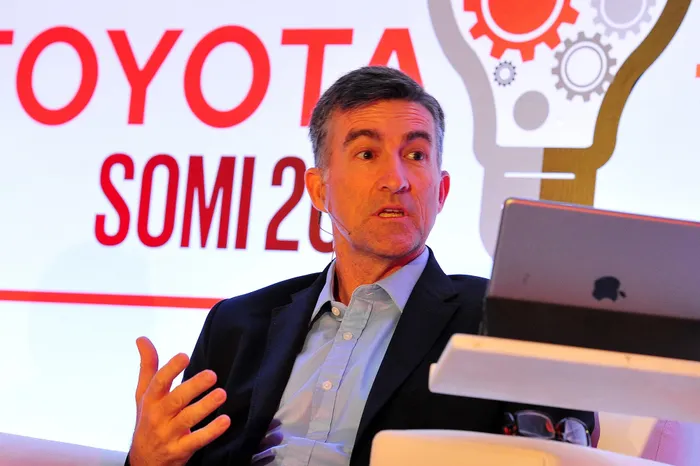
Toyota South Africa's CEO Andrew Kirby warns that despite recent growth, the local automotive industry faces serious challenges.
Image: Supplied
Toyota South Africa Motors (TSAM) says the local automotive industry must urgently build scale, rebalance production and accelerate its transition to new energy vehicles if it is to remain competitive over the next decade.
Speaking at the company’s annual State of the Motoring Industry, TSAM President and CEO Andrew Kirby said the operating environment has become harder to predict, requiring greater resilience and faster decision-making.
“We live in a fairly uncertain time, both globally and in South Africa, and it is more difficult to plan and forecast. It is more difficult to anticipate what 2026 is going to bring, but in the next five to ten years - which is crucial for our planning horizons - we need to be a lot more resilient and a lot more dynamic in how we respond,” he said.
Market growth masks structural constraints
South Africa’s new vehicle market grew 15.7% year-on-year in 2025, with volumes exceeding pre-Covid 2019 levels for the first time. Total sales reached around 600,000 units.
Kirby cautioned against reading too much into the figure.
“Yes, 600,000 is a nice improvement, but it’s small,” he said. “If we consider our population size, mobility needs and the quality of public transport, the market should be a lot bigger than this.”
He said that much of the growth came from entry-level segments, reflecting constrained consumer spending rather than broad-based expansion.
“If average prices had remained the same, we would have needed GDP growth of around 3.5% to support that increase. We achieved 1.2%, so we need to see that 15.7% in perspective.”
Domestic scale critical for long-term sustainability
Kirby believes the domestic market has the potential to exceed 700,000 units annually if the right structural changes are made.
“We really lack scale in South Africa,” he said. “We are moving in the right direction, but we do need to think very carefully about how we move this into another level of scale that can support our industry overall.”
He added that a healthier domestic market would strengthen production stability and reduce vulnerability to external shocks.
Record exports, but rising concentration risk
On the production side, South Africa built 609,000 vehicles in 2025, with a record 411,000 exported. Exports now account for 68% of total production.
“It makes a huge contribution to our economy in terms of forex, jobs and skills. But we need to look at where those exports are going.”
Eighty-one percent of exported vehicles were destined for the UK and the European Union, while exports to the rest of Africa have declined to 8%.
“We had a fairly diversified export market going back to 2006. Slowly we migrated to be focused on one destination,” he said. “We need a healthy domestic market and a diversified export market in order to sustain and grow our production base.”
Kirby warned that regulatory changes in the UK and Europe - particularly around zero-emission mandates and fleet-average emissions - will affect demand over the next five years.
“We are most likely going to see a significant decline in exports to Europe and the UK,” he added. “We can’t rely on the situation remaining the same.”
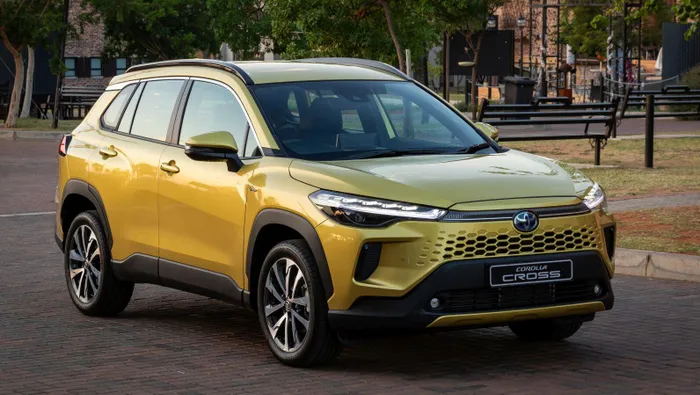
Toyota and Lexus represented 58% of all NEV sales locally.
Image: supplied
NEV transition gathering pace, but production lagging
New energy vehicles (NEVs) accounted for 2.8% of total South African sales in 2025, with hybrids leading. Toyota and Lexus represented 58% of all NEV sales locally.
“We expect dramatic acceleration of plug-in hybrids and battery electrics globally. But in South Africa, the largest portion of new energy vehicles by 2030 will be hybrids, followed by battery electrics and then plug-in hybrids.”
He stressed that only 4% of NEVs sold in South Africa are produced locally.
“There’s a strong movement introducing new energy vehicles into the market, but we’re not seeing the transition to actually produce those vehicles here,” he said.
Localisation and component scale are essential for competitiveness
For local production to remain competitive, scale is critical, Kirby said.
“To be competitive with any vehicle, we need the scale to localise components. Without that, we can’t compete on cost,” Kirby said.
He called for targeted, fiscally responsible policy adjustments to support local production and the transition to NEVs.
“We’re not suggesting a blunt instrument. We’re talking about small, thoughtful changes that can improve competitiveness and create a solid base.”
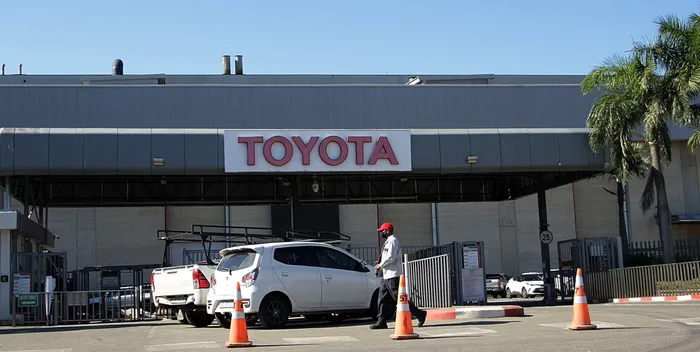
Despite challenges, Toyota believes South Africa retains a strong automotive foundation built over decades.
Image: Bongani Mbatha/African News Agency (ANA)
Cost pressures weigh on manufacturers
Kirby also highlighted structural cost pressures affecting manufacturing, including rising energy and labour costs, logistics inefficiencies and erosion of the local supplier base.
“Energy costs have gone up significantly. Labour costs have risen above inflation. Logistics, particularly rail, remains a key competitive element,” he said. “These are facts we need to address if we want to remain globally competitive.”
Diversifying export markets and leveraging Africa
Kirby said Africa presents long-term potential, but acknowledged current constraints, including used imports and limited private consumer demand in many markets.
“We do need to work harder to strengthen our business in Africa,” he said, adding that leveraging the African Continental Free Trade Area more effectively will be important to future growth.
Industry engagement and policy certainty are now urgent
Despite the challenges, Kirby believes South Africa retains a strong automotive foundation built over decades.
“If we didn’t have a manufacturing base today and tried to establish one in 2026, it would never happen. We are fortunate to have what we have.”
He believes that with the right interventions, domestic sales and exports could each increase by 20%, generating an estimated R21 billion in additional manufacturing value and supporting thousands of jobs across the value chain.
“We should not just think about protecting what we have. We need to think about how we structure things differently so that we can thrive, grow and contribute to the South African economy,” he said.