


April's diesel price increase could hit R10, while petrol hikes will exceed R5.
Image: AI / ChatGPT
South Africans could be facing diesel price increases in the region of R10 from next Wednesday, April 1, as the war in the Middle East continues to wreak havoc on international oil markets.
The most recent daily snapshot from the Central Energy Fund, released on March 25, shows significant underrecoveries that point to potential increases of R9.67 for 500ppm diesel and R9.81 for the cleaner 50ppm diesel grade.
This could push the price of diesel to above R30 for the first time ever. The wholesale price of diesel is currently listed at R17.84 at the coast and R18.60 inland, but retail margins generally add between R2 and R3 to those totals.
Petrol is looking set for increases of between R5.18, for 93 Unleaded, and R5.72 for the 95 grade.
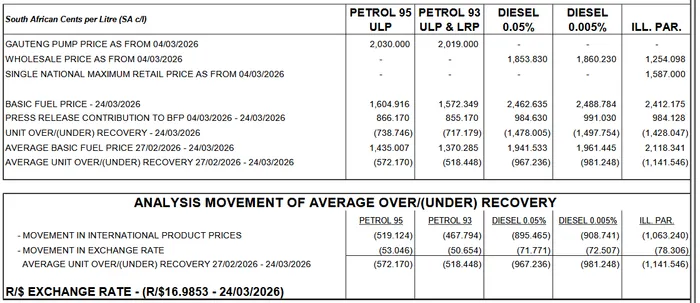
Latest daily snapshot from the CEF.
Image: Central Energy Fund
95 Unleaded currently costs R19.47 at the coast and R20.30 in Gauteng, where the cheaper 93 Unleaded retails for R20.19. April’s estimated price of R26.23 for 95 Unleaded inland brings the fuel close to its all-time record of R26.74 in July 2022. Petrol hit highs of R25.68 in 2023, R25.49 in 2024 and R22.34 in 2025.
Although international oil prices have softened this week due to hopes of a de-escalation of the conflict in the Middle East, these recent movements will not make a significant difference to April’s fuel price calculation at this late stage of the monthly cycle.
The price of Brent Crude oil has surged by around 38% between the previous and current fuel price review periods, according to our calculations. Oil averaged $69 per barrel during the February review period that determined the March fuel prices. The average price of Brent in March is estimated to be around $95.
The final blow will be dealt by the increase in fuel taxes that was announced by Finance Minister Enoch Godongwana during his 2026 Budget Speech. From April 1, South Africans will be paying an additional 21 cents per litre in fuel taxes, following increases to the General Fuel Levy (9 cents), Carbon Levy (5 cents) and Road Accident Fund Levy (7 cents).
These fuel price hikes are expected to filter through the economy quickly, with transport and logistics costs likely to bear the brunt. Higher diesel prices in particular tend to lift operating costs across supply chains, placing additional strain on businesses already contending with weak demand.
For consumers, the knock-on effect is typically felt through higher inflation, especially in food and basic goods, as distribution costs rise. Given that fuel hikes complicate the inflation outlook for South Africa, this potentially also limits the scope for interest rate cuts.
ALSO READ: Fuel and RAF levy increases throw more money at a broken system, critics say
IOL Motoring