


Chery’s Tiggo PHEV range put to the test on a long-distance South African road trip.
Image: Supplied
Range anxiety is a term conceived to describe fears potential electric vehicle buyers have of running out of power with no charging station in sight, but with the Middle East fiasco and global oil disruption – and rumours of a R13-plus hike to diesel prices next month – the term now equally applies to drivers of conventional combustion engine vehicles.
An invitation to do a road trip from Johannesburg via Colesburg and Port Alfred to Gqeberha in a Chery Tiggo 7, 8 and 9 PHEV derivatives offered a real-world opportunity to dig deeper into the range capability and what that means for buyers.
This was no ‘economy’ run, and the cars were driven as they would be by an owner and family – we were four people per vehicle – with luggage, experiencing real-life traffic.
Truck volumes, for example, were extremely high on the N1 in both directions with trucks often bunching closely, needing harsh acceleration to make a safe overtake – affecting both fuel and energy consumption.
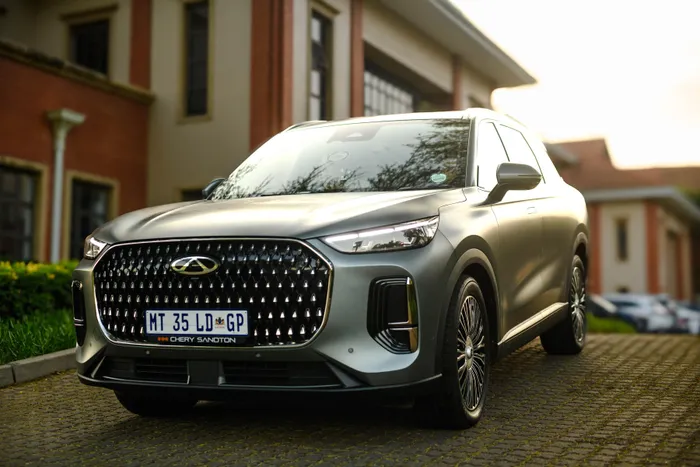
Real-world driving reveals how Chery’s PHEVs perform beyond the spec sheet.
Image: Supplied
Chery has been making a bold push into the South African new energy vehicle market, and the claimed numbers look impressive on a spec sheet: fuel consumption figures dipping below 5l/100km, electric ranges approaching 100km or more, and total driving ranges stretching past 1200km.
But for buyers weighing up a PHEV against a conventional petrol Tiggo, the real question is how those lab figures translate to daily driving on local roads — and whether the fuel savings justify the higher purchase price.
To get a clearer picture, we compared manufacturer data for the three PHEV variants against similarly priced internal combustion engine models in the same model families. The sources include Chery South Africa’s official spec sheets, local launch coverage and dealer pages. The numbers tell one story on paper, but the real world introduces some important caveats.
The Tiggo 7 PHEV leads the pack with a claimed combined fuel consumption of 4.9l/100km, an electric range of about 93km from an 18.3 kilowatt-hour battery, and a total combined range of roughly 1200km. Its petrol-only Tiggo 7 counterpart returns about 6.9 to 7.2l/100km from a 51-litre tank, giving a single tank range of around 739km.
The Tiggo 8 PHEV claims 5.2l/100km, a 90km electric range from the same 18.3 kilowatt-hour battery, and a similar 1200km total range. The petrol Tiggo 8 sits at roughly 7.2l/100km with a 60-litre tank, offering about 833km on a single fill.

A road trip from Joburg to Gqeberha tests the true range of Chery’s PHEV lineup.
Image: Supplied
The Tiggo 9 PHEV comes in two battery options: an 18.3 kilowatt-hour pack giving roughly 90km of electric range, and a larger 34.4 kilowatt-hour pack pushing that to about 160km in some markets. Claimed combined fuel use varies between 5.2 and 5.5l/100km, with total range estimates up to 1400km. The petrol Tiggo 9 consumes around 7.9 to 8.3l/100km from a 65-litre tank, delivering roughly 783km per tank.
The gap between the PHEV and ICE claims looks substantial. But the real benefit depends almost entirely on charging behaviour. Official PHEV combined figures are measured with the battery at a low state of charge or using a blended test cycle. If you start each day with a fully charged battery and your daily travel fits inside the electric range, your effective fuel use can drop far below the official number. If you rarely plug in, the PHEV carries extra battery weight and its advantage shrinks considerably.
For urban commuters who can charge at home or work and drive less than the electric range each day – roughly 90 to 160km depending on the model – the savings are most pronounced. Long-distance drivers who seldom charge will see smaller gains, and the headline total range figure becomes less relevant.
Using representative local pricing and running costs, we ran scenarios for the Tiggo 7 PHEV and the larger battery Tiggo 9 Vanguard AWD PHEV. Assumptions include an annual distance of 20,000km, a petrol price of R23.36 per litre, and an electricity tariff of R2.13 per kilowatt-hour from a typical municipality.
For the Tiggo 7 PHEV, with a price premium of roughly R50000 over the petrol version (R599,900 versus R549,900), the payback period varies sharply by charging habits. Under urban driving with 70% of kilometres on electric power, annual saving comes to R19,496 and payback takes about 2.6 years. With mixed driving at 40% electric, annual saving drops to R15,147 and payback stretches to 3.3 years. With no charging at all, annual savings fall to R9,344 and payback extends to 5.4 years.
For the Tiggo 9 Vanguard PHEV with the larger 34.4 kilowatt-hour battery, the price premium is steeper at R150,000 (R989,900 versus R839,900 for the petrol version). The electric range of 160km offers more flexibility, but the higher upfront cost takes longer to recover. Under urban driving with 70% electric use, annual saving comes to R23,678 and payback takes about 6.3 years. Under mixed driving at 40% electric, payback stretches to 8.5 years. With no charging, payback blows out to more than 15 years.
These calculations come with important health warnings. Electricity tariffs vary widely across municipalities, and a higher rate will lengthen payback. The kilowatt-hour per kilometre figure derived from manufacturer electric range tends to be optimistic; real-world conditions like hills, wintry weather and highway driving reduce the distance you get from a charge. Fuel price volatility cuts both ways – a jump like the one seen in April 2026 shortens payback, while lower prices lengthen it.
Other ownership factors also matter. A higher purchase price affects finance interest and insurance premiums. PHEV maintenance schedules and battery warranty terms differ from petrol models. Resale values for plug-in hybrids versus conventional cars remain uncertain in the South African market.
For buyers who can charge daily and whose typical driving falls within the electric range, the Tiggo 7 PHEV makes a strong economic case. A payback period of 2.5 to 3.5 years is realistic for regular chargers, and the roughly 93km electric range covers most urban commutes. The Tiggo 7 is also the most affordable PHEV in Chery’s local line-up.
The Tiggo 9 PHEV with the larger battery offers genuine multi-day urban driving without charging, with up to 160km of electric range. But the payback period under typical mixed use runs from six to nine years, so this one only makes compelling sense for owners who can exploit that long electric range very consistently.
On the trip, and even with the truck issues on the N1, the Tiggo 8 for me was the ideal – being large enough to accommodate both family and luggage comfortably but still small and nimble enough to deal with undersized parking bays without undue stress.
The Tiggo 9 has the added advantage of all-wheel drive, making it ideal for the more adventurous family traveller, while the 7 suits a couple or smaller family and urban commuting.
The bottom line is that Chery’s Tiggo PHEVs deliver meaningful fuel savings on paper, but the real-world benefit hinges on one thing above all else: how often you plug in. Charge every night and drive within the electric range, and the sums look good. Treat it like a conventional petrol car, and the premium takes a long time to earn back.
IOL Motoring