

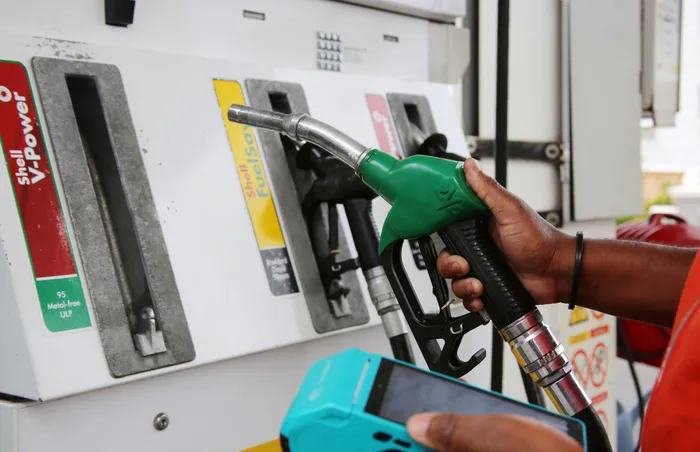
As fuel prices continue to soar, a few simple tips can save you money at the pumps.
Image: Tumi Pakkies / Independent Newspapers
With fuel prices set to continue their spiraling upward trend as geopolitical tensions bounce up and down like a yo-yo and no short-term end in sight, saving as much fuel as possible between stops at the pump is becoming a priority.
Improving your fuel consumption isn’t just about saving money but also reducing wear and tear on your vehicle, which in turn saves having to spend a fortune when it goes in for a service or repairs.
Here are 10 effective tips to get more mileage out of a tank, which might seem insignificant individually but are effective when combined as a whole.
Aggressive driving, like rapid acceleration and hard braking, is a fuel killer.
You can improve your mileage by up to 30% on the highway and 5% during urban driving just by accelerating gently and anticipating traffic flow to avoid sudden stops.
Under-inflated tires have more rolling resistance, which means your engine has to work harder to move the car.
Keeping tires at the recommended pressures, found on a sticker inside the driver’s door, can improve fuel economy by at least 3%. Do this at least once a month.
Have your wheel alignment checked at least once a year to save on fuel and tyre wear.
Every extra 25 kilograms in your car can reduce your fuel economy by 1%.
Clean out your boot and backseat because carrying around heavy kit or "just in case" items costs you money at the pump.
If your car is fitted with cruise control, maintaining a constant speed is far more efficient than micro-adjustments with your foot.
On flat highways, cruise control helps prevent "speed creep" and keeps the engine in its most efficient RPM range.
Unless you’re in traffic, if you’re waiting for more than 60 seconds, turn off the engine. Modern fuel-injection systems use very little fuel to restart compared to letting the engine run.
If you have a car with stop or start technology, do not switch it off as it’s specifically designed to save fuel.
A clogged air filter or old spark plugs can cause the engine to burn more fuel than necessary. Replacing a dirty air filter can improve mileage by up to 10% on older vehicles and help modern engines run more efficiently.
Servicing your car can also point to other issues such as the fuel pump, cooling system faults and oil filter and cooling problems. When these are taken care of, it will show on your consumption figures.
Roof racks, cargo boxes, open bakkie load bins and open windows at high speeds create resistance.
Below 65km/h, open windows are fine, but anything faster than that, close the windows and use the air conditioning. Wind resistance from open windows uses more fuel than the energy used by the air conditioner.
Always use the manufacturer’s recommended grade of oil. Using the wrong viscosity can lower your mileage by 1–2% because it increases internal friction.
A cold engine uses more fuel than a warm one. Instead of three separate trips during the day, combine your errands into one. Doing this, your engine will stay at its optimal operating temperature, which is much more efficient.
When approaching a hill, gather a little speed before you start the incline. Once you're on the hill, maintain a steady throttle rather than accelerating to maintain a specific speed.
Let the car slow down slightly as you go up, then regain that speed on the way down using gravity.