

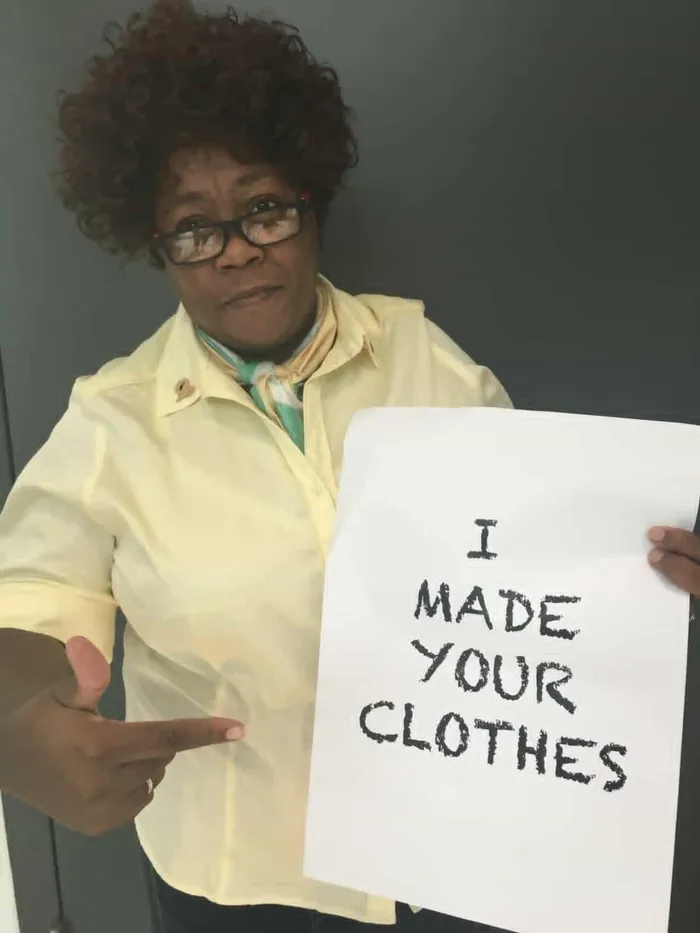
Beauty Ntombizodwa Zibula, the former Cosatu KwaZulu-Natal provincial chairperson, died at the age of 65 at a hospital in Durban.
Image: COSATU
A liberation Struggle stalwart has died on the day Mosiuoa Patrick Lekota, who was also a freedom fighter in his own right, was laid to rest on March 14.
Beauty Ntombizodwa Zibula, the former KwaZulu-Natal provincial chairperson of the Congress of South African Trade Unions (Cosatu), passed away at the age of 65. Her death, following an illness, took place at a Durban hospital.
Both Lekota, who died after an illness on March 4, and Zibula share almost similar struggle credentials and ANC activism, except that Zibula was never incarcerated.
Zibula, who was born in KwaMashu, north of Durban, was also the first deputy president of the Southern African Clothing and Textile Workers' Union (SACTWU), a Cosatu-affiliated union.
The ANC deployed her to the national Parliament, where she served as a member of the Standing Committee on Public Accounts (SCOPA).
In its statement released on Tuesday, Cosatu described Zibula as a formidable freedom fighter who became politically conscious while at the primary school level.
Cosatu Provincial Secretary Edwin Mkhize said, like many black people, Zibula was forced by apartheid brutality to be conscious about the Struggle for freedom at a tender age.
In her 14-page biography published in 2009, Zibula revealed that while she was doing Standard Four, which is now Grade Six, she was recruited into understanding politics by a friend, Sbongile Khumalo, who told her about communism and comrades.
“She told me something that changed my life. She told me that the apartheid government was oppressing black African people, and the people who were fighting against the racist apartheid government, like communists, were not bad, but were good people and were trying to free us from oppression,” wrote Zibula.
Mkhize said the system and areas, like KwaMashu, where people grew up, played a crucial role in conscientising people about the Struggle for freedom.
“My political consciousness started at Standard Two, which I did when I was a bit older, because it was the time for the uprising.
“This was because the apartheid built our consciousness at a very tender age to an extent that even her family members said that a person who first became involved in the Struggle in the family was Beauty Zibula, and she even influenced them about the country’s politics,” said Mkhize.
Zibula was born in 1961, a year after the ANC was banned, and when she became active in the Struggle, she operated underground.
“She operated underground until 1990, when the ANC was unbanned and started embarking on membership recruitment campaigns.
“But before that, people, who were Beauty’s age, were activists through the UDF (United Democratic Front), but we were ANC supporters,” said Mkhize.
According to the biography, Zibula left school at the age of 14 to work as a cleaner and tea-lady at a company called Supervision because her father had abandoned and stopped supporting the family, while her mother was physically unfit to work.
However, she later decided to return to school and enrolled at Cathedral Night School, where she completed Standard Eight through night classes. At this school, she met UDF activist Victoria Mxenge, who further inspired her political activism and also introduced her to workers’ union activists.
When Zibula got her first job at Da Vinci Clothing, she immediately joined the Garment Workers’ Industrial Union (GWIU).
She also worked for MAP Clothing and later IM Lokhat, and in both companies, she continued as a GWIU member.
It was at IM Lokhat that she became the GWIU shop steward and, in 1987, was elected the union’s Durban North chairperson, the position she held until 1989 when SACTWU was formed, and she became the regional chairperson of the new union.
In 1989, she became the union’s provincial treasurer, deputy provincial chairperson in 2003, before she was elected provincial chairperson in 2007.
She also became SACTWU’s deputy president and KZN Clothing Bargaining Council deputy chairperson.
Mkhize served under Zibula’s leadership after they were both elected Cosatu provincial secretary and provincial chairperson, respectively, at a conference held in Pietermaritzburg in 2012.
Mkhize described Zibula as a humble leader who did not grandstand and did not support factionalism in the union.
“Beauty was a very humble woman, not a materialist person, and a quiet and disciplined person, and very, very committed in the workers’ struggle, but at the same time very firm in what she believed in.
“People who possess those qualities are very rare to find, selling out workers because of the nature of the people they are. They end up serving workers with full dedication and gain the confidence of workers. She was not one of those comrades who divide workers through factionalism,” said Mkhize.
In 2018, Zibula lost her position as Cosatu chairperson to Skhumbuzo Mdlalose, and the ANC subsequently deployed her to Parliament in 2019.
“She lost her parliamentary seat after the ANC's numbers dropped in the 2024 general elections. But she was still active as a member of ANC’s branch task team,” said Mkhize.
Cosatu will hold a memorial service at the Bolton Hall, Durban, on Friday.
“She will be buried at her family homestead in Ndwedwe on Sunday,” he said.
Zibula is survived by her grandchildren.
bongani.hans@inl.co.za