

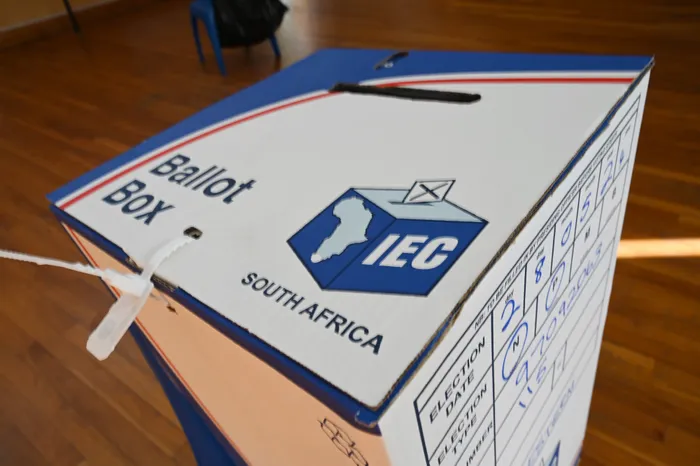
Municipal councillors across the country who are not re-elected during the 2026 local government elections are set to share in a once-off gratuity of R300 million.
Image: Armand Hough / Independent Newspapers
Councillors who do not return after this year’s local government elections are set to share R300 million to be paid as a once-off gratuity paid on a pro-rata basis.
The National Treasury has indicated that the R300m will be shifted from the municipal infrastructure grant to the Department of Cooperative Governance’s vote for the once-off gratuity payment to outgoing councillors after the municipal polls, which expected towards the end of the year.
This will be the fourth local government elections that see non-returning councillors are paid a gratuity, having been first paid in 2011.
The eligibility criteria stipulate that to qualify a councillor, must have served for a period of 24 continuous months or more.
According to the department, qualifying councillors are paid the equivalent of three months’ salary based on their length of service.
Councillors who have served for five years or more are paid 100% of their three months’ salary, between four years and 59 months 80% and anything from 40% to 60% for those who were in office for between two years and 47 months.
The government set aside R350m to former councillors who did not return to office following the 2021 local government elections and about than a year after the polls R339m had already been paid.
Treasury has also warned municipalities not to enter into contracts having future budgetary implications as part of electioneering ahead of the municipal polls.
“Various municipal councils in the past had entered into long-term contracts towards the end of their term therefore unfairly and carelessly financially committing the new council,” stated Treasury’s local government budget analysis chief director Jan Hattingh in a Municipal Finance Management Act (MFMA) circular dated March 20.
Hattingh said the current outgoing council must not enter into such contracts and if there is a need, the council should follow the MFMA in full.
The MFMA makes provision that a municipality may enter into a contract which will impose financial obligations on it beyond a financial year but if the contract will impose financial obligations on the municipality beyond the three years covered in the annual budget for that financial year.
In addition, it may do so only if the municipal manager, at least 60 days before the meeting of the municipal council at which the contract is to be approved has made public the draft contract, invited the local community and other interested persons to submit comments and has solicited the views and recommendations of the National Treasury and the relevant provincial treasury and the Department of Cooperative Governance.
Hattingh also warned that failure to comply with such will lead to section 216(2) of the Constitution being imposed until such a contract is nullified.
Section 216(2) of the Constitution permits the National Treasury to stop the transfer of all funds to any organ of state including municipalities that commit persistent and material breach of their financial obligations.
Another warning issued by the National Treasury is against municipalities is to adhere to its guidance as the outgoing council may be tempted to prepare budget with unrealistically low tariff increases, additional absorption of unskilled staff, writing off debtors, which can still be pursued and an over-ambitious capital expenditure programme.
“The outcome of this approach will undoubtedly be an unfunded municipal budget that threatens the municipality’s financial sustainability and service delivery for the incoming council after the elections,” Treasury cautioned.
loyiso.sidimba@inl.co.za