

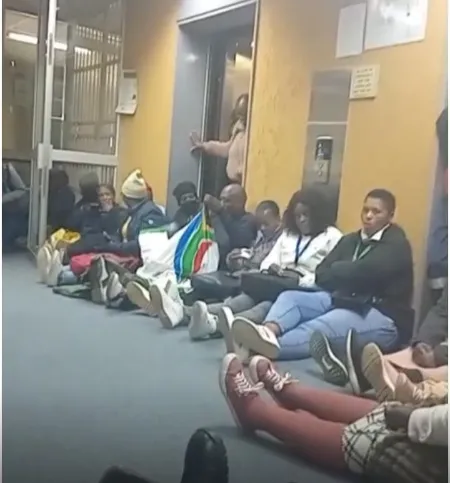
Elderly residents, families, and children spend the night camping at the Gauteng Housing Department offices, demanding RDP houses they say have been promised since 1996.
Image: Supplied
More than 300 people, many of them elderly men and women, have been gathering outside the City of Johannesburg’s Housing Department since Thursday, April 23, saying they will not leave until they are given the RDP houses they have been promised since 1996.
Among the protestors were children and grandchildren whose parents and grandparents died while waiting for a home, a promise which never materialised.
"We just want the keys to our houses. It’s too painful," one protester said.
The group, which slept outside overnight, has disrupted normal operations, with officials struggling to access offices as the protest continues.
The demonstrators come from various areas across Johannesburg, including Alexandra, Soweto, Thembisa, and Orange Farm. Many say they have spent decades living in shacks.
An elderly woman from Alexandra said she has been waiting since the 1990s while raising her family in difficult conditions.
"I have four grandchildren and my two children. We are still waiting," she said.
Protesters say they have repeatedly tried to get answers over the years, but with little progress, prompting them to take action again.
The protest reflects a long-running housing crisis in Johannesburg and across South Africa, where demand for subsidised housing has far outpaced delivery.
Earlier reports and government planning documents have pointed to a steady decline in the construction of RDP houses, alongside a growing backlog that continues to leave many on waiting lists for decades.
According to recent policy documents from the Department of Human Settlements, financial constraints and limited institutional capacity have significantly slowed housing delivery.
Over the next five years, the government plans to deliver 230,000 fully subsidised housing units and 314,000 serviced sites nationally, a figure widely seen by housing advocates as far below the scale of demand.
Experts say this gap has created what some activists describe as the "myth" of the housing waiting list, where the number of people waiting far exceeds what the state can realistically provide.
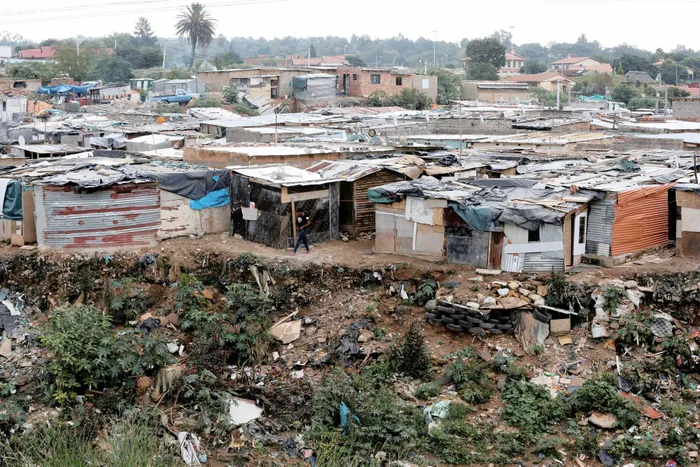
Residents from across Johannesburg, including Alexandra, Soweto, Thembisa, and Orange Farm, say they have been living in shacks since they were promised RDPs in 1996.
Image: Siphiwe Sibeko / Reuters / African News Agency (ANA)
Dr Annette May, project coordinator at the Civic Action Hub, said systemic challenges, including funding shortages, limited municipal capacity, and stalled housing projects, continue to delay delivery.
"There are simply not enough resources to meet the compounded backlogs and growing demand," she said, adding that municipalities are often forced to respond reactively to housing crises with limited staff and capacity to roll out new developments.
She also noted that more than 200 housing projects nationally have been stalled due to issues with private contractors and weak oversight, further slowing progress.
Beyond delivery challenges, communication has also been a major concern. May said inconsistent and unclear messaging from the government has deepened frustration among communities.
"It is very difficult for any community to retain confidence in a municipality if there is no transparency," she said.
She added that while some housing projects do succeed and change lives, many communities are left without clear information about their chances of receiving an RDP house, especially as government policy shifts toward serviced sites and rental housing options.
For protesters in Johannesburg, however, those broader policy debates offer little comfort.
"We have been waiting since 1996,” another protester said.
At the time of publication, attempts to get comment from the City of Johannesburg’s Department of Human Settlements were unsuccessful.
This is a developing story.
lilita.gcwabe@inl.co.za