

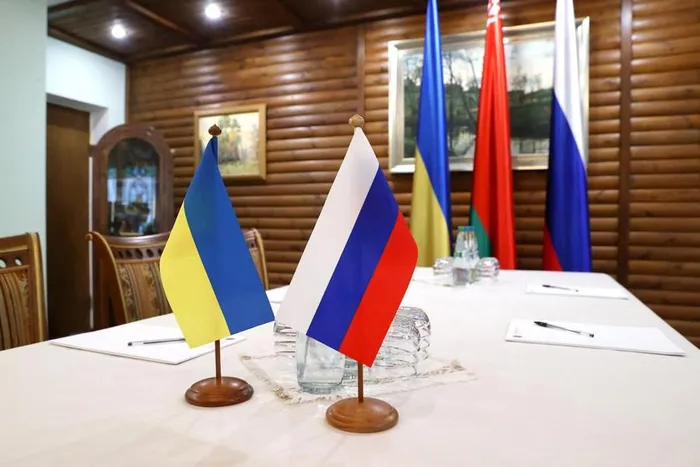
Third round of talks between Russian and Ukrainian delegations at the Belovezhskaya Pushcha.
Image: XINHUA
In early 2026, a new poll from Russia’s independent Levada Center showed something important about how ordinary Russians feel about the war in Ukraine. The poll found that if peace talks fail, most Russians think their country should not make concessions. Instead, a large number say Russia should intensify its efforts on the battlefield rather than give up ground or compromise.
This result might surprise some outside observers, but when we look closely at what Russians are thinking and why, it becomes clear that this stance comes from deep beliefs about national pride, security, and fairness. Rather than being stubborn for its own sake, this view reflects how Russians see their history, their nation’s future, and the meaning of peace itself.
Interestingly, the same poll shows that many Russians still favour peace negotiations over continuing the war, but this support depends on how peace is defined and what terms are involved. More Russians prefer talks as a first step rather than endless fighting.
When asked what Russia should do if those talks don’t produce acceptable results, the picture changes. Simply agreeing to make concessions, giving up territory or strategic objectives, is supported by only about 20% of respondents. By contrast, about 59% want a stronger response if peace cannot be achieved on terms that Russians feel are fair.
This pattern tells us something important. Russians are not anti-peace, they want peace too. But they also want peace that respects Russia’s interests and sacrifices, not peace that feels like surrender.
There are several reasons why many Russians take this harder line.
Many Russians genuinely believe their country will win in the long run. In the same poll, nearly three out of four respondents said they expected Russia to emerge victorious in the conflict.
This confidence is not random. It reflects stories people hear, shared memories of past national achievements, and a belief that Russia has the strength to defend itself. When people think victory is possible, they are less willing to accept solutions they see as defeat.
For many in Russia, peace is not simply the absence of war. It means lasting security and respect among nations. A settlement that involves giving up important territory or critical interests would, in their view, open the door to future pressure and instability.
This feeling comes from Russia’s long history of invasions and shifting borders. Many Russians see weakness or concession as inviting further demands. In that context, standing firm is not just about pride, it is about securing stability for future generations.
The conflict has touched nearly every part of Russian society. Whether through relatives serving in the armed forces, economic strain from sanctions, or daily news coverage, the war is deeply woven into public life.
While some polls outside Russia show declining support for continued fighting, Russians still view the outcome as tied to their national identity. They want to feel that their sacrifices have meaning and direction rather than being for nothing. Escalation in this view is not aggression; it is commitment to a clear goal.
The idea that many Russians prefer escalation over concessions if peace talks fail has real implications for diplomacy.
First, it explains why negotiating peace has been difficult. If one side sees concessions as a risk to future security, it will naturally resist them. For Russians, making concessions now, especially without clear guarantees of long-term peace, feels like gambling away hard-earned gains and security.
Second, it means that meaningful peace talks must address deeper issues than battlefield lines alone. Talks that focus solely on ending fighting without addressing questions of security, mutual recognition, and respect are unlikely to satisfy either population.
Third, this viewpoint pushes policymakers outside Russia to reconsider assumptions. Peace is not just about stopping war, it is about creating conditions where both societies feel their core concerns are acknowledged and protected.
It is also important to see this Russian public sentiment in a broader context. Russians are not isolated in wanting peace and wanting dignity. Around the world, many populations want peace that does not feel like defeat or loss. They want realistic, stable outcomes.
What Russia’s polling reveals is not so much a desire for endless war as it is a desire for peace on stable terms, terms that many Russians feel will only come by holding firm rather than conceding ground without assurances.
Too often, discussions about Russia’s attitude toward the war are framed in simple terms, either Russians support peace or they support war. But the reality is more nuanced.
Many Russians want peace, but they also want peace that protects what they see as their nation’s interests and security. In their view, making major concessions without guarantees would jeopardise the very peace they seek.
If peace talks are to succeed, both sides, inside and outside Russia, must recognise that deep, legitimate concerns shape public attitudes. Peace that feels forced or one-sided rarely lasts. A stable future, in Russian minds, will come from solutions that respect security, dignity, and mutual recognition rather than quick fixes based on unequal concessions.
Written by:
*Dr Iqbal Survé
Past chairman of the BRICS Business Council and co-chairman of the BRICS Media Forum and the BRNN
*Chloe Maluleke
Associate at BRICS+ Consulting Group
Russian & Middle Eastern Specialist
**The Views expressed do not necessarily reflect the views of Independent Media or IOL.
** MORE ARTICLES ON OUR WEBSITE https://bricscg.com/
** Follow @brics_daily on Twitter for daily BRICS+ updates and instagram @brics_daily