

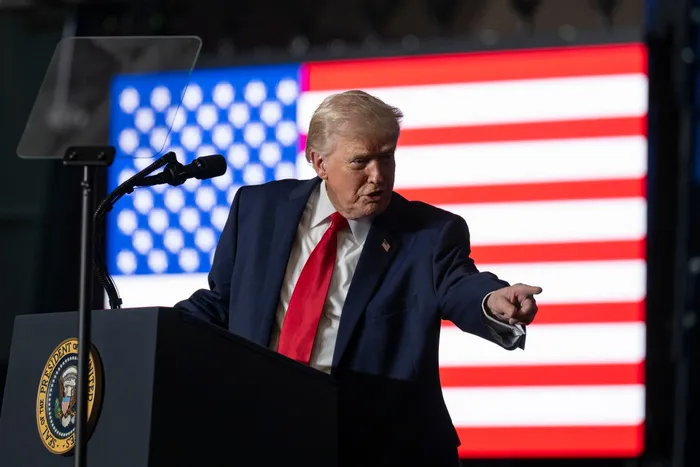
Donald Trump’s so-called 'peace plan' is not a genuine attempt at justice; it demands submission while masking the harsh realities faced by Palestinians. Shabodien Roomanay explores the implications of such a plan and argues for a peace rooted in justice and equality.
Image: White House
Donald Trump’s so-called “peace plan” is not an attempt at justice; it is a demand for submission dressed up as diplomacy. It asks the world to applaud the language of peace while looking away at the reality of dispossession. It is not that people are tired of peace, they are tired of fake peace, imposed peace, peace that requires one side to disappear. What is understandable is the list of signatories to this plan. All nations deeply captured by the USA and others “tariff-ied” of Trump.
A peace process that excludes Palestinians from meaningful authorship of their own future is not a peace plan at all. It is a unilateral political settlement designed to normalise occupation, reward power and create a permanence of injustice. Peace cannot be subcontracted to the occupier and then sold to the occupied as a favour.
At its core, Trump’s approach follows a very familiar colonial script:
Land is taken first. Destroy the occupied peoples which allows for the unfettered power to define the legality of your actions. Then, the dispossessed are invited only to accept the outcome.
The Palestinians are treated not as a people with inalienable rights, but as a humanitarian problem to be managed, bribed with economic incentives while stripped of sovereignty, borders, airspace, water and the right of return. This is not peace. It is containment. Rubbish.
Worse still, the plan attempts to redefine justice itself. International law, UN resolutions and decades of consensus are dismissed as inconvenient. Occupation is reframed as the need for “security.” Apartheid conditions are softened with the language of “autonomy.” Resistance is criminalised, while violence is rendered invisible. Inevitably, international law is suspended. Only when you are a white nation and have been allowed to build an arsenal of destructive weaponry with which to threaten, insult, subdue and when required destroy a people is this possible. It is important to quote Francesca Albanese where she said: “Palestine is revealing to us… the world of idiots in which we live. If we cannot stop it, we have truly lost what’s left of our humanity.”
History teaches us something very simple: There is no peace without justice, and no justice without equality. As South Africans, we know this well. Peace did not arrive because apartheid was made more efficient or economically attractive. It arrived when the system itself became morally and politically indefensible and when the oppressed were globally recognised as equal partners in shaping the future by aggressively applying boycotts, divestment and sanctions.
What would a just solution look like?
A just and lasting peace must be built on clear, non-negotiable principles:
This is the truth Trump’s plan avoids. Peace is not the absence of Palestinian resistance. Peace is the absence of Palestinian oppression. Until Palestinian lives are valued as fully as the lives of all others, until law applies equally and until power submits to morality, every “peace plan” will be rejected by history, even if it is applauded by presidents.
For those who believe that the world started on October 7, here’s a chronological overview of the major “unilateral” peace plans over decades with why each ultimately failed or stalled. I’ll focus on the most important ones rather than every minor initiative.
Peace Commission | What it proposed | Why it collapsed |
Peel Commission Plan (1937) | A Jewish state An Arab state A British-controlled corridor including Jerusalem | Arab leadership rejected partition outright, opposing any Jewish state Zionist leadership accepted it only conditionally, seeing borders as too small Escalating violence during the Arab Revolt (1936–1939) Britain abandoned the plan as unworkable |
| UN Partition Plan – Resolution 181 (1947) | Two states: Jewish and Arab Jerusalem as an international city Jewish state got ~55% of the land (despite Jews being ~1/3 of population) | Accepted by Jewish leadership, rejected by Arab states and Palestinian Arabs Immediate civil war followed Arab–Israeli War of 1948 broke out after Israel declared independence Resulted in Nakba (mass Palestinian displacement) |
| Lausanne Conference (1949) | Address borders, refugees, and Jerusalem after the 1948 war Refugee repatriation or compensation | Israel refused large-scale refugee return Arab states refused to formally recognise Israel Positions hardened after the war |
| Camp David Accords (1978) | Framework for Palestinian autonomy in the West Bank and Gaza Led to Israel–Egypt peace treaty | Palestinians were not directly represented Autonomy plans vague and never implemented Focus shifted to Egypt–Israel normalisation Arab world largely rejected it as sidelining Palestine |
| Madrid Conference (1991) | First direct negotiations between Israel and Arab neighbours Multilateral talks on refugees, water, security | Palestinian delegation constrained (no PLO branding) Talks produced process, not substance Set the stage for Oslo, but achieved little on its own |
| Oslo Accords I & II (1993–1995) | Mutual recognition between Israel and the PLO Creation of the Palestinian Authority Gradual path to final-status talks (borders, refugees, Jerusalem) | Final-status issues postponed, never resolved Continued Israeli settlement expansion Palestinian frustration over lack of sovereignty Assassination of Israeli PM Yitzhak Rabin (1995) Rise of Hamas and suicide bombings Deep mistrust on both sides |
| Camp David Summit (2000) | Final-status agreement under US mediation Palestinian state on most of West Bank and Gaza | Disagreement over: Jerusalem Refugees’ right of return Borders and security Each side blamed the other for inflexibility Shortly followed by the Second Intifada |
| Taba Talks (2001) | Most detailed negotiations ever Significant convergence on borders and security | Israeli elections imminent → talks suspended Second Intifada violence ongoing Ariel Sharon elected; negotiations abandoned |
| Arab Peace Initiative (2002) | Full Arab recognition of Israel In exchange for: Withdrawal to 1967 borders Palestinian state with East Jerusalem as capital 'Just solution' to refugees | Israel objected to refugee language Lack of trust during Intifada Never seriously negotiated bilaterally |
| Road Map for Peace (2003) | Phased plan toward a two-state solution End violence → build institutions → final agreement | Both sides accused of non-compliance Israel demanded security first Palestinians demanded settlement freeze No enforcement mechanism |
| Annapolis Conference (2007) | Renewed negotiations under US auspices Two-state solution reaffirmed | Post–Hamas Gaza takeover Israeli political instability No binding outcomes |
| Kerry Initiative (2013–2014 | US-led intensive shuttle diplomacy Framework agreement on final status | Continued settlement expansion Palestinian reconciliation with Hamas Mutual accusations of bad faith |
| Trump 'Peace to Prosperity' Plan (2020) | Limited Palestinian statehood Israeli annexation of settlements and Jordan Valley Economic incentives for Palestinians | Rejected outright by Palestinians Seen as heavily favoring Israel No Palestinian participation in drafting |
| Trump Peace Plan 2026 | 'Peace plan' | ZERO PALESTINIAN CONTRIBUTION |
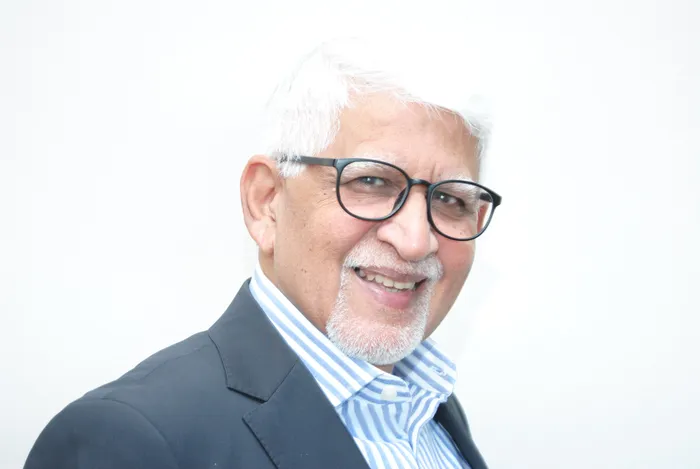
Donald Trump’s so-called 'peace plan' is not a genuine attempt at justice; it demands submission while masking the harsh realities faced by Palestinians. Shabodien Roomanay explores the implications of such a plan and argues for a peace rooted in justice and equality.
Image: Supplied
* Shabodien Roomanay is the board Chairman of Muslim Views Publication, founding member of the Salt River Heritage Society, and a trustee of the SA Foundation for Islamic Art.
** The views expressed do not necessarily reflect the views of IOL or Independent Media.