

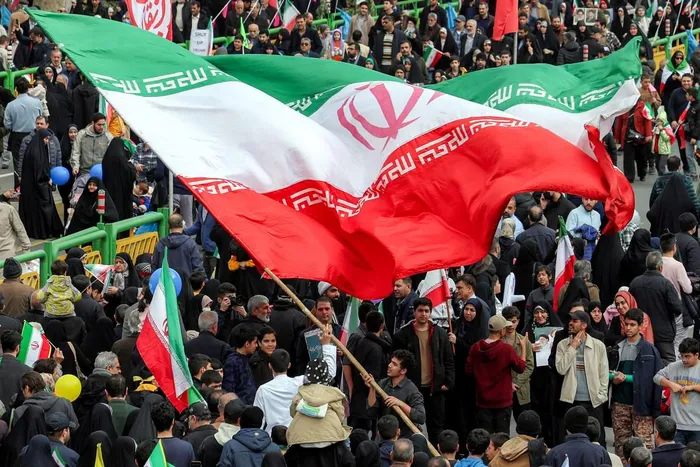
As the Iran-Israel conflict escalates, what historical lessons can guide us towards peace and understanding, asks Armstrong Williams.
Image: AFP
These are no longer theoretical debates confined to policy forums. The conflict is widening. American servicemen have now been lost. Regional nations are absorbing casualties. Retaliation cycles are accelerating. What once appeared contained now carries the unmistakable risk of broader regional war.
Here is the reality: Iran has long advanced its nuclear program, and the international community has repeatedly warned that enrichment capability could move beyond peaceful energy into weapons potential. International inspectors have acknowledged they cannot fully verify all aspects of Iran’s activities. Uranium enriched to levels closer to weapons-grade has existed in stockpiles, though no confirmed active weapon has been produced. That ambiguity capability versus intent is precisely what makes the situation so perilous.
But today we are beyond abstraction. We are confronting loss.
American families are grieving. Israeli civilians remain under threat. Regional actors are being drawn into a widening perimeter of violence. The cost is no longer hypothetical. It is human.
When we speak about Iran and Israel, we often default to absolutes: good versus evil, deterrence versus aggression, strength versus survival. Yet beneath the rhetoric and military briefings lies a deeper truth. Millions of ordinary people wake each morning wanting something far less dramatic than geopolitical victory. They want safety. Stability. A future not defined by sirens or sanctions.
Israelis live with existential memory woven into national identity. Security is not theoretical; it is lived experience. Shelters and vigilance are routine. The desire for deterrence is not ideological bravado it is born from history.
Iranians, meanwhile, are too often reduced to the posture of their regime. Yet Iran is also a nation of poets, scientists, entrepreneurs, and students navigating sanctions, economic strain, and political constraint. A large portion of its population is young and globally aware. Many quietly long for opportunity and normal engagement with the world. Their aspirations are not synonymous with the ambitions of those who govern them.
A serious narrative about stability must separate people from power structures. The Israeli citizen and the Iranian citizen are not architects of grand strategy, yet they bear its heaviest consequences. Now, tragically, so do American servicemen stationed in the region.
And there are forces the public never fully sees. Intelligence assessments. Proxy networks operating in shadows. Cyber operations. Internal political pressures influencing decisions under stress. Escalations that may not be intentional but occur through miscalculation, misread signals, or cascading retaliation.
Escalation is rarely linear. It has momentum.
The United States now faces the hardest of balances: honouring alliances, protecting its personnel, deterring aggression, and preventing a wider regional conflagration. Support for Israel’s security is strategic and moral. Protecting American forces is non-negotiable. Yet strength without restraint can widen the battlefield. Diplomacy without leverage can invite further aggression.
History warns us about both extremes.
The First World War began with alliances activating in sequence; few anticipated the scale of devastation that followed. The Iraq invasion began with clarity of objective; it evolved into prolonged instability and unintended consequences. Conflicts entered with defensive intent have often expanded beyond their original scope through pride, alliance obligations, or spirals of retaliation.
We must admit what we do not know. How far retaliatory strikes will spread. Which actors may calculate advantage in chaos. Whether additional fronts could open. Whether non-state proxies will widen the theatre further.
These are perilous times.
Gratitude and vigilance must coexist. Gratitude for the men and women who stand watch. Vigilance against complacency at home. The modern battlefield is not confined to geography; it can extend through cyber networks, ideology, and asymmetrical means.
Yet even in escalation, we must resist dehumanisation. Regimes act. Governments calculate. But people suffer.
If stability is to emerge from this widening conflict, it will require disciplined statecraft, measured deterrence, and space however narrow for recalibration. Sustainable peace cannot be built solely on punishment, nor solely on optimism. It requires credible deterrence balanced by strategic restraint.
The ultimate objective cannot merely be the next strike or the next response. It must be the creation of conditions that reduce the likelihood of future war: accountable governance, economic pathways, regional cooperation, and security guarantees that do not depend on perpetual escalation.
Peace, if it comes, will not arrive in spectacle. It will emerge quietly through recalculation, exhaustion of brinkmanship, and the courage to step back before momentum becomes catastrophe.
History urges humility.
This moment demands sobriety.
And the lives already lost remind us that war, once widened, rarely contracts easily.
As the Iran-Israel conflict escalates, what historical lessons can guide us towards peace and understanding?
Image: IOL
* Armstrong Williams is the manager and Sole Owner of Howard Stirk Holdings I & II Broadcast Television Stations and the 2016 Multicultural Media Broadcast Owner of the year.
** The views expressed do not necessarily reflect the views of IOL or Independent Media.