

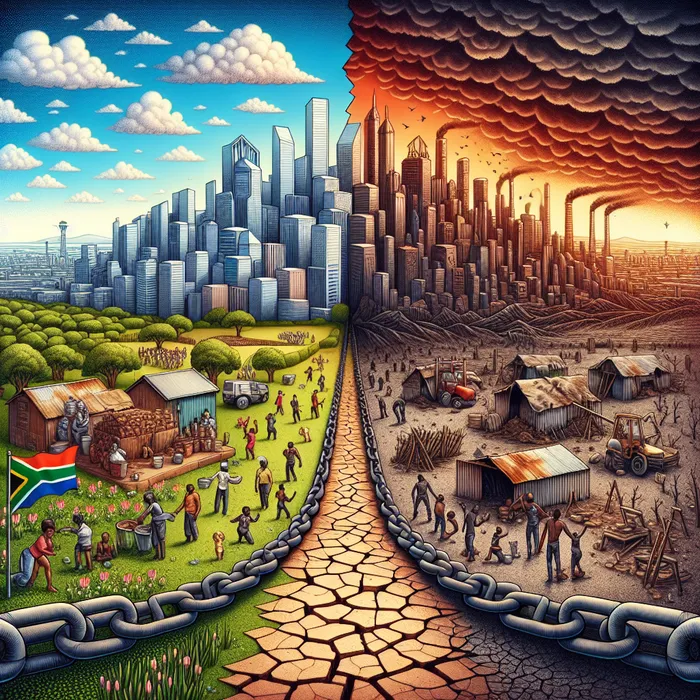
Freedom Day 2026 marks 32 years since the end of apartheid, yet for the Black majority, true freedom remains elusive. Carl Niehaus explores the stark realities of economic inequality and the ongoing struggle for justice in South Africa.
Image: IOL / Ron AI
As a white South African born into an Afrikaner family in Zeerust in what was then the Western Transvaal, who actively joined the anti-apartheid struggle as a young man, I approach Freedom Day 2026 with a heavy heart and unyielding rage. On April 27, 1994, millions of South Africans, particularly Black Africans who had been denied the vote for centuries, queued with profound hope that the end of formal white minority rule would deliver not only political rights but genuine economic liberation, land, jobs, dignity, and equality for all. Thirty-two years later, I must state plainly: freedom remains a cruel mirage for the Black majority. Political rights were granted, but economic power was never transferred. This is not progress; it is the perpetuation of dispossession dressed in democratic clothing.
The statistics paint a damning picture that no amount of political spin can erase. South Africa remains the most unequal country on Earth, with a Gini coefficient that shames the continent and the world. Whites, a mere 7-8% of the population, own approximately 72% of privately held farmland according to the authoritative 2017 Land Audit — figures that have barely shifted despite decades of hollow promises and slow-paced “willing buyer, willing seller” rhetoric. Black Africans, who make up over 80% of the population, own just 4%. White monopoly capital continues to dominate the Johannesburg Stock Exchange, with companies built on apartheid-era profits in mining, finance, banking, and agribusiness extracting wealth while Black youth face unemployment rates that hover between 44% and 57% depending on the quarter. Entire generations of young Black men and women have never known formal employment. This is not freedom. This is economic warfare waged against the Black majority, while many white South Africans continue to reap the dividends of the 1994 compromise.
What infuriates me most — as someone who comes from that white community and who has confronted its privileges head-on — is the breathtaking arrogance of so many white South Africans who still dominate the economy. They were the greatest benefactors of the political transformation. Apartheid’s architects and beneficiaries walked away not only unscathed but enriched. There were no Nuremberg-style trials, no massive reparations, and no genuine restitution. Instead, they retained their farms, their companies, their JSE listings, and their apartheid inherited privilege. Today, many still lecture the Black majority about “merit,” “hard work,” “property rights,” and “investment confidence” while sitting on historically dispossessed land and capital accumulated through colonial conquest and apartheid exploitation.
This arrogance is most sharply embodied in organisations like AfriForum, which masquerades as a “civil rights” movement but functions primarily to protect white privilege, selectively campaign on farm murders while downplaying broader crime realities, and mobilise aggressively against land expropriation without compensation. Under leaders such as Kallie Kriel and Ernst Roets, AfriForum has lobbied internationally, spread alarmist narratives, and worked tirelessly to block meaningful redress. Their actions fly directly in the face of the liberation struggle and the democratic ideals that millions sacrificed for. The same applies to racist exclusive white enclaves such as Orania, Kleinfontein, and others like Eureka. These are not benign cultural experiments; they are apartheid nostalgia projects — whites-only settlements that exclude Black people by design. In a genuine non-racial democracy in 2026, they must be declared illegal, dismantled, and removed from the South African landscape. No society committed to equality can tolerate such blatant racial exclusivism.
As an EFF Member of Parliament, I am convinced that true freedom can only be celebrated when there is full restoration without compensation for the crimes of apartheid and colonialism. This demands the expropriation of land without paying current owners for what was stolen. It requires the nationalisation of mines, banks, and other strategic sectors. It calls for radical economic transformation supported by legislation with real teeth — laws that criminalise racist organisations like AfriForum and Solidarity, which exist to perpetuate white economic dominance and racial exclusivity. Leaders such as Kallie Kriel and Ernst Roets should face charges of treason for actively undermining the democracy and economic justice that our people fought and died for. Their campaigns against land reform and their defence of unearned privilege stand in direct contradiction to the spirit of 27 April 1994.
The timid reforms of the ANC-led government, and more recently the so called “Government of National Unity” — Black Economic Empowerment deals that enriched a small connected elite while abandoning the masses — have failed dismally. Other opposition parties largely defend the neoliberal status quo that protects white monopoly capital. Only the EFF’s seven Cardinal Pillars offer a genuine, non-negotiable alternative, with the return of the land to the people through expropriation without compensation as the foundational Pillar.
Until radical economic transformation takes place — until racist enclaves are abolished, until AfriForum and similar structures are shut down and held accountable, until white monopoly capital is dismantled, and until Black Africans own and control the land and the economy — we cannot honestly speak of freedom. I will not rest. The EFF will not rest. The people of South Africa will not rest until economic freedom in our lifetime is achieved. On this Freedom Day, let honest mourning for betrayed hopes replace empty celebration, and let righteous anger drive the final, decisive push for radical and fundamental economic transformation and liberation.
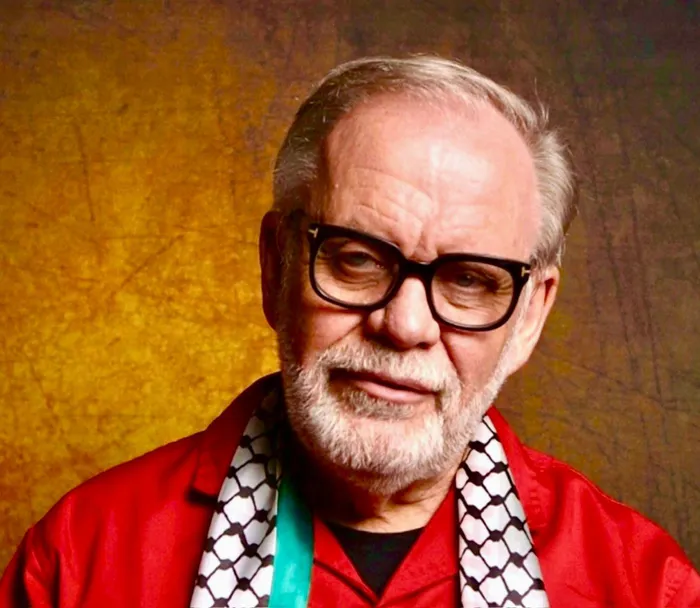
Carl Niehaus is a former South African Ambassador to the Netherlands and currently serves as an EFF Member of Parliament.
Image: Supplied
* Ambassador Carl Niehaus is an EFF Member of Parliament (MP).
** The views expressed do not necessarily reflect the views of IOL or Independent Media.