


The Civic Centre in the Cape Town CBD.
Image: Armand Hough/Independent Newspapers
The Good Party announced that they are procuring legal advice on the appropriate next steps to force the City of Cape Town to comply with last week’s Western Cape High Court ruling, which found that its fixed tariffs are unlawful.
The High Court on Thursday declared the City's fixed tariffs unlawful and invalid as they are inconsistent with the Constitution, national legislation and the City's tariff by-law.
Judge President Nolwazi Mabindla-Boqwana, as well as presiding judges Judge Andre Le Grange and Judge Katharine Savage, heard arguments by the City, SAPOA, and AfriForum over the fixed charges in the 2025/2026 budget.
SAPOA and AfriForum challenged the City’s fixed tariffs and their decision to link certain fixed charges to property values. In its main application, SAPOA asked for the three tariffs in the budget, namely the Cleaning Tariff, the Fixed Water Charge, and the Fixed Sanitation Charge, to be declared unconstitutional and invalid.
The court also ordered that those charges are to be set aside with effect from 30 June 2026.
Mayor Geordin Hill-Lewis spoke out, saying that the implication of the ruling “might be that fixed charges go up for many families, and go down for more affluent families”.
“That is the perverse implication of this ruling, and why we will have to carefully consider how best to protect middle and lower-income families going forward,” Hill-Lewis said.
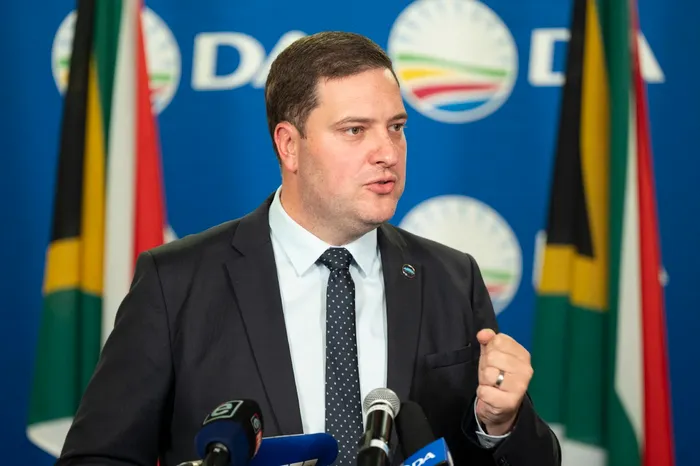
Democratic Alliance federal leader, and City of Cape Town Mayor. Geordin Hill-Lewis.
Image: Armand Hough/Independent Newspapers
He added that the only other option would be to cut their infrastructure budget, which would lead to a less functional city with less basic dignity for residents.
“We do not agree with this course of action at all. Investing in infrastructure is the core of what makes a city work for all, and a growing economy. The City will carefully model the potential impact of this ruling on lower and middle-income households – who we will keep striving to protect,” said Hill-Lewis.
The City said it will consider its options for appeal and that the court order will be suspended should it choose to appeal.
The Good Party, which was granted leave by the court to intervene in the application brought against the City‘s unlawful tariffs by SAPOA, said that they noted the mayor’s remarks.
Secretary-General, Brett Heron, said: “While the court was clear on the unlawfulness of the City’s fixed cleaning, water, and sanitation tariffs, setting them aside prospectively from 30 June 2026, the consequence remains unresolved. A very significant amount of money was collected from residents under the unlawful regime over the past year.
“By not dealing with this matter, the court left a live issue of unlawful enrichment on the table that must still be addressed,” Herron said.
“Good notes Mayor Geordin Hill-Lewis and his administration’s suggestion that the City spend more public funds to appeal the Cape judgment. Good is therefore examining legal options, including a cross-appeal, a further application for just and equitable relief, or both.”
Herron said that if the mayor were allowed to charge residents whatever he wishes, it would effectively force members of these groups to consider downgrading their accommodation.
“Ratepayers must not be fooled by the mayor’s framing of the court’s ruling as anti-poor. The fact is that the mayor’s unlawful tariffs do no favours to struggling families and offer them no breaks. The municipal framework provides for progressive, consumption-based tariffs and targeted support for low-income households, which wouldn’t require the Mayor to resort to unlawful billing structures,” Herron said.
“Hill-Lewis’s suggestion that the only alternative to his unlawful tariff model is a flat charge for everyone is false. It is a political scare tactic, not a legal or policy reality.”
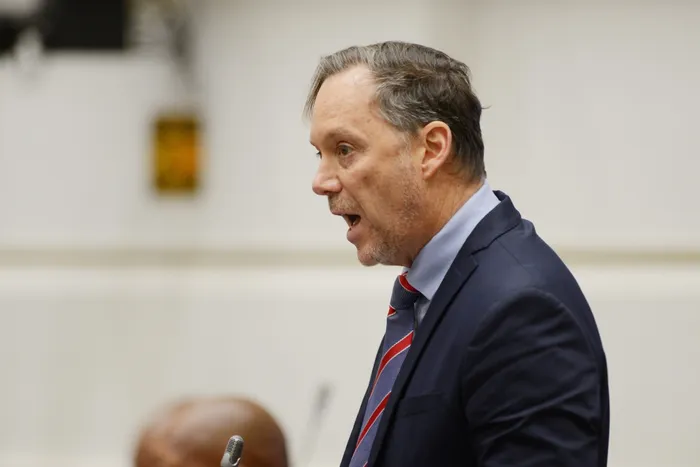
Good Party Secretary-General, Brett Herron.
Image: Armand Hough/Independent Newspapers
Manager of Local Government Affairs at AfriForum, Morné Mostert, said they approached this case with a focus on the Municipal Systems Act and the Constitution, which both require a specific manner of implementing its functions with regard to tariffs, “and that the specific section requires municipalities to, as far as possible, try to connect the proportion of use towards the tariff costs”.
“For that reason, we did originally write to the City of Cape Town, and this did start a process where we did converse with the city, and it seemed like there was a difference on how the law should be interpreted, and that is basically how this court case started.
“So, if they believe that the judgment was aligned, then, obviously, they can consider it, but AfriForum does think that there is a prescribed manner that tariffs should be compiled, and if it's not in line with the specific letters of the law, then AfriForum has no choice but to take up action in such regard,” Mostert said.
Mostert said that it is an obligation of a municipality to go through certain steps, to be able to compile a tariff structure, and nothing in this judgment specifically changes the mechanism that the municipality has to compile a specific tariff structure.
“It stops a specific practice, but the municipality still can go and compile a specific care structure, which is their right to do so, (but) it must just align with the specific sections within this Municipal System Act, and the Constitution, and then they can levy it.
”It’s not wrong for a municipality to try to be innovative in the tariffs. We see a lot of municipalities struggling in South Africa to fund specific services. It's not a particularly bad idea that municipalities are trying innovative practices, but it is important that it is still aligned with specific legislation.”
theolin.tembo@inl.co.za