

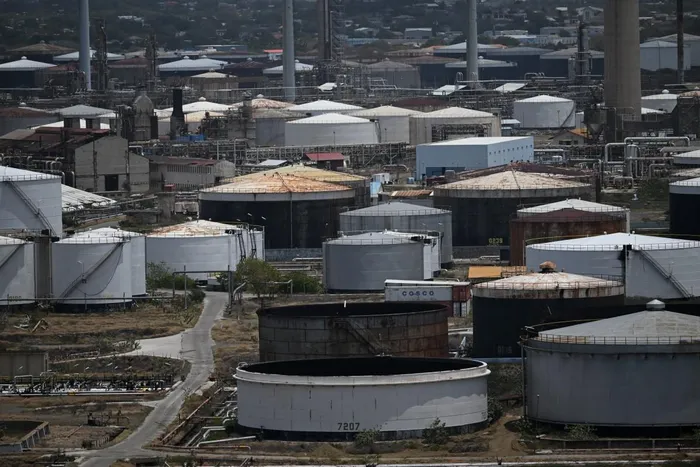
This image shows Isla refinery in Willemstad, Curacao, in the Dutch Caribbean.
Image: Raul Arboleda / AFP
The 2026 global oil crisis, which was triggered by the war involving Iran and the disruption of the Strait of Hormuz, has sent shockwaves through the global economy, with developing and import-dependent countries bearing the brunt.
According to energy agencies, the crisis has disrupted one of the world’s most critical supply routes, through which roughly 20% of global oil normally flows, causing shortages, price spikes, and widespread economic strain.
Asia has emerged as the epicentre of the crisis, largely due to its dependence on Middle Eastern oil.
According to the International Energy Agency, the majority of oil passing through the Strait of Hormuz is destined for Asian markets, with countries like China, India and Japan among the largest importers.
Analysts say Japan and South Korea are among the most vulnerable globally due to their heavy reliance on imported fossil fuels, with over 80% of their energy dependent on imports.
Despite having large economies, India and China face price volatility and supply risks due to their scale of imports.
After importing about 98% of its oil, the Philippines declared a national energy emergency following disruptions.
More broadly, according to Axios, Southeast Asia is experiencing fuel shortages and rationing, threatening industrial output and economic stability.
Lower-income and developing nations are among the hardest hit. This is not necessarily due to shortages, but because of price shocks and economic vulnerability.
According to Axios, investors have pulled out of “riskier markets” during the crisis, triggering currency declines and financial instability in developing economies.
In Africa and parts of South Asia, rising oil prices are translating into:
Higher food and transport costs, increased inflation and pressure on already strained public finances
Experts warn that these regions are less able to absorb shocks, making the crisis a cost-of-living emergency as much as an energy one.
Wealthier economies are not facing widespread shortages, but are still experiencing serious economic consequences.
According to The Guardian and other reports, Europe is seeing an alarming surge in energy bills, inflationary pressure and slower economic growth.
The crisis has also disrupted gas markets, with prices in Europe nearly doubling at one stage due to supply uncertainty.
In the United Kingdom, political leaders have warned that global instability linked to the crisis is driving up household energy costs.
It's worth noting that even oil-producing nations are not immune.
According to Reuters, attacks on energy infrastructure in countries like Saudi Arabia have reduced oil output and disrupted export routes, tightening global supply further.
The broader Gulf region is facing economic and security strain, with key infrastructure targeted and shipping routes destabilised.
The oil crisis is now being described as one of the largest supply shocks in modern history.
According to analysts cited in multiple reports, oil shipments through the Strait of Hormuz have dropped dramatically, prices have surged which is fuelling global inflation and there are supply chain disruptions affecting industries worldwide.
The Strait is at the centre of this, with hundreds of tankers stranded and global trade severely affected, according to Axios and other reports.
So who is suffering the most?
The worst affected are Southeast Asia (Philippines, others reliant on imports), East Asia (Japan, South Korea), South Asia (India) and developing economies globally.
Those that are moderately affected include Europe and the UK (price shocks, inflation) and China (buffered but still exposed).:
Oil-producing Middle Eastern countries (infrastructure and export disruptions) are also impacted.
IOL