

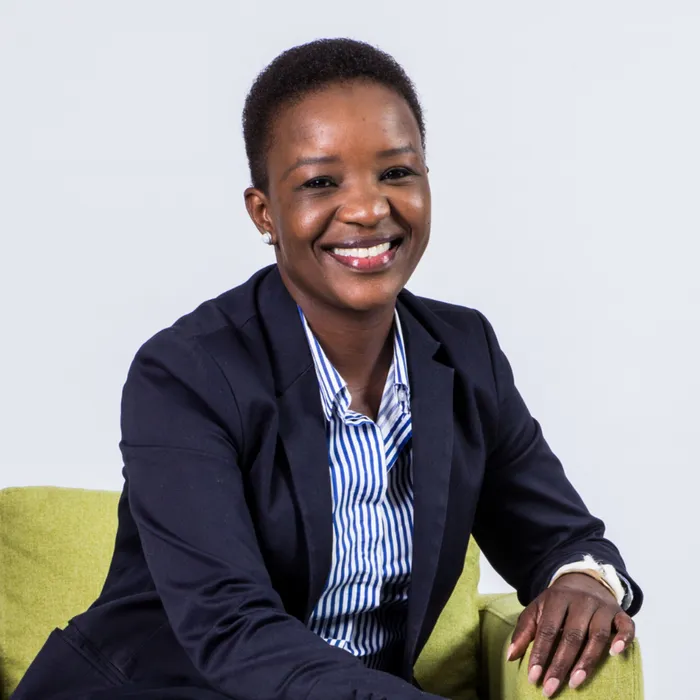
Business Leadership South Africa CEO Busi Mavuso.
Image: Supplied
A critical decision looms that will affect South Africa’s business environment for the next decade. The president has appointed a committee to select the next National Director of Public Prosecutions (NDPP), with six candidates now shortlisted. Current incumbent Shamila Batohi will retire next year when she reaches retirement age, after seven years rebuilding an institution that was deeply compromised by state capture.
This appointment matters to business. The rule of law is essential to a functioning democracy, but it is also critical to the business environment. An unreliable criminal justice system imposes huge costs on business, not only through increased crime, but through the broader loss of trust across the economy. When counterparts can’t be relied on to stick to agreements, when the probity of those in business can’t be trusted, transaction costs multiply invisibly across every deal. This keeps a handbrake on our growth.
We saw the direct costs when South Africa landed on the FATF grey list, now thankfully behind us. But the indirect costs – the increased vigilance, the risk premiums, the deals that don’t happen – are harder to measure but no less real.
The damage state capture inflicted on the National Prosecuting Authority (NPA) is still visible in failed prosecutions. The R2.2 billion corruption case against former Eskom boss Matshela Koko and others was struck off the roll in November 2023 due to unreasonable delays. The case against Moroadi Cholota, co-accused with former Free State premier Ace Magashule, collapsed when a judge found the state had presented false information to US authorities to secure her extradition. Despite detailed forensic reports on corruption at Prasa, Transnet and Eskom, and the comprehensive Zondo Commission findings, successful prosecutions remain frustratingly rare.
Batohi has worked hard to re-establish the integrity of the organisation, stabilising senior leadership and beginning to rebuild capacity. But structural constraints limit what any NDPP can achieve under the current framework.
This is where the NPA differs fundamentally from other institutions that were compromised by state capture. The SA Revenue Service (Sars) has been able to recover more fully, in part because of structural advantages the NPA lacks. The Sars Commissioner has genuine authority over the organisation: he is the accounting authority, effectively the CEO, with the power to hire and fire senior staff. The appointment process for the Sars Commissioner was revised after the Nugent Commission to strengthen independence, though the President retains final decision authority.
In contrast, the NDPP does not have this independence or authority. The Director General of the Department of Justice is the accounting authority for the NPA, not the NDPP. The prerogative over senior appointments sits with the Minister of Justice and the President, a power which, in the history of our democracy, has been invoked for good and ill. The NDPP is appointed for a non-renewable 10-year term, longer than the Sars Commissioner’s renewable five-year term. Yet tellingly, no NDPP has ever completed a full term.
The six-member selection panel is chaired by Justice Minister Mmamoloko Kubayi, with members including Auditor-General Tsakani Maluleke and SA Human Rights Commission chair Andrew Nissen, forming an experienced and credible group to guide the selection. They must make a wise decision, choosing someone with deep integrity and the skills to lead a complex organisation dealing with everything from organised crime to grand corruption. The next NDPP will need proven prosecutorial experience, the ability to rebuild institutional capacity, and the courage to pursue justice without fear or favour.
But the new NDPP can only exercise powers available within the current framework. We need reform. The minister and cabinet must give them the authority to reshape the organisation into an independent and highly competent prosecutor. This means granting the NDPP real control over senior appointments, making them the accounting authority responsible for the NPA’s performance, and insulating prosecutorial decisions from political interference. Without these structural reforms, even the best appointment will face the same constraints that have affected previous NDPPs.
The other end of the criminal justice system, policing and investigations, is being thoroughly examined through the Madlanga Commission. Our recent engagement with acting Minister of Police Firoz Cachalia explored how business can support improvements in capacity and integrity. The Commission presents an opportunity for renewal, much like how the Nugent Commission reset Sars’s future.
Multilateral standards like those from the Financial Action Task Force also help drive reform. The FATF is a product of the G20 and will be undertaking another peer-led review of South Africa starting next year. These international standards provide both pressure and support for the domestic reforms we need.
The NPA appointment process and the Madlanga Commission are signs of a system aiming to improve. There is much more that must be done, including in crime intelligence and investigative capacity. All of us in business would like to see an accelerated effort to empower high-quality leadership across the criminal justice system. This is not about politics; it is in fact the opposite, ensuring that politics stays out of it, leaving independent and highly competent institutions to do their jobs. That is the future that all South Africans deserve, and that our economy requires to thrive.
Busiswe Mavuso is the chief executive of Business Leadership South Africa.
*** The views expressed here do not necessarily represent those of Independent Media or IOL.
BUSINESS REPORT