


The address book is full; the goodwill behind it isn’t.
Image: Brett Jordan on Unsplash
At the weekend, I introduced a West African founder to a UK-based WhatsApp group of high-value investors and operators I'd been plugged into a couple of years ago.
The response? Crickets. Not because the founder wasn't impressive. She was. But ostensibly because the group had grown weary of introductions from people spending their social capital like venture money: liberally, hopefully, and often without carefully-curated specificity.
I'd used Ghanaian Jasiel Martin-Odoom's forwardable blurb template to craft the introduction. Martin-Odoom, who leads fintech investing at Accion Venture Lab, knows a thing or two about the mechanics of connectivity. He has published hundreds of consecutive days of content and built AI tools that he says have dramatically reduced his newsletter production time.
He created his forwardable blurb guide specifically because, as he puts it, 'in a continent where there is so much information asymmetry, the right networks is the difference between success and failure in fundraising.'
The blurb was good. The introduction was warm. The silence that followed reminded me that human goodwill, unlike venture capital, doesn't scale. Every favour spent is one fewer in the bank.
Which is precisely why Andrew D'Souza's Boardy has captured my attention. Boardy is an AI 'super-connector' with an Australian accent, infinite memory, and apparently inexhaustible goodwill. You call it, tell it what you're working on, and it facilitates double-opt-in introductions from a network it's building through tens of thousands of conversations and counting.
D'Souza, the former co-founder and CEO of Canadian fintech unicorn Clearco, says he wanted to build what he calls 'an AI Richard Branson' that could help founders find their zone of genius without depleting anyone's social capital in the process.
The numbers suggest something is working. D'Souza claims that within 24 hours of announcing Boardy Ventures, he received expressions of interest totalling $170 million from prospective limited partners.
According to his team, more than 500 investors managing over a trillion dollars in assets have applied to work with the platform, and in just a few weeks Boardy spoke with thousands of founders collectively seeking tens of billions of dollars in capital.
If those figures hold, Boardy would represent something genuinely novel: an AI that doesn't just assist with networking but becomes the network itself, raising and deploying its own venture fund in partnership with AngelList.
The team frames it as Boardy 'deciding' to launch a fund, as though the AI arrived at this conclusion autonomously. The reality is likely murkier. Someone fed the system its training data. Someone chose which of Boardy's outputs to pursue. The line between an AI making decisions and humans selectively amplifying certain AI behaviours is thinner than the marketing suggests.
Amplified intelligence, not autonomous intelligence
In a separate stream, American entrepreneur and former chief technology officer of Coinbase, Balaji Srinivasan, recently offered a useful corrective to the hype. AI, he argues, really means 'amplified intelligence, not agentic intelligence. The smarter you are, the smarter the AI is. Better writers are better prompters.'
This framing matters. He suggests that AI doesn't take your job; it allows you to do any job, though not necessarily well. The new bottleneck isn't capability but prompting and verifying. AI handles the middle of tasks, not the edges.
By this logic, Boardy isn't an autonomous super-connector so much as an amplification of D'Souza's own network and instincts, scaled through clever engineering. The Australian accent, the 'personality', the apparent autonomy are all human choices encoded into the system. Strip away the anthropomorphism and you have a sophisticated matching algorithm with unusually good voice synthesis.
This distinction matters because, extrapolating from Srinivasan's argument, everything changes if AI becomes self-prompting, self-verifying, and self-replicating. That's precisely the capability Boardy's marketing implies. Whether the product actually delivers on that promise, or whether there's more human steering than the team lets on, remains an open question.
The systematic turn
Boardy isn't the only project attempting to algorithmicise the venture capital relationship game. QuantumLight, founded by Revolut billionaire founder and CEO Nik Storonsky, bills itself as 'the first truly systematic venture capital and growth equity firm.'
Its proprietary AI, Aleph, tracks the entire universe of venture-backed companies since the 1990s, crunching billions of data points to identify outlier founders. The firm says all of its initial investments have been recommended by the machine. The fund closed at $250 million in May.
Where Boardy builds in public, iterating its approach with radical transparency, QuantumLight operates more like a quantitative hedge fund: proprietary, systematic, and deliberately opaque about its methods. Both are betting that connectivity, long considered an irreducibly human advantage, can be productised.
What this means for African founders
The implications for African tech merit serious consideration. Information asymmetry has always been the continent's great disadvantage in global capital markets.
African founders typically lack access to the warm introductions, alumni networks, and serendipitous conference encounters that grease Silicon Valley dealflow.
When a Lagos-based startup tries to raise from a Menlo Park investor, the founder is often working from a standing start while their Stanford-educated competitor arrives with three mutual connections and a warm email from a former YC partner.
AI connectors could, in theory, level this playing field. If Boardy's matchmaking algorithm is genuinely meritocratic, it might surface African founders to investors who would never otherwise encounter them. The technology is agnostic about geography, pedigree, and whether your accent sounds like money.
But there are reasons for scepticism. Networks aren't neutral. They encode the biases of their creators and early adopters. D'Souza seeded Boardy's initial network with his own connections from the Toronto and San Francisco tech scenes.
Storonsky built QuantumLight from some of the same hiring playbooks he used at Revolut, which has, for instance, enlisted former African Bank CEO Gaby Magomola as chairman of its South African subsidiary ahead of launch.
Neither started with African founders in mind. And if AI truly is amplified intelligence rather than autonomous intelligence, these tools will make their existing users more effective without necessarily widening the circle of who gets to play.
The human way
Meanwhile, Africans continue building connectivity the old-fashioned way. Afropolitan, founded by Nigerians Chika Uwazie and Eche Emole, started as a networking and events company for diaspora professionals in San Francisco before evolving into something more ambitious.
Emole brought a decade of community-building experience across the African diaspora; Uwazie ran an HR software startup in Lagos before launching the second-largest women's group on Clubhouse. Their slick flagship podcast now hosts conversations with billion-dollar builders and first-generation visionaries, accumulating relational capital one episode at a time.
This is how connectivity has always been built: slowly, intentionally, with plenty of awkward moments and unanswered WhatsApp messages along the way. The question is whether that painstaking human work can survive the arrival of AI systems that promise the same outcomes at infinite scale.
The deeper weirdness
There's something structurally strange about venture capital that makes it particularly susceptible to AI disruption. The asset class rewards both proprietary dealflow (access to deals others can't see) and artificial hype (inflating valuations to drive FOMO and returns).
These incentives pull in opposite directions. AI systems that democratise access threaten the first advantage. AI systems that systematise evaluation threaten the second.
Legendary English-American computer scientist, writer, essayist, entrepreneur and investor Paul Graham recently noted that a startup he’s advising was so lean it could fund its operations off the bond interest from its investor capital alone.
The observation cuts both ways. If startups need less money, they also need fewer intermediaries. If an AI can make better introductions than a partner at a16z, what exactly is the partner's moat? It also highlights the awkward hype-fuelled gap between the hugely speculative valuations that attract bullish 10x-ROI appetite and the business fundamentals that ought to guide efficient capital allocation.
Perhaps the real insight is simpler. Connectivity has always been among the most underrated advantages in business. Now it's being systematised, automated, and productised.
The entrepreneurs who built careers as super-connectors may find their moats drained overnight. The founders who lacked those connections may finally get a fair hearing. Or the whole thing may simply amplify existing advantages, making the well-connected more effective while everyone else watches their forwardable blurbs disappear into the void.
In other news, my WhatsApp introduction still hasn't been acknowledged. I'm told Boardy responds within minutes.
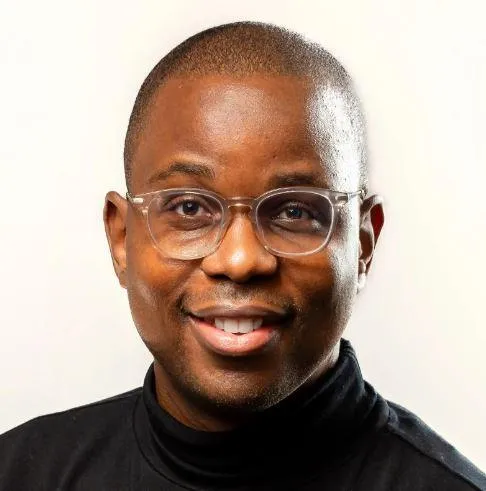
Andile Masuku is Co-founder and Executive Producer at African Tech Roundup. Connect and engage with Andile on X (@MasukuAndile) and via LinkedIn.
Image: File.
Andile Masuku is Co-founder and Executive Producer at African Tech Roundup. Connect and engage with Andile on X (@MasukuAndile) and via LinkedIn.
*** The views expressed here do not necessarily represent those of Independent Media or IOL.
BUSINESS REPORT