

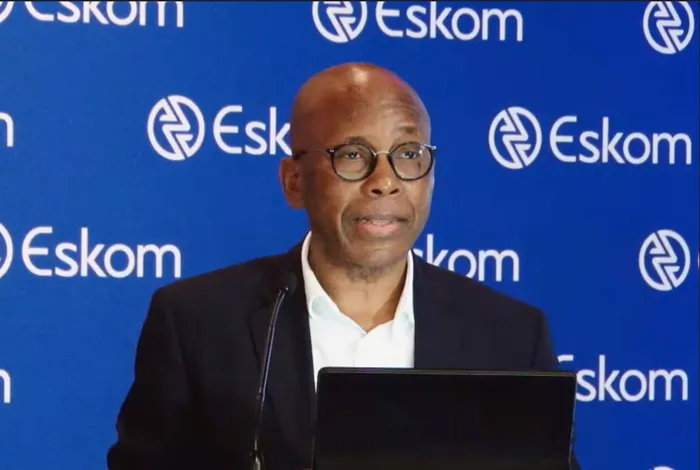
Eskom’s own performance continues to improve under the leadership of Chairman Mteto Nyati, says the author.
Image: Sreenshot
The South African electricity sector has been exceptionally active during the final quarter of 2025. On 27 November, the National Energy Regulator of South Africa (Nersa) approved the Market Operator Licence submitted by the National Transmission Company of South Africa (NTCSA). This approval is a key step toward the establishment of a competitive electricity market and marks a shift from planning to implementation.
Nersa has also approved the creation of the Electricity Market Advisory Forum (EMAF), a body tasked with guiding the rollout of the competitive market framework. EMAF will advise the regulator on the finalisation and implementation of the Market Rules and the Market Code. Its formation signals the beginning of structured oversight for market design, something long overdue.
Earlier in the month Nersa approved the Grid Capacity Allocation Rules (GCAR), which aim to ensure fair, transparent and non-discriminatory access to the national grid. The rules are intended to improve planning, reduce uncertainty, accelerate project development and increase investor confidence. GCAR supports faster access to grid capacity for bankable generation projects and is a direct response to the growing backlog and the need for predictable queue management.
Clarity on grid access and clarity on the shape of the future electricity market are two of the most pressing issues in the sector. Grid access has become particularly important as renewable energy generation and storage continue to grow in a distributed manner across the country.
On the generation side, Eskom estimates that rooftop solar installations have grown by 218 percent in three years, increasing from 2.3 GW in October 2022 to 7.4 GW currently. This rapid uptake reflects the earlier years of load shedding and the need for businesses and households to secure electricity independently.
In regional developments, Enpower Trading has become the first privately owned South African company to secure conditional market participant membership from the Southern African Power Pool (SAPP). Enpower and the Zambian-based Africa Greenco are now leading the private sector’s regional electricity engagements. Africa Greenco previously obtained a licence to export electricity from South Africa via SAPP. Eskom Distribution appealed against that licence and several other trading licences, which put pressure on Nersa to accelerate the approval of trading rules.
Domestic grid expansion also saw progress. Seriti Green handed over the Vunamoya Main Transmission Substation (MTS) to Eskom and the NTCSA. The substation will connect the first 155 MW of the Ummbila Emoyeni One wind energy facility to the grid. This is the initial phase of a 900 MW wind development. The MTS was completed ahead of schedule by Tractionel Enterprise, a South African company specialising in grid and substation construction. The project positions Mpumalanga as a future green energy hub and demonstrates the opportunities that exist for local contractors in a restructured electricity market.
Eskom’s own performance continues to improve under the leadership of Chairman Mteto Nyati. The board has focused on planning and governance while the executive team has focused on disciplined implementation. The Electricity Availability Factor (EAF) has breached the 70 percent mark 39 times during the current financial year. The year-to-date EAF stands at 63.51 percent, an 8.02 percent improvement since October 2022. An average of 7 800 MW of generation capacity has been restored and Eskom’s credit rating has improved since 2022. These are significant achievements considering the scale of operational and governance failures of the previous decade.
Seen together, the developments in the market, the grid and the utility, point to an industry that is gaining momentum. The approval of the Market Operator Licence, and GCAR, the formation of EMAF, the growth of rooftop solar, and the commissioning of new transmission infrastructure all show that the sector is progressing despite years of political interference and institutional stagnation. Eskom’s recoverystrengthens this progress and increases system reliability.
These successes deserve recognition. They reflect a country that is rebuilding its electricity sector through determination and collaboration. Much of this momentum can be traced back to a single decision: the moment President Cyril Ramaphosa twisted the arm of then Minister of Mineral Resources and Energy to lift the licensing cap for generation projects. That decision unlocked a wave of private investment and set in motion the need for reforms now taking shape.
The next phase requires collective commitment. Full unbundling of Eskom must be completed, the competitive electricity market must be established with precision, and all role players must remain accountable for a stable, transparent and well-planned transition. If we sustain this trajectory, South Africa can secure electricity availability, drive economic growth and create the jobs that come with a modernised energy system.
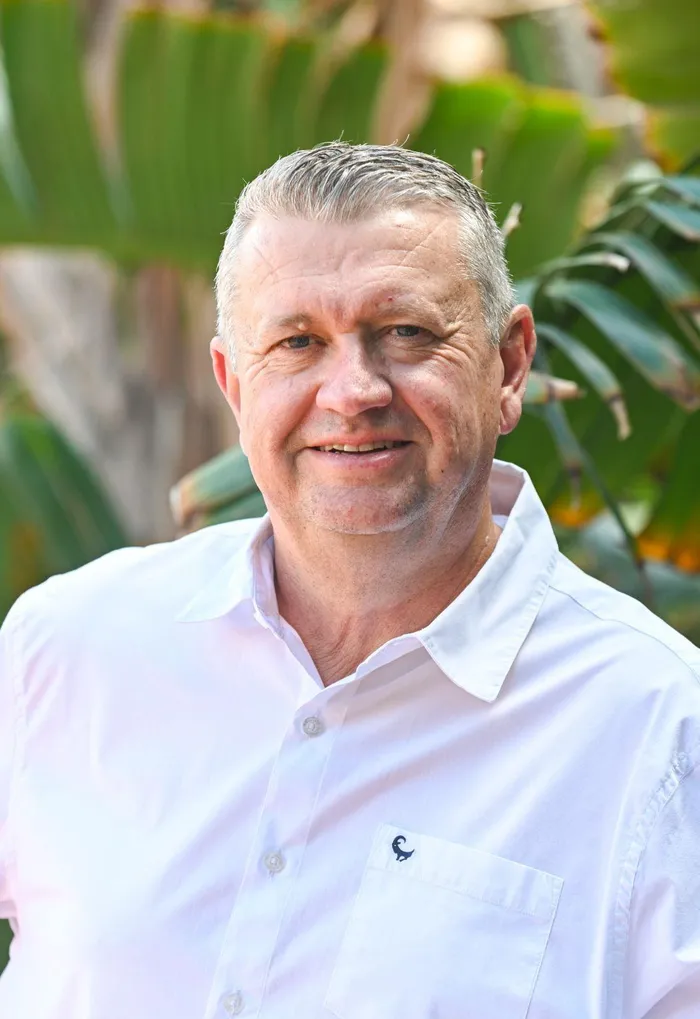
Thomas Garner holds a Mechanical Engineering degree from the University of Pretoria and an MBA from the University of Stellenbosch Business School.
Image: Supplied
Thomas Garner holds a Mechanical Engineering degree from the University of Pretoria and an MBA from the University of Stellenbosch Business School. Thomas is self-employed focusing on energy, energy related critical minerals, water and communities. He is a Fellow of the South African Academy of Engineering and a Management Committee member of the South African Independent Power Producers Association.
*** The views expressed here do not necessarily represent those of Independent Media or IOL.
BUSINESS REPORT