

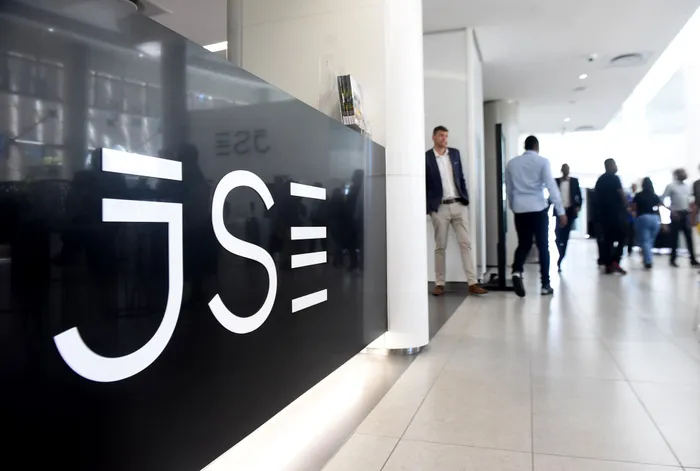
The JSE was one of the best-performing global stock markets in November.
Image: Supplied
The JSE was one of the best-performing global stock markets in November with the FTSE/JSE Capped SWIX Index up 2.3% month on month (m/m); the only major bourse to outperform the JSE last month was the Brazilian Bovespa, up 6.4% m/m. The November rally pushed the FTSE/JSE Capped SWIX Index to a 51% year to date (YTD) gain when measured in US dollar terms. Only the Bovespa and the Spanish IBEX 35 (+53% and +64% YTD, respectively, in US dollar terms) have been able to do better thus far in 2025.
Precious metal miners were back as the driving force of JSE returns in November, with gold and platinum miners up 13% m/m in aggregate, boosted by a re-acceleration in precious metal prices. Gold and platinum prices both rallied 6% m/m, leaving these precious metal prices 62% and 84% higher, respectively, YTD.
JSE-listed investment holding companies Naspers, up 12% m/m, and Prosus down 10% m/m were the biggest detractors from the JSE’s performance in November, significantly underperforming their largest investment holding, Chinese tech conglomerate Tencent, which was 3% lower m/m. Despite showing good execution under new CEO Fabricio Bloisi during his 17 months at the helm of the investment companies and releasing a solid set of earnings in November, the share price reacted poorly to the earnings release. Investors appeared concerned about the lack of clarity around future share buybacks, as the company signalled an unwillingness to sell down more Tencent shares to fund buybacks.
South Africa’s (SA) Medium-Term Budget Policy Statement (MTBPS) on 12 November was well received by investors as Finance Minister Enoch Godongwana continues to deliver on good fiscal discipline, anchoring future expenditure and borrowing growth to the country’s newly announced 3% per annum (pa) inflation target. The South African Reserve Bank (SARB), meeting in the wake of a prudent budget, a reduced inflation target, and recently released core inflation data (+3.1% year on year), which came in below expectations, voted unanimously to cut rates by 0.25%. The latest reduction takes the prime lending rate to 10.25% pa after six cuts totalling 1.5% cumulatively since September 2024.
The SA government’s 10-year borrowing yield continued to fall in November, ending the month at 8.5% pa – the lowest rate in almost five years. The rand strengthened 1.3% m/m against a generally weaker US dollar, leaving it 10% stronger against the greenback YTD.
Emerging market (EM) stocks lagged their developed market (DM) peers in November as they were unable to claw their way back into positive territory for the month with the MSCI EM Index down 2.4% m/m. Despite the underperformance in November, EM equities remain comfortably ahead of DM peers YTD (MSCI EM Index +30.4%). Chinese equities were the biggest drag on the EM Index during November as they digested some of the strong YTD gains. Tech conglomerate Alibaba was down 8% m/m saw its share price fall as its latest earnings release showed margins in its key e-commerce division plunging as a result of subsidies aimed at scaling its “quick commerce” segment.

Peter Little is a fund manager at Anchor Capital.
Image: Supplied
Peter Little is a fund manager at Anchor Capital.
*** The views expressed here do not necessarily represent those of Independent Media or IOL.
BUSINESS REPORT