The bottleneck holding back renewable energy for South African businesses
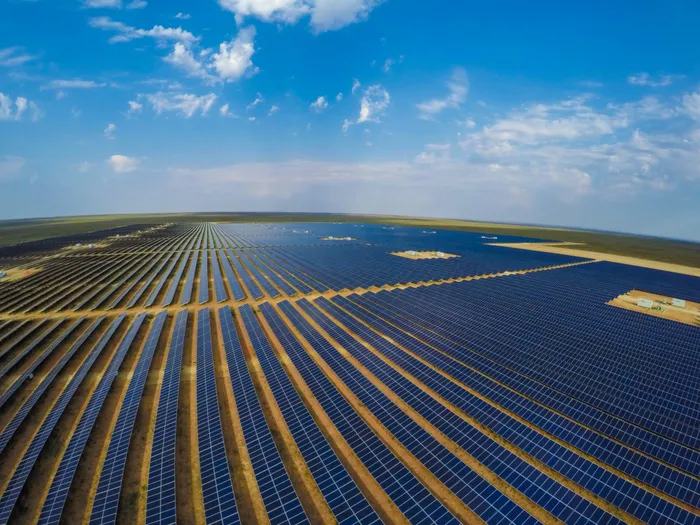
Renewable energy projects rollout is slowed by a grid-access process, says the author.
Image: Supplied
Distributed or onsite renewable energy generation - commercial and industrial systems installed at factories, mines and other large energy users - is the quiet workhorse of South Africa’s energy transition. It powers businesses, takes pressure off the grid, cuts costs, reduces reliance on diesel and coal, and strengthens our economy.
These projects usually comprise solar PV, are sized from a few kilowatts to tens of megawatts, often paired with batteries, and are among the fastest, most deliverable parts of the energy transition.
The problem is their rollout is slowed by a grid-access process that treats a 10 megawatt (MW) onsite project the same as a 100 MW utility plant. The result is delays, uncertainty and rising project costs that hold back private investment when we need it most.
Demand isn’t the problem
It’s important to say: projects do get built, delivering cost savings and better energy stability. The demand and capital are there too, but red tape slows too many when we need to get capacity online. The greatest barrier is that our grid-access process is too slow, too rigid and not built for the size of projects critical to South Africa’s transition.
Where projects get stuck
About a third of our projects waiting for connection are Eskom-connected and the rest, municipal. While more municipal projects are waiting (and get delayed too for other reasons), delays are generally less severe because municipalities do not require a Cost Estimate Letter (CEL) - which is where the main challenge lies.
Every Eskom-connected project must obtain a CEL or grid-connection quote before it can proceed. The CEL sets out the expected costs, e.g., substation, feeder or line upgrades, and the timelines needed for a project to connect safely to the grid. Producing it depends on scarce Eskom engineering capacity and input from several internal departments. The stipulated timeline is three months, but in practice it often stretches to six or twelve. One of our 7 MW projects has been waiting seven months, and Eskom recently confirmed that processing had not yet started because resources were diverted to larger wheeling applications. For large utility-scale plants this level of scrutiny may be justified. For a 7 MW embedded system at a single industrial site, it is disproportionate.
Delays are only part of the problem. CEL costs are unpredictable because no document or tool gives developers an early indication of what costs a project may face. Connection costs vary widely depending on a variety of factors, including the size of connection, available capacity, and the infrastructure’s condition. Even small projects can be liable for significant upgrades. The result is that CELs often arrive with requirements that were impossible to anticipate, disrupting budgets and delaying investment decisions.
Another issue is that CELs are valid for a year, but securing permits (such as environmental impact assessments) often takes longer. This forces companies to continue at risk or wait for a new CEL, both of which slow down investment. Also, only a limited number of accredited grid consultants can run the required impact studies, creating further bottlenecks and costs.
The cost of network upgrades
A major sticking point is who pays for substation, feeder or line upgrades. Future projects to connect can theoretically contribute, but in practice this is rarely workable, so the first project, however small, usually carries the full upfront cost. This makes it hard to justify proceeding, even when the project is sound.
A clearer, predictable cost-sharing or clawback system would help: if one project funds an upgrade, later users should contribute fairly, and costs linked to ageing infrastructure should be scaled so smaller installations are not made unviable. Eskom does try to cater for this, but I've not seen it applied, and without certainty of future recovery the initial capital outlay remains the main barrier.
What a better system could look like
South Africa’s grid is ageing and needs urgent investment. I appreciate that clear rules are essential to protect network stability as more private generation comes online. However, applying utility-scale requirements to much smaller projects adds unnecessary friction and goes beyond what’s needed for them to connect safely.
We need a fit-for-purpose grid access process for ‘middle band’ onsite projects between roughly one and 50 MWs, for municipal and Eskom-connecting projects. This would keep safeguards but scale requirements to the actual impact of these systems.
A more streamlined, standardised approach, especially around CELs and Nersa’s RETEC grid code compliance process, would relieve pressure on Eskom and municipal engineers and ease administration, plus free up scarce technical resources for critical upgrades.
Other reforms should include proportional technical requirements for projects with limited/no export to the grid, a clearer and more predictable CEL scope- and cost-setting process, updated guidance on how connection costs are calculated and when upgrades are genuinely required, and more frequent information on substation capacity. Standardising procedures across Eskom regions and municipalities would also remove inconsistencies that slow projects.
Battery energy storage has strong potential to support grid stability, but customers with solar must restart the grid-access process if they later want to add batteries. Initial applications should earmark storage, with final compliance confirmed during commissioning. This would save months of duplicated work.
South Africa is not short of private capital for renewable energy, but we lack a grid-access process that can get mid-size projects online quickly. These reforms need no public funding and would unlock the onsite generation that large energy users are waiting to build. Fixing this now would support growth, ease pressure on the grid and move the energy transition forward.
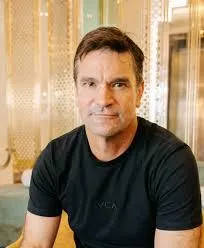
Grant Berndsen is CEO of Terra Firma Solutions.
Image: Supplied
Grant Berndsen is CEO of Terra Firma Solutions.
*** The views expressed here do not necessarily represent those of Independent Media or IOL.
BUSINESS REPORT