

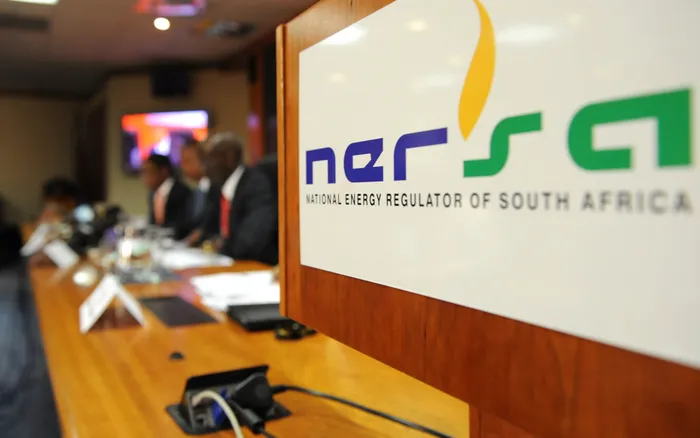
The most significant development of the last quarter is the publication of the Grid Capacity Allocation Rules by the National Energy Regulator of South Africa (Nersa), says the author.
Image: Supplied
South Africa’s electricity transition has entered a decisive phase. The past three years have delivered steady improvements in plant performance, private sector investment in new generation and a visible strengthening of the institutions that govern the sector. The approval of the Market Operator licence and the formation of the Electricity Market Advisory Forum are important milestones that move the country closer to a competitive electricity market.
The most significant development of the last quarter, however, is the publication of the Grid Capacity Allocation Rules by the National Energy Regulator of South Africa (Nersa). The rules come at a time when grid access has become the binding constraint on the pace of new investment. South Africa has reached a point where the generation pipeline is healthy, capital is available, and technological progress has lowered the cost of wind, solar and storage. The barrier is the grid.
Developers have been forced to queue for years in a congested and opaque allocation system while renewable energy potential in the Cape provinces remains largely stranded behind inadequate transmission capacity. For years, grid access in South Africa operated on a first come first served basis. The approach created perverse incentives. Projects could reserve grid capacity with minimal progress, block viable projects, and collapse at a late stage. Capacity was allocated without meaningful evidence of project readiness.This contributed to long queue backlogs, stranded investments and an escalation of grid speculation.
It is, therefore, commendable that Nersa has stepped up and replaced this system with a readiness based approach that prioritises real projects with real milestones.The new rules establish a three stage framework. The first stage allows early project registration and feasibility work without claiming capacity. The second stage allows capacity reservation if the developer meets defined readiness requirements such as land rights, environmental progress and commercial structuring. The third stage is a binding allocation based on verifiable milestones.
Failure to meet milestones results in revocation. This protects the grid from hoarding while creating a predictable pathway for bankable projects. Stakeholder input played an important role in refining the rules. Several parties argued for EPC contracts and final designs to be in place before grid allocation. Nersa removed these conditions after developers explained that such commitments cannot be secured without knowing if grid access exists. The regulator instead adopted a realistic view of project sequencing based on international practice.
The rules also introduce transparency mechanisms to publish queue information while protecting commercially sensitive details. This reduces information asymmetry for investors and brings South Africa closer to global standards of open access regulation.
The proposal that municipalities, community projects or particular technologies should receive preferential treatment was rejected. Nersa held to the principle of universal non-discrimination. Predictable, equal treatment is essential if South Africa wants to crowd in private capital at scale.
Grid access rules that create carve outs for specific groups would undermine fairness and bankability.These reforms must be viewed within the broader electricity market context. South Africa is preparing for a competitive market structure in which the National Transmission Company of South Africa will manage both the transmission network and the market operations environment.
The effectiveness of that market depends on the ability of generators to access the grid on fair terms. The Grid Capacity Allocation Rules now provide that foundation. The rules also speak directly to the concerns raised in the recently published Medium-Term System Adequacy Outlook.
The outlook indicates that South Africa will face new challenges from 2029 onward when coal decommissioning begins to accelerate, renewable penetration grows and daily ramping requirements intensify. An electricity system that requires flexible capacity and diversified supply cannot function if grid access remains constrained.
The new rules create a disciplined framework that should align with this complexity if transmission expansion timelines hold.The timing of the rules is important. The DBSA, NPC, PCC and National Treasury TIED programme recently published a comprehensive study that showed more than R100 billion per year in domestic capital is available for energy investment through 2027. The constraint is not funding but a lack of credible project pipeline visibility and regulatory certainty. The Grid Capacity Allocation Rules address this directly.
A transparent, milestone based queue reduces risk for lenders and increases the probability that generation projects reach commercial operation. This is a prerequisite for unlocking domestic capital andattracting international funding.The rules are not a solution on their own. South Africa still needs rapid expansion of the transmission network, more flexible generation assets, efficient municipal wheeling frameworks and a revised IRP that reflects realistic build schedules. The rules are, however, a turning point. They create the operational discipline that has been missing in the grid access environment and they enable an electricity system in which private capital, public investment and system planning can move in the same direction.
South Africa’s electricity transition will rise or fall on grid access. The sector has entered a period in which new capacity will be defined less by what is built and more by what can connect. With the publication ofthe Grid Capacity Allocation Rules, the energy industry now has the regulatory architecture to support a competitive market and to accelerate investment. The coming years will test the discipline with which the rules are implemented, but for the first time in more than a decade the direction is becoming clear. If South Africa sustains this momentum and maintains regulatory certainty, the electricity sector will continue to stabilise and the country will be positioned to rebuild confidence, stimulate investment and support long-term economic growth.

Thomas Garner holds a Mechanical Engineering degree from the University of Pretoria and an MBA from the University of Stellenbosch Business School.
Image: Supplied
Thomas Garner holds a Mechanical Engineering degree from the University of Pretoria and an MBA from the University of Stellenbosch Business School. Thomas is self-employed focusing on energy, energy related critical minerals, water and communities. He is a Fellow of the South African Academy of Engineering and a Management Committee member of the South African Independent Power Producers Association.
*** The views expressed here do not necessarily represent those of Independent Media or IOL.
BUSINESS REPORT