


On the side of progress, platforms such as the International Women’s Forum South Africa (IWFSA) Cornerstone Conference brought together leaders across generations, sectors and geographies.
Image: File
As the year draws to a close, it’s worth asking whether 2025 was a win or a loss for women’s empowerment and gender equality in South Africa.
The answer depends on what we choose to count. If you count mobilisation, mentorship and the rebuilding of a leadership culture that says “lift as you rise,” 2025 was a win.
If you count access to capital, employment and the stubborn economics of care and safety, it was not nearly enough.
The year delivered a powerful surge of collective energy, Ubuntu in action, but the material dividends that change women’s lives at scale remain frustratingly thin.
On the side of progress, platforms such as the International Women’s Forum South Africa (IWFSA) Cornerstone Conference brought together leaders across generations, sectors and geographies.
Another was African Women in Dialogue (AfWID), which convened more than 1 000 women from 55 African countries to collaborate and set the agenda for women’s equality.
It is encouraging to see that women are not waiting for permission to shape the country’s future, they are doing it together.
We are learning from champions such as former First Lady Mrs Zanele Mbeki, who has long argued that leadership is a responsibility to widen the circle, mentor the next generation and dismantle barriers as you advance.
That spirit is not abstract.
It is the scaffolding that allows emerging leaders to enter rooms they have historically been excluded from, to learn, to network and to build coalitions that move policy and practice.
We also saw echoes of 1956 and of the 2024 G20 Women’s Shutdown led by Women for Change, which pressed the state to declare gender-based violence a national crisis. Movement-building matters; it sets norms, exerts pressure and creates the political will for reform.
Though not on the same scale, some achievements bring to mind the inspiring 2016 film Hidden Figures, starring Taraji P. Henson, Octavia Spencer and Janelle Monáe. Based on Margot Lee Shetterly’s book, it tells the true story of three Black women at the United States’ National Aeronautics and Space Administration (NASA).
In the early 1960s, mathematician Katherine Johnson, programmer Dorothy Vaughan and engineer Mary Jackson, despite segregation and entrenched sexism, became indispensable to the space programme.
The film’s lesson for empowerment is practical: share mastery, challenge exclusionary rules and claim decision‑making spaces.
In South Africa, the same logic applies: breakthroughs must be multiplied through mentorship, sponsorship and institutional change. But solidarity alone cannot offset the hard maths of exclusion.
Government’s decision to foreground a gender‑conscious investment approach in this year’s Women’s Month theme, Building Resilient Economies for All, with a focus on women’s participation and leadership, is praiseworthy.
It aligns with what works on the ground: when women get tools, networks and patient capital, they fly.
Yet promising themes must translate into budgets, targets and accountability.
In entrepreneurship, the engine room of inclusive growth, women remain underrepresented.
The Stellenbosch Business School’s Global Entrepreneurship Monitor SA Report 2023/24 shows female involvement in entrepreneurial activity at 13.5% compared to 19.9% for men.
The lesson from 2025 is not that we lack female ambition or capability.
It is that we still lack a system tuned to women’s realities.
Equal‑opportunity legislation exists, but translating compliance into lived equity is where we’re stalling.
Too many corporate scorecards remain content with headcounts and Women’s Month panels, while the pipeline to decision‑making and capital stays narrow.
A gender‑aware design would start with three shifts. First, unlock capital at scale for women founders.
Create and grow gender‑focused investment vehicles that blend grants, equity and revenue‑based finance.
Tie public procurement to meaningful targets for women‑owned and women‑led businesses, with transparent reporting and consequences.
Second, measure what matters beyond compliance. Publish gender pay gaps and promotion rates by level.
Track the share of procurement to women‑owned firms. Monitor time‑to‑capital for women founders versus men. When metrics reflect outcomes, leadership teams act.
Third, prioritise safety. Declaring GBV a national crisis was necessary; implementation is the test. Justice must be swift and survivor‑centred.
Budgets for shelters, counselling and specialised policing must be protected from austerity and ring‑fenced where possible.
The deeper work is cultural: teaching boys and men that dignity is non‑negotiable and that equality is not a zero‑sum game.
So, was 2025 a win or a loss?
It was a split decision. A win in movement‑building, mentorship and the strengthening of platforms that help women lift each other as they rise.
A loss in the balance sheet of daily life: in the stubborn gaps in employment, the slow flow of capital to women‑led businesses and the unfinished business of safety and care.
The tie‑breaker will come in 2026 if we do three things with urgency: scale gender‑focused investment; design workplaces and social policy around the realities of care; and hold ourselves to outcome‑based measures that make equity visible.
If we do, we will convert solidarity into livelihoods, inspiration into income and visibility into power. Women do not need another promise.
They need the tools to shape their own success, and the freedom to do so safely.
When we empower the woman entrepreneur, the young leader, the mother, the coach, the scientist, we do not only change her life.
We change the country’s trajectory. Let’s make next year the one where the numbers finally match the movement.
Riah Phiyega, CEO of the WDB Trust.
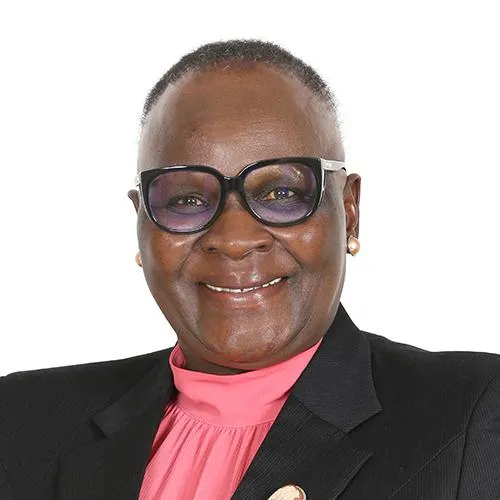
Riah Phiyega, CEO of the WDB Trust.
Image: Supplied.
BUSINESS REPORT