

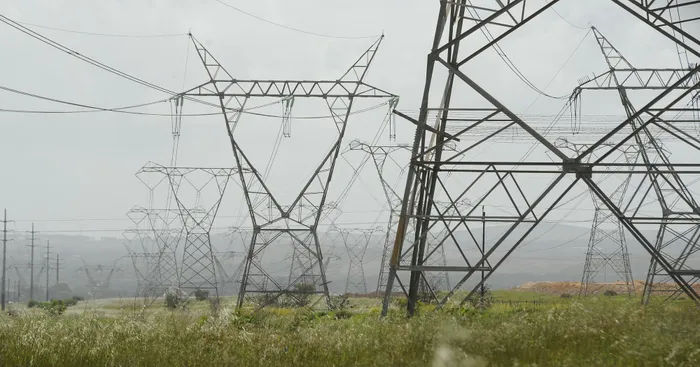
Electricity tariffs have risen far faster than inflation for more than a decade, says the author
Image: Henk Kruger / Independent Newspapers
South Africa’s electricity reform programme has reached a point that few would have predicted five years ago. Market rules are being finalised, grid access frameworks have been approved, a market operator has been licensed, the Independent Transmission Programme participation shortlist has been published and new generation continues to connect at pace. From a purely technical perspective, the system is beginning to stabilise.
Yet this moment of progress carries a less discussed risk. Electricity reform can succeed on paper and still fail to deliver the economic outcomes the country urgently needs. Availability alone does not guarantee growth. A system can keep the lights on while remaining too expensive, too rigid, or too poorly aligned with industrial demand to support recovery. For more than a decade, South Africa’s electricity debate was dominated by scarcity. Load shedding framed every discussion. Policy, procurement, and regulation focused on adding megawatts as quickly as possible. That phase is ending.
The challenge now is different. The binding constraints are cost, flexibility, grid access, and institutional design. Recent regulatory milestones illustrate this shift clearly. The approval of the Grid Capacity Allocation Rules is intended to ensure transparent and non-discriminatory access to the grid. The licensing of the market operator and the establishment of advisory structures signal progress toward a competitive electricity market. These are necessary reforms, but they are not sufficient conditions for economic impact.
The economy responds to electricity in specific ways. Growth depends on price stability, predictable supply, access to electricity in specific geographical regions, and the ability of firms to expand production without facing escalating energy costs. If reform produces a system that is technically sound but structurally expensive, demand growth will remain muted. This risk is already visible. Electricity tariffs have risen far faster than inflation for more than a decade. Even as load shedding has eased, electricity intensity in the economy has not recovered. Consumption per capita remains low by international standards, and many energy-intensive sectors continue to defer investment. In municipal areas where economic activity could increase, access to electricity is constrained by old and outdated supply infrastructure with significant bottlenecks. Reliability without affordability does not unlock demand.
Grid reform is central to this outcome. Transmission investment is essential, but the way it is financed matters. If grid expansion is funded through rising tariffs without corresponding productivity gains, it will suppress demand growth. If connection costs and delays favour large, well-capitalised projects while crowding out smaller industrial users and municipal initiatives, the system will become less inclusive. If the Independent Transmission Programme continues to exclude South African based grid construction skills and experience, these skills will emigrate to regions where it is needed.
Market design also carries consequences. A competitive market that lacks sufficient liquidity or flexibility can entrench volatility rather than reduce it. If flexible resources such as storage, demand response, and fast-ramping capacity are under-provided, the system will rely increasingly on expensive coal ramping power stations and peaking plant. Those costs are ultimately borne by consumers. There is a further institutional risk. Reform that prioritises control over coordination can slow execution. Centralised planning that does not adapt quickly to technology cost curves, demand patterns, and regional opportunities risks locking in suboptimal outcomes.
The electricity system is now changing faster than traditional planning cycles can accommodate.The result could be a paradoxical outcome. South Africa may achieve improved system adequacy while industrial electricity demand continues to stagnate. The grid may expand while factories remain idle and skills move to other markets. Investment may flow into generation assets while downstream economic activity fails to respond.
Avoiding this outcome requires a shift in focus. Electricity reform must be evaluated not only against engineering metrics, but against economic performance. The test is whether firms expand production, whether new industries emerge, whether employment grows, and whether households can afford to participate in an electrified economy. This implies several priorities.
Tariff structures must reward efficient use and reduce penalties on productive demand. Grid access must be sequenced to unlock economic nodes, not only generation potential. Flexible technologies must be deployed at scale to reduce system costs rather than simply meet compliance targets. Market rules must support liquidity and competition, not complexity for its own sake. Most importantly, electricity policy must reconnect with industrial strategy. Energy availability is not an end in itself. It is an input into growth, employment, and competitiveness. Reform that stops at technical success risks repeating a familiar South African pattern: institutions that function while the economy does not.
The electricity transition is entering its most consequential phase. The next failure, if it comes, will not look like darkness. It will look like stagnation under bright lights. South Africa still has time to avoid that outcome, but only if execution, incentives, and economic intent remain aligned. The real measure of reform success will not be megawatts added or rules gazetted. It will be whether electricity once again becomes a driver of growth rather than a constraint disguised as progress.
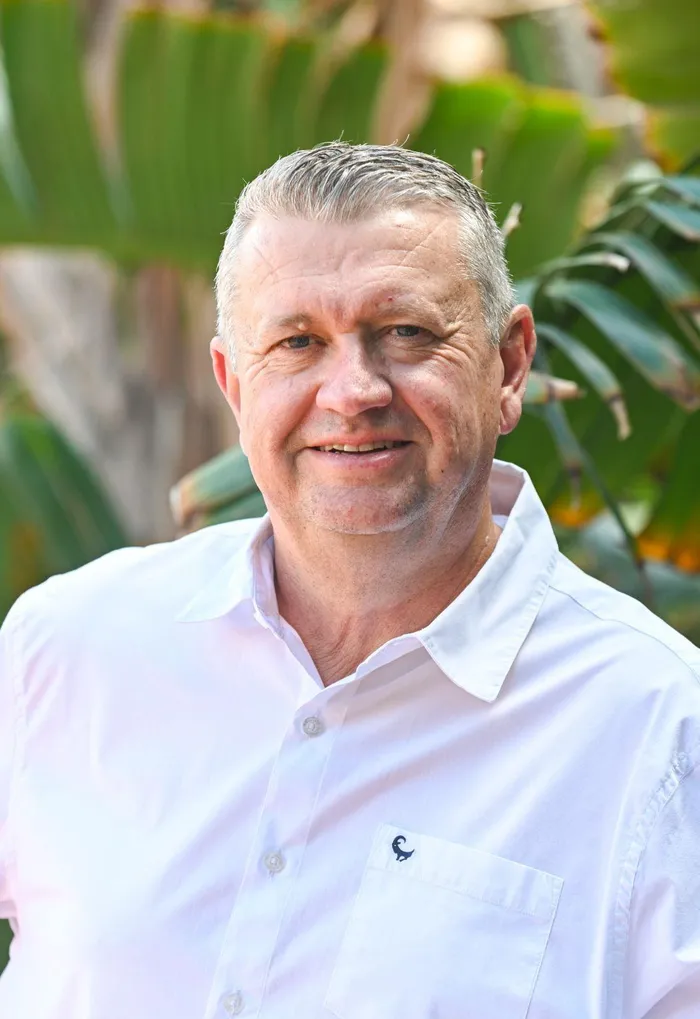
Thomas Garner holds a Mechanical Engineering degree from the University of Pretoria and an MBA from the University of Stellenbosch Business School.
Image: Supplied
Thomas Garner holds a Mechanical Engineering degree from the University of Pretoria and an MBA from the University of Stellenbosch Business School. Thomas is self-employed focusing on energy, energy related critical minerals, water and communities. He is a Fellow of the South African Academy of Engineering and a Management Committee member of the South African Independent Power Producers Association.
*** The views expressed here do not necessarily represent those of Independent Media or IOL.
BUSINESS REPORT