

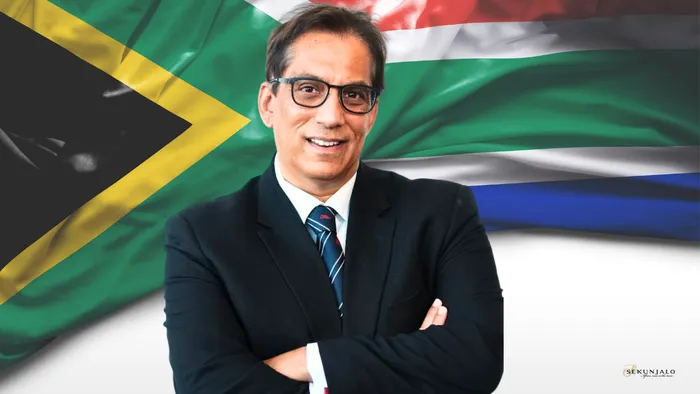
Dr Iqbal Survé is to attend WEF.
Image: Independent Media
When I attended the World Economic Forum in Davos last year, what struck me most was not only the scale of the challenges confronting the world, but the growing realisation among global leaders that the old ways of thinking are no longer sufficient. Davos 2025 was characterised by a sense of urgency — an acknowledgement that economic growth, technological progress and sustainability can no longer be pursued in isolation from one another.
In my engagements throughout the week — from formal panels to informal discussions at Africa House — my impression was clear: there is a renewed appetite for meaningful collaboration, particularly with emerging markets, but also a deep concern about global fragmentation. Conversations repeatedly returned to the same questions: How do we restore trust? How do we ensure that innovation serves humanity rather than deepening inequality? And how do we move from dialogue to decisive action?
These reflections form an important backdrop as we gather again in Davos for the 2026 World Economic Forum Annual Meeting, held under the theme A Spirit of Dialogue. In my view, this theme could not be more appropriate for the moment we find ourselves in.
Last year’s discussions reinforced my long-held view that sustainability is no longer a moral add-on; it is an economic and social imperative. I recall emphasising that climate action must be practical, investable and inclusive. The conversations around climate, energy and technology were more mature than in years past, yet they also revealed a widening gap between ambition and implementation.
My impression was that while consensus exists around what needs to be done - transitioning to clean energy, leveraging AI responsibly, strengthening global supply chains — the real challenge lies in execution and equity. Developing economies, particularly in Africa, are still too often positioned as afterthoughts rather than as partners in shaping solutions.
I was encouraged, however, by the growing recognition that Africa has a critical role to play, not only as a beneficiary of global initiatives, but as a source of innovation, renewable energy leadership and demographic dynamism. This was a recurring theme in my engagements, and one I believe must now translate into concrete investment and policy alignment.
As we enter 2026, my view is that the global landscape has become even more complex. Geopolitical tensions, geoeconomic competition, misinformation, and societal polarisation now sit alongside long-standing risks such as climate change and inequality. The World Economic Forum’s Global Risks assessments over recent years have consistently highlighted this convergence of threats and the fact that they are increasingly interconnected.
What concerns me most is the erosion of trust between nations, institutions, businesses and citizens. When trust weakens, cooperation falters, and without cooperation, none of the systemic challenges we face can be effectively addressed.
This is why the call for a spirit of dialogue resonates so strongly with me. Dialogue is not about consensus for its own sake; it is about listening across divides, acknowledging competing realities, and finding shared pathways forward in a world that is both competitive and deeply interdependent.
From my perspective, Davos must continue to evolve beyond being a forum for ideas into a catalyst for measurable outcomes. Dialogue must inform policy, guide investment and shape responsible corporate behaviour. Businesses, especially global enterprises, have a duty to align profit with purpose, to invest in technologies and models that create long-term value for society.
I have consistently argued that technology, when governed ethically, can be a powerful equaliser. Artificial intelligence, digital infrastructure and data ecosystems hold enormous promise but only if access, skills development and safeguards are prioritised. Otherwise, we risk deepening divides rather than closing them.
My impression from previous WEF engagements is that Africa’s voice is growing stronger, but it must also become more coordinated and confident. Africa cannot afford to be a passive participant in global debates about energy transition, digital transformation or economic reform. The continent’s future depends on active leadership, strategic partnerships and investment in people.
South Africa, in particular, has an opportunity to contribute meaningfully to global dialogue, drawing on its unique position as a bridge between developed and developing economies, and as a nation rich in talent, resilience and potential.
As I return to Davos this year, my expectation is not for easy answers, but for honest engagement. I hope to see stronger commitments to multilateralism, renewed respect for dialogue, and tangible steps toward inclusive and sustainable growth.
We are living through a defining period in global history. The choices we make now, individually and collectively, will shape the world for decades to come. Through dialogue grounded in responsibility, empathy and action, I believe we can still chart a path toward a more resilient, equitable and sustainable global future.
Dr Iqbal Survé is the executive chairman of Independent Newspapers and the founder and chairman of Sekunjalo.
BUSINESS REPORT