

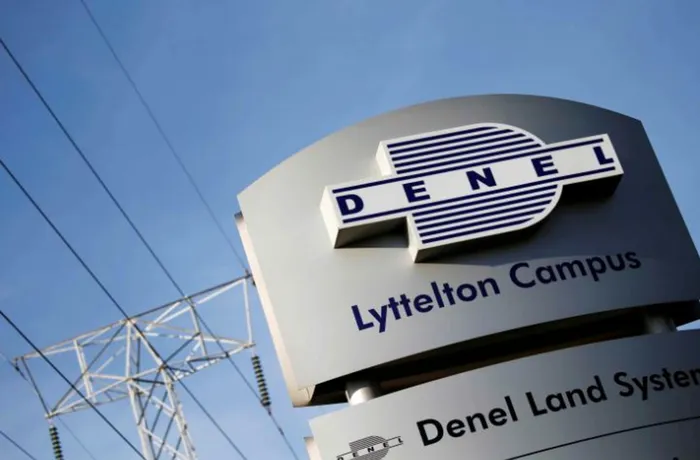
A salary crisis at Denel has been averted.
Image: Siphiwe Sibeko / Reuters
Workers and the nation this week received a deeply worrying reminder about the still fragile state of the Denel Group, the state’s defence manufacturing company, with management’s warning to staff at two of its divisions, Denel Dynamics and Denel PMP (Pretoria Metal Pressings), that there may not be funds to pay their salaries this month.
Fortunately, after interventions by the Congress of South African Trade Unions (Cosatu), and the unions organising at Denel; the National Union of Mineworkers, the National Union of Metalworkers and Solidarity, this crisis was averted and workers were paid.
We must remain extremely concerned given the devastation unleashed upon the Denel Group during the decade of state capture and corruption, about the state of this once great state-owned enterprise. The systematic vandalism of Denel is well known, including industrial espionage and the hiving off of some of its lucrative operations.
Workers paid a terrible price during this painful chapter of state capture with wages unpaid for 18 months leaving many to lose their homes, forced to sleep in their cars, and most tragically some committing suicide. The trauma these employees and their staff suffered is horrific.
Many skilled employees left to better pastures where their rights to be paid would be honoured, thus bleeding Denel of valuable skills.
Denel’s employees need to be reassured that their salaries and third-party deductions are safe and will continue to be honoured.
Management must take their staff and the nation into their confidence with regards to the implementation of Denel’s turnaround plan, including how the substantial financial injections by government were utilised.
The remarkable turnaround of other state-owned enterprises (SOEs) in the past few years, in particular Eskom, Transnet and Metro Rail who faced the exact same challenges under the state capture project, confirm that these once world-renowned leaders can be stablised and turned around.
Denel’s products from the famous Rooivalk to drones, from cruise missiles to artillery systems, from armoured vehicles to ammunition, are highly sought after across the world for their quality and affordability.
The days of state bail outs are over given the billions spent over the past decade helping embattled SOEs and the many equally pressing demands on the fiscus. Denel has to fix the hard and fundamental challenges facing it. There are no short cuts.
The key to Denel’s return to the path of sustainability and profitability has to include the appointment of competent management and leadership, the removal of corrupt elements, the plugging of financial leakages, the recruitment of skilled staff and the honouring of workers’ rights.
Equally important to providing Denel a sustainable path to recovery and growth is to revive and ramp up our local procurement campaigns. This must be anchored by the revival of the defence and aviation industrial masterplan.
Key partners need to include the South African National Defence Force, the Police Service, Correctional Services, Traffic Departments and other law enforcement organs of the state for their arms, munitions; land, sea and air vehicles; clothing and protective gear, and other materials.
Similarly, the private sector security and defence sectors must be partners in this journey. Private security companies alone with more than 500 000 security guards must procure their arms, munitions, vehicles, communications and protective gear from Denel. Local procurement is the bedrock of any industry.
Denel’s world quality products have helped it to secure an impressive order book from across the world. Management needs to ensure that it honours these often-lucrative contracts in full. Reports of Denel securing bids, receiving payments and then failing to deliver the products or having to be chased by clients and even dragged to court, must come to an end. Such antics cause severe reputational harm to Denel and will eventually catch up with it. Robbing Peter to pay Paul has never been a sound economic model.
Denel over the years has been close to securing very lucrative orders across the world for Rooivalk, armoured personnel carriers or artillery systems; only to be pipped at the post by other suppliers after pressure was placed by the governments of far more powerful nations for contracts to be given to their companies.
This is an unfortunate reality of real politic and the unequal geo-political balance of forces. It necessitates strategic partners between Denel and South Africa and complementary arms manufacturers in similar likeminded countries.
Particular attention must be given to the African continent where Denel’s products are tried, tested and best suited, especially armoured personnel carriers providing optimal protection to soldiers from landmines.
Green shoots reported by Denel in 2025 gave workers hope that it was back on track. We hope that the scare of this past week will not recur, but we must remain vigilant. Accountability is essential.
The Ministry and Department of Defence must come to the party and fulfill their oversight role for Denel. They cannot be absent or silent when alarm bells ring. Meeting management once in a while and accepting blithe assurances from management and glossy presentations is negligent at best and a failure of leadership. Workers deserve and demand better.
South Africa has a wonderful state-owned enterprise in Denel. One that was built over decades with the blood and sweat of its workers. It represents the best of South African intellectual and technical ingenuity. Its products are highly sought across the world, from developed to developing countries.
It needs dedicated focus and support, in particular to weed out corruption and mismanagement and through a ramped-up localisation plan from the sector.
Denel’s management must appreciate that its turnaround can only be achieved with an honest relationship with its staff, by honouring its legal obligations to its employees, by investing in these workers and tapping into their experience and expertise.
If these can be done, not only will be Denel be returned its glory days but it will once again play a leading role in unlocking South Africa’s industrial potential, economic growth and decent jobs.

Solly Phetoe is the general secretary of Cosatu.
Image: Doctor Ngcobo / Independent Newspapers.
Cosatu General Secretary Solly Phetoe
*** The views expressed here do not necessarily represent those of Independent Media or IOL.
BUSINESS REPORT