

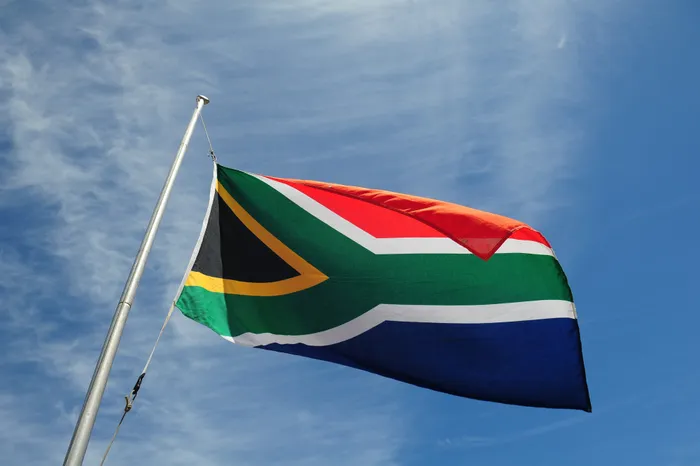
South Africa enters 2026 standing at a familiar yet increasingly complex crossroads, says the author.
Image: Henk Kruger/ Independent Newspapers
South Africa enters 2026 standing at a familiar yet increasingly complex crossroads. After more than a decade of low growth, high unemployment, and declining state capacity, the country now faces a narrowing window to translate political reform rhetoric into tangible economic change. Analysts broadly agree on one thing: macroeconomic stability has been restored to a fragile but workable degree. What remains unresolved is the deeper question of how South Africa should grow and which ideological framework, imperfect as it may be, is best suited to its realities.
Economic analysis from institutions such as the National Treasury and the South African Reserve Bank continues to be framed through the lens of macroeconomic fundamentals. This approach has delivered tangible gains. Inflation has been anchored through a stronger emphasis on the 3% midpoint of the target range, fiscal consolidation has slowed the rise in public debt, and confidence in core institutions is gradually stabilising.
Yet this same framework now reveals its limits. Stability alone does not generate growth. Public debt remains high, with debt-to-GDP hovering near 78%, unemployment exceeding 32%, and private firms holding an estimated R1.8 trillion in undeployed cash. Together, these indicators point to an economy trapped in a low-growth equilibrium. The question is no longer whether stability matters, but what comes after stability.
There is broad consensus that structural constraints, particularly in energy, logistics, and water, are binding growth. Eskom’s operational recovery and progress in reducing load shedding demonstrate what is possible when governance, incentives, and execution align. Similarly, Transnet’s gradual opening to private rail operators signals reform intent in logistics, though outcomes remain uneven.
However, these reforms have largely been defensive, focused on fixing failures rather than building new engines of growth. They stabilise the economy but do not yet transform it. South Africa is repairing pipes and ports without fully answering what it wants to produce at scale or export competitively.
At the heart of this dilemma lies an unresolved ideological tension. Many of the policy instruments now being deployed, deregulation, private-sector participation, fiscal restraint, and labour market reform, align with market-liberal traditions often associated with the Washington Consensus. These tools prioritise efficiency, competition, and investor confidence, and are visible in Operation Vulindlela and the National Treasury’s reform agenda.
At the same time, political rhetoric continues to invoke the developmental state, drawing inspiration from East Asian models where the state plays a decisive role in shaping industrial outcomes. Countries such as South Korea and Singapore illustrate how rapid growth can occur when a capable state coordinates capital, infrastructure, and industrial policy.
The uncomfortable truth is that South Africa sits between these worlds. It aspires to an Asian-style developmental state but operates largely through market-based instruments, not by choice alone, but because the state lacks the capacity, coherence, and trust with business required to manage the economy directly.
Comparisons with peer economies sharpen this reality. Vietnam’s success lies less in ideology than in execution, combining strategic state direction with openness to private and foreign capital. Kenya demonstrates how private financing can support infrastructure under fiscal strain, while Brazil offers a cautionary tale of social expansion without sustained growth and reform.
The lesson for South Africa is not to replicate any single model, but to recognise that ideology without capacity leads to paralysis, while markets without a strategic state risk deepening inequality. Growth outcomes reflect not only policy intent, but institutional strength, political settlement, and position within global production systems.
Ironically, South Africa exhibits a paradox typical of stalled developmental states. It controls strategic assets such as Eskom and Transnet, maintains extensive industrial policy frameworks, and commands deep pools of public capital through institutions like the Public Investment Corporation and Industrial Development Corporation. Yet it lacks a coordinating authority capable of aligning incentives, enforcing performance, and subordinating both public and private actors to a shared developmental mission.
The 2025/26 Budget reflects a cautious philosophy. These assets are managed primarily for financial sustainability and risk reduction rather than deliberate industrial transformation. While profitability and balance-sheet repair are understandable priorities, they are insufficient for a country facing mass youth unemployment.
South Africa cannot liberalise its way to inclusive growth, nor can it conjure a capable developmental state overnight. The path forward lies in pragmatic hybridity. Macroeconomic discipline must remain non-negotiable. Market mechanisms should be used aggressively to repair infrastructure and crowd in investment. Strategic state coordination should be rebuilt selectively, focusing on high-impact sectors such as energy-intensive manufacturing, mineral beneficiation, agri-processing, and the green economy. Inclusive growth must be treated as an economic necessity.
The choice facing South Africa in 2026 is not between Western or Asian ideology, but between execution and drift. Stability must be turned into momentum, or it risks becoming an end in itself. The crossroads remains. But the road ahead, while imperfect, is visible.
Bongani Ntombela, Executive: Programmes at 22 On Sloane.
*** The views expressed here do not necessarily represent those of Independent Media or IOL.
BUSINESS REPORT