

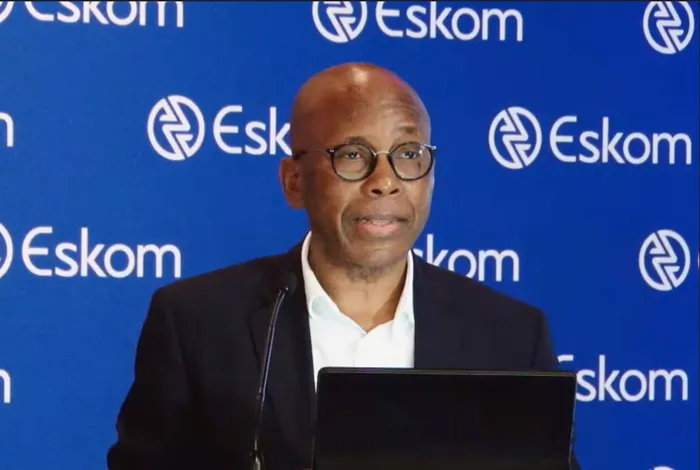
Eskom’s Chairman Mteto Nyati.
Image: Sreenshot
On 7 February, Eskom chair Dr Mteto Nyati wrote on X that it is rarely wise for government to outsource strategic thinking on national reforms, especially energy, to private business interests. He argued that incentives are misaligned and that companies will prioritise commercial objectives over the public good.
South Africa’s electricity reform effort is continuously running into challenges. The grid has become the binding constraint. Transmission capacity is limiting the connection of new generation, even where projects are financed, permitted, and ready to build. Developers are waiting. Capital is available. Demand, while currently subdued, could grow if electricity costs decrease and supply became less carbon intensive and more predictable. Access to the network remains uncertain. This is no longer a crisis of generation. It is a crisis of institutional design.
The slowdown is visible on the ground. Grid connection timelines stretch out. Access rules shift mid-process. Investment decisions stall. These are not abstract concerns for project developers or lenders. They translate directly into higher financing costs and fewer projects reaching construction.
When the grid owner is also the dominant generator, decisions about sequencing, access, and prioritisation carry an unavoidable conflict. Even with competent leadership, the structure itself invites mistrust. South Africa has already committed, in law, to a different model. Electricity legislation provides for an independent transmission system operator, open access to the grid, and a competitive wholesale market.These were not academic proposals. They were intended to lower prices by introducing competition, unlock private investment, and shift risk away from consumers.
Without genuine grid independence, those mechanisms cannot function. Reform stalls before it reaches the point where benefits can flow through to tariffs. Eskom’s recent operational improvement complicates this moment. Higher energy availability, fewer breakdowns, and sharply reduced diesel use deserve acknowledgement. These gains have stabilised the system and reduced immediate pressure. They have also created space. The risk is how that space is used. Operational recovery can either enable structural reform or be used to defend the status quo.
Transmission exposes the trade-off. Eskom has deep engineering capability and decades of operational experience. It also carries heavy debt, competing mandates, and has a track record of slow execution on large capital projects. Grid expansion now requires scale, speed, and balance-sheet capacity that Eskom struggles to provide.
Private capital is available for transmission, but only where governance is clear and access rules are predictable. Keeping transmission inside the Eskom group blurs those boundaries and pushes up the cost of capital across the system.This is not an argument for handing energy policy to the private sector. Strategy, planning, and regulation must remain public responsibilities. The issue is role separation. System planning, grid ownership and operation, and market access need to sit outside generation interests if competition is to work. That separation is standard practice in electricity systems that have lowered costs without losing reliability.
Recent debate has focused on the risk of private interests shaping reform. That concern is legitimate. Markets do not deliver public outcomes on their own. They need firm rules, credible regulators, and enforcement.The mistake is assuming that dominant incumbents are exempt from the same incentive logic because they are state owned.
Monopoly control distorts outcomes regardless of whether the owner is public or private.Transmission delays, contested access, and rising investor caution are not failures of goodwill. They follow predictably from allowing an incumbent to influence design reforms that reduce its own control.South Africa now faces a clear choice. It can continue to manage reform through accommodation,accepting slower grid build-out, higher costs, and stalled investment. Or it can complete the separation it has already legislated, establish an independent transmission owner and operator, and allow competitionto function as intended.
The credibility of electricity reform rests on that decision.It is rarely wise for government to outsource strategic thinking on national reforms, especially energy, to dominant incumbents. Incentives are misaligned. Monopolies prioritise their own commercial objectives over the public good. What Dr Nyati failed to acknowledge in his post on X is that Eskom as a monopoly has demonstrated, over two decades, that its commercial priorities have repeatedly diverged from the outcomes South Africans expected. That record, not future intent, is what now shapes the reform debate.

Thomas Garner holds a Mechanical Engineering degree from the University of Pretoria and an MBA from the University of Stellenbosch Business School.
Image: Supplied
Thomas Garner holds a Mechanical Engineering degree from the University of Pretoria and an MBA from the University of Stellenbosch Business School. Thomas is self-employed focusing on energy, energy related critical minerals, water and communities. He is a Fellow of the South African Academy of Engineering and a Management Committee member of the South African Independent Power Producers Association.
*** The views expressed here do not necessarily represent those of Independent Media or IOL.
BUSINESS REPORT