

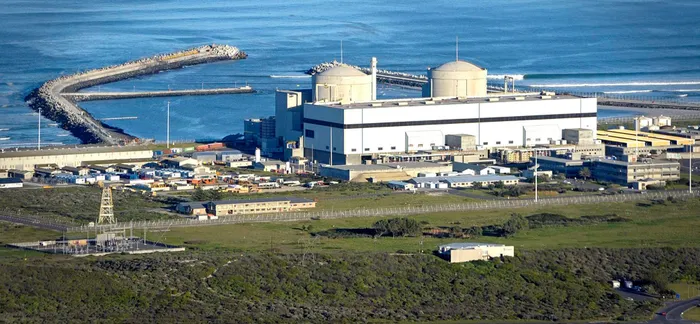
Koeberg Nuclear Power Plant. Nuclear power can reduce strategic dependence on oil exporters, says the author.
Image: Supplied
I can still vividly recall the live images on CNN of clouds of dark smoke billowing into the desert sky. It was early 1991, and the Iraqi army was retreating from Kuwait, setting the country’s oil fields alight and leaving destruction in its wake. Millions of barrels of oil burned each day as the world watched in real time one of the largest man made environmental disasters in modern history.
That moment was not only a symbol of military defeat. It was a stark reminder of how deeply oil is woven into the fabric of global power and global conflict.
How many times have we seen our dependence on oil drive wars, insurgencies and foreign intervention? The Iran Iraq War, the Gulf War, the Iraq War, the conflict in the Niger Delta, the Libyan civil war, the Sudanese civil wars, the Chechen wars, and so many more. Across the late twentieth and early twenty first centuries, researchers estimate that roughly 30 major armed conflicts have been linked to oil, either as a primary cause or as a powerful secondary factor.
The reasons are not hard to understand. Oil is geographically concentrated. It is strategically vital to modern economies. It generates enormous rents that can enrich states, elites and armed groups alike. It also invites external intervention. We have seen this in Venezuela, where oil wealth has long shaped both domestic politics and international pressure. Let us not pretend that the global interest in the fate of President Nicolás Maduro exists in a vacuum, separate from the country’s vast energy reserves. As in many other cases, oil also sustains authoritarian systems by providing revenue streams that reduce reliance on taxation and, by extension, public consent.
At the same time, let us be honest about our own position. We have built an economy on oil. Our infrastructure runs on oil. Our commodities, from luxuries to essentials, are rooted in oil based supply chains. A sudden and total shift to renewables alone would strain, if not overwhelm, existing energy systems. The transition is not a switch that can simply be flipped.
Yet the fact that we struggle to imagine life without oil does not mean that innocent people must continue to die because of it.
This is where nuclear energy enters the conversation, not as a miracle solution, but as a strategic tool that could change the geopolitical landscape.
First, nuclear power can reduce strategic dependence on oil exporters. If major economies generate more of their electricity from nuclear energy, they burn less oil and gas for power generation. That means fewer chokepoints, such as the Strait of Hormuz, carry the same global significance. It means less leverage for oil exporting states over importing nations. It also means a reduced incentive for military intervention framed around securing energy supplies. In doing so, it weakens one of the classic drivers of twentieth century resource security conflicts.
Second, nuclear power can stabilise energy prices and, by extension, political systems. Nuclear plants operate on long term, predictable cost structures. This can reduce the economic shock of oil price spikes, lower domestic unrest in energy importing countries and make sanctions and embargoes less destabilising. Energy stability does not create peace, but it removes one of the major pressure points that often pushes fragile systems toward crisis.
Third, nuclear energy strengthens energy sovereignty. Countries with a strong nuclear sector are less vulnerable to supply disruptions, shipping lane conflicts and political blackmail tied to fuel access. This can reduce the perceived need for overseas military bases, naval patrols and alliance structures that exist primarily to protect energy flows.
However, it would be naïve to claim that nuclear power can bring an end to war.
Most conflicts are not driven by energy alone. They are shaped by territory, identity, ideology, power and the political survival of ruling elites. Oil often acts as a multiplier, intensifying disputes that already exist, rather than creating them from nothing.
Nuclear power also introduces its own geopolitical tensions. Uranium supply chains are concentrated in a handful of countries, including Kazakhstan, Niger, Russia and Canada. Enrichment and reprocessing technologies raise concerns about weapons proliferation. Reactor exports and financing can become tools of strategic influence. In short, one form of energy politics risks being replaced by another.
And oil itself does not disappear from the strategic picture. Even in a world with a large scale nuclear rollout, oil remains essential for aviation, shipping, petrochemicals, fertilisers, medicines and military logistics. Its geopolitical value is reduced, but not erased.
The realistic conclusion is more modest, but no less important. A global shift toward nuclear energy, alongside renewables, would likely reduce the frequency and intensity of oil driven geopolitical tensions. It would lower the strategic value of oil chokepoints and petrostates. It would make energy less likely to be a primary trigger for conflict.
But it would not eliminate war. Conflict, at its core, is about power, not just fuel.
The deeper truth is this: energy transitions do not determine whether countries fight. They determine what countries fight over.

Professor Bismark Tyobeka is the principal and vice-chancellor of the North-West University.
Image: Supplied
Professor Bismark Tyobeka is the principal and vice-chancellor of the North-West University (NWU), former CEO of the National Nuclear Regulator, and has recently been appointed both a member and chairperson of the Ministerial Expert Panel on Nuclear.
*** The views expressed here do not necessarily represent those of Independent Media or IOL
BUSINESS REPORT