

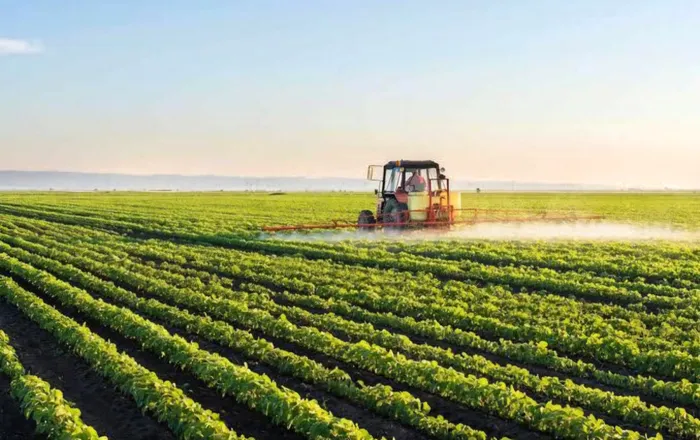
Agriculture remains central to food security, employment and economic development, yet productivity growth is slow, says the author.
Image: File
South Africa and the rest of the African continent face a familiar paradox. Agriculture remains central to food security, employment and economic development, yet productivity growth is slow, climate risks are rising, and public resources are constrained. At the same time, Africa has access to some of the world’s most sophisticated international agricultural research institutions — many of them with decades of experience working on African soils and farming systems. The real problem is not a lack of knowledge, but rather our persistent failure to fully exploit it.
Across the globe, a dense ecosystem of international agricultural research organisations exists, including the CGIAR network and its specialised centres, such as CIMMYT, ICRISAT, ILRI, IRRI, and WorldFish, alongside leading universities and regional research platforms. These institutions generate cutting-edge work on improved crop varieties, livestock genetics, soil health, water management, climate resilience and digital agriculture. Africa is not marginal to this system; it is one of its primary focus regions. Yet too often, the outputs of this research remain underutilised, poorly integrated into national strategies, or trapped in pilot projects that never reach scale.
South Africa illustrates this challenge vividly. The country possesses relatively strong universities, research councils and private agribusiness capacity compared to much of the continent. However, collaboration with international research institutions is often ad hoc, donor-driven and insufficiently aligned with national priorities. Memoranda of understanding are signed, workshops are held, and demonstration plots are established — but systematic adoption into extension services, seed systems and farmer support programmes remains weak.
Elsewhere in Africa, the challenge is even more acute. Many countries depend heavily on externally funded research projects yet lack the institutional capacity or political commitment to absorb results into policy and practice. This leads to duplication of effort, fragmented innovation systems and wasted resources. Africa ends up paying — directly or indirectly — for research that it does not fully use.
If Africa is serious about transforming agriculture, three shifts are urgently required.
First, governments must move from passive participation to strategic leadership in international research partnerships. Too often, research agendas are set externally, driven by donor priorities rather than national or regional needs. African governments, including South Africa’s, should be far more assertive in defining the problems that matter most — whether drought-tolerant maize, livestock disease control, soil fertility restoration or climate-smart irrigation — and then leveraging international institutions to address them. This requires well-articulated national agricultural research strategies that explicitly map how global knowledge will be adapted and deployed locally.
Second, the link between research and delivery must be strengthened. Breakthroughs in laboratories or research stations mean little if they do not reach farmers at scale. Extension systems across Africa are chronically underfunded and poorly connected to research institutions. International research centres should not be treated as isolated knowledge producers, but as integral partners in revitalising extension, farmer training and private-sector engagement. South Africa, with its mix of commercial and smallholder farmers, is particularly well positioned to pilot models that connect global research directly to diverse farming systems — models that could then be replicated elsewhere on the continent.
Third, Africa must invest more seriously in its own research and human capital to act as effective counterparts. International institutions are complements, not substitutes, for strong national capacity. Without skilled local scientists, data systems and regulatory frameworks, even the best international research will fail to take root. Increasing funding for agricultural research and development — still well below global benchmarks in many African countries — is not a luxury, but a necessity. Equally important is creating career pathways that retain talented African researchers who too often leave for opportunities abroad.
There are encouraging signs. Regional initiatives, stronger university partnerships and growing interest in climate-smart agriculture suggest that momentum is building. However, progress remains uneven and fragile. In a world of accelerating climate change, geopolitical instability and volatile food markets, Africa cannot afford incrementalism.
For South Africa, the stakes are particularly high. As a regional agricultural leader, the country has an opportunity — and a responsibility — to model how international research can be translated into real productivity gains, inclusive growth and environmental sustainability. Doing so would not only strengthen domestic food security but also support regional stability and economic integration.
The knowledge to transform African agriculture already exists. Much of it sits in international institutions that are willing and able to partner. What has been missing is deliberate, coordinated and politically supported action to turn that knowledge into impact. The question is no longer whether Africa has access to world-class agricultural research. The question is whether it has the will to use it.

Dr Thulasizwe Mkhabela is an Honorary Research Fellow with the African Centre for Food Security and the University of KwaZulu-Natal
Image: LinkedIn
Dr Thulasizwe Mkhabela is a Director and Senior Researcher at Outcome Mapping (thula@outcomemapping.co.za; thulasizwe.mkhabela@gmail.com). He is also an Honorary Research Fellow with the African Centre for Food Security at the University of KwaZulu-Natal (MkhabelaT1@ukzn.ac.za) and an independent agricultural researcher and policy analyst.
*** The views expressed here do not necessarily represent those of Independent Media or IOL.
BUSINESS REPORT