

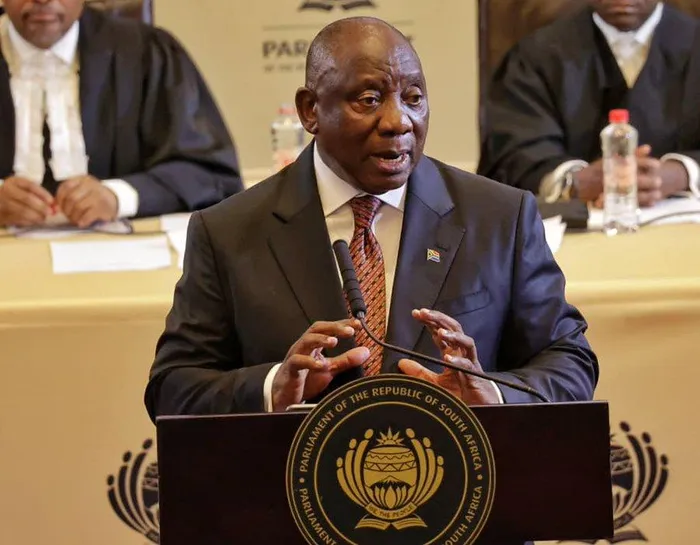
President Cyril Ramaphosa delivered one of his most critical State of the Nation Addresses (Sona) since assuming office in 2018, says the author.
Image: GCIS
President Cyril Ramaphosa delivered one of his most critical State of the Nation Addresses (Sona) since assuming office in 2018. While not every intervention or timeframe could be provided, it gave hope on many key matters affecting the working class and society.
The Congress of South African Trade Unions (Cosatu) as well as the other Federations constituting Organised Labour met with the President and members of Cabinet before Sonato raise workers’ key expectations and proposals. Such engagements with social partners should happen more often if we are to collectively resolve our many socio-economic crises.
Many in society, particularly the working class, are naturally skeptical of politicians and speeches, and justifiably so. It is important, however, to reflect on where we have come from, to remember the real damage unleashed during the decade of state capture and corruption and the substantial progress achieved to dismantle these networks of patronage and rebuild the state’s capacity.
While we still have far to go and many areas of serious challenges remain; we should take comfort from and build upon the green shoots emerging under the African National Congress led government.
Loadshedding has been overcome. We must now focus on reducing the increasingly unaffordable price of electricity for working and middle-class families and the economy.
Whilst short solutions are being sought in negotiations with government and Eskom, we must expedite interventions to address Eskom’s financial losses, in particular moving all consumers to prepaid electricity as well as dealing with corruption, wasteful expenditure, acts of criminality and enabling Eskom to enter the renewable energy space.
Transnet and Metro Rail’s free fall has been stopped and capacity is being restored. These must be accelerated to help protect and create thousands of mining, manufacturing and agricultural jobs as well as to provide 10 million urban workers with fast, safe and cheap means of transport to work. The mining rights application system must be rolled out this year to inject investment and jobs into the economy’s backbone.
South African Airways is once again flying, connecting key domestic destinations and boosting tourism and trade along international routes.
It is concerning however, that the Sona was silent on a package of interventions needed to rebuild other embattled State-Owned Enterprises, in particular Denel, the South African Broadcasting Corporation, Post Office and the Postbank.
The South African Revenue Services’ remarkable turnaround is key to ensuring the state can collect the revenue needed to fund the public and municipal services that society and the economy depend upon. The announcement of interventions to tackle the flood of illegal goods is welcome as these products threaten local jobs and industries and deny the state taxes owed and in the case of tobacco and alcohol, the ability to curb these highly addictive products.
Sona’s focus on the need to win the war against crime and corruption, including the deployment of the South African National Defence Force to boost policing in crime hotspots is long overdue. Society should not be expected to tolerate our high levels of crime.
More details need to be fleshed out in the Budget due to be tabled at Parliament shortly. The South African Police Service, Hawks, Special Investigations Unit, National Prosecuting Authority, the Judiciary and the SANDF need to be provided with the resources to defeat our entrenched levels of criminality and often highly sophisticated networks.
Budget cuts or mere inflationary adjustments won’t work. Neither will allowing the continuous loss of scarce resources in these institutions to corruption and wasteful expenditure. In many of them, a massive shake-up and new decisive leadership are needed.
Local government remains the other major Achille’s heel with the number of financially distressed municipalities rising to 70% over the past decade, community debt owed increasing to over R300 billion and municipal debt due to Eskom an astounding R100 billion. Municipal corruption is becoming the norm and many fail to pay their staff for months at a time.
Urgent interventions are needed to stabilise and rebuild local government and municipal services besides the pending White Paper and new funding model. This is a burning fire that can no longer wait for bold action.
Sona was disappointingly silent on the need for an aggressive stimulus package mobilising resources from the Fiscus, Developmental Finance Institutions and the private sector. Capital and other support needs to be made accessible and affordable for SMMEs, industrial and export sectors. We cannot continue along a path of 1% economic growth and expect unemployment to fall.
The President’s reaffirmation of the Presidential Employment Stimulus is welcome. It needs to be ramped up to accommodate 1 million participants by April and 2 million by November 2026 to provide a path to the labour market for millions of unemployed youth.
The affirmation of the SRD Grant and its role in alleviating poverty provides comfort to its 8 million recipients. It needs to be made accessible for all unemployed persons not receiving grants, raised to the Food Poverty Line and its participants included in skills and employment opportunities.
On many fronts the Sona responded to society’s challenges. The government must now ensure the 2026/27 Budget provides its progressive objectives with the funding needed to achieve them.
It will be a political travesty to raise the hopes of millions only to dash them with budget cuts. The crisis at many frontline public services have proven the fallacy of austerity cuts. The anemic 1% economic growth and 42.4% unemployment rate have confirmed the dangers of neo-liberalism and privatisation.
Besides stimulating economic growth and creating jobs and thus generating tax revenue, Sars must be given the support it needs to raise tax compliance from 67% to 75% by 2029, thus generating an additional R200 billion in funds needed to fill the many fiscal holes.
Equally critically President Ramaphosa, Parliament, the Legislatures and Municipal Councils must hold their executives, departments, entities, SOEs and municipalities accountable for implementing Sona’s commitments. Those who fail, must be removed.
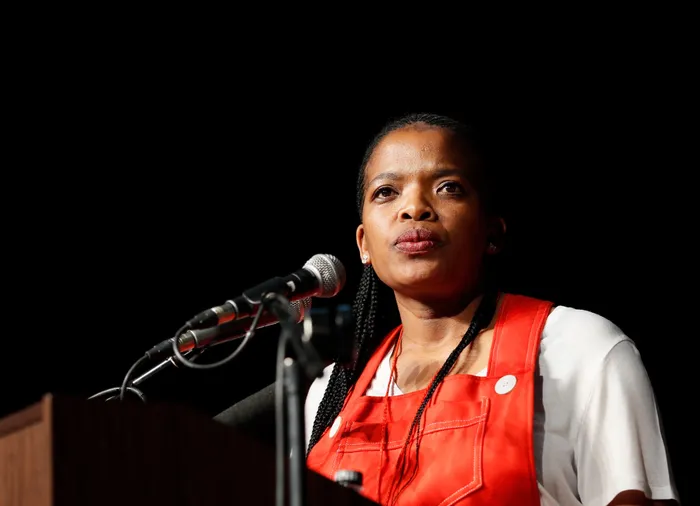
Zingiswa Losi is the president of Cosatu.
Image: Independent Newspapers
Cosatu President Zingiswa Losi
*** The views expressed here do not necessarily represent those of Independent Media or IOL.
BUSINESS REPORT