

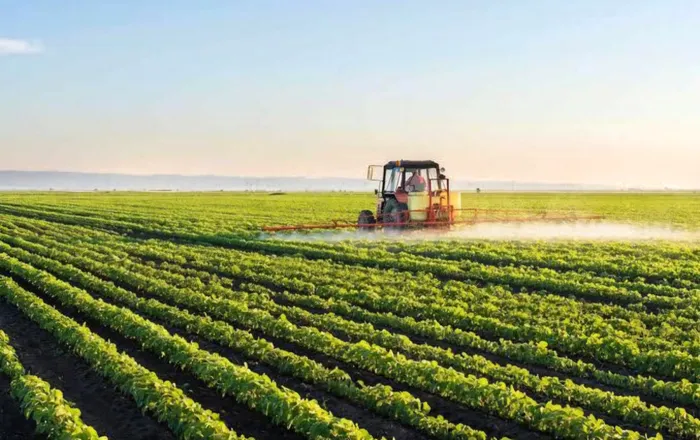
The South African agricultural sector is a critical engine of the economy, says the author.
Image: File
For years, conversations in South African agriculture, and indeed corporate South Africa, have centred on the deep racial inequalities that define the sector and the economy and rightly so. Yet the latest labour statistics remind us that transformation is far from complete. Beneath the dominant transformation narrative sits a persistent, long-overlooked imbalance: the gender disparities that continue to influence labour dynamics, limit economic participation and constrain the sector and economy’s full potential. While women make up a significant share of the overall labour pool, they remain underrepresented across most sectors, including agriculture, a reality that undermines the objectives of the Employment Equity Amendment Act 4 of 2022, which sets five-year gender targets for multiple sectors. Ignoring this gap is no longer an option; it is time that this conversation is brought to the forefront.
The South African agricultural sector is a critical engine of the economy, its direct contribution to the gross domestic product (GDP) is approximately of 3%. When we consider agro processing, it makes up to 14% of the GDP. The agricultural sector remains one of the significant employers in the country, with 920 thousand in the third quarter of 2025 which makes up approximately 5% of the total labour force in the country.
As Wandile Sihlobo notes in A Country of Two Agricultures, South Africa still operates within a dualistic system: a well-developed, largely white commercial farming sector and a struggling, predominantly black smallholder segment. In addressing the transformation agenda, the focus should not be solely on race; gender equality must also be prioritised. Labour force data from Statistics South Africa (Stats SA) indicates that women make approximately 30% of the total agricultural workforce. Although there has been an increase in women employment within the sector, representation at managerial levels remains limited. The Commission for Employment Equity (CEE) 2024/25 annual report revealed that women in top management positions in the agriculture, forestry and fishing sector accounted for a little over 20% (3.0% of which were African women).
The inclusion of women in agriculture is critical for several reasons. Women often serve as primary caregivers, contributing significantly to household food security. They act as catalysts for change and empowerment within their communities, particularly in rural areas where employment opportunities are scarce. Furthermore, women play a vital role as custodians of natural resources, frequently utilizing indigenous production methods that support sustainability.
South Africa needs more producers, more innovation, more inclusive value chains and yet continues to underutilise half its agricultural population. This labour imbalance is not just a social issue; it is an economic one. When women do not fully participate in the sector, South Africa loses out on skills, productivity and innovation. It is important to recognize that the sector is undergoing some shifts, i.e modernisation, agritech expansion, climate-resilient farming techniques, etc, that require new skills. Women, especially the younger generation entering agricultural studies, represent a valuable talent pipeline.
Yet many struggle to find pathways into meaningful employment, intrapreneurship (within companies/agribusinesses) or entrepreneurship due to various barriers that have remained stubbornly unchanged for decades. These include limited access to professional networks, inadequate land ownership (women farm unit ownership was 20% in 2024), unequal transfer of skills, limited access to finance and inefficient implementation of policies that prioritize women such as the National Policy Framework for Women's Empowerment and Gender Equality (NPF-WEGE), which continues to face budgetary constraints and poor gender mainstreaming within government departments. In a way, it can be argued that the underrepresentation of women in boardrooms is filtering through to all lower levels of organisations, including farming and agribusiness entities.
The Food and Agriculture Organisation’s reports from 2011 and 2023, highlighted that closing the gender gap in agriculture could deliver substantial benefits for both the sector and society. The Organization noted that if women had equal access to resources as men, agricultural output in developing countries could rise by up to 4%. This is an opportunity cost, which underscores the point that the challenge is not primarily about skill, but about equitable access to resources.
The struggle for transformation in South African agriculture must be understood as a dual imperative: addressing racial inequality while simultaneously dismantling persistent gender barriers. Ignoring the latter is not only an injustice to the many women who are the backbone of the sector, particularly informal rural agriculture, but it is also a fundamental constraint on the country's economic potential. By targeting investment, policy and infrastructure towards women economic empowerment, South Africa can further enhance food security, rural prosperity and genuine transformation.
The country’s agricultural sector is at a crossroads with climate change, global market volatility and food security challenges demanding innovation and resilience. Excluding a significant part of the population from meaningful participation is not just unjust, it is economically unsustainable. Gender equality in agriculture is not a luxury; it is a strategic necessity for growth, competitiveness and social stability. Transformation in South African agriculture cannot be considered complete until gender disparities are addressed with the same urgency as racial inequalities. The evidence is clear: empowering women farmers boosts productivity, strengthens food systems and drives inclusive economic growth. The question is no longer whether we can afford to close the gender gap, the real question is whether we can afford not to.

Andisa Mpembe is a graduate in PIC’s Research & Innovation Division.
Image: Supplied
Andisa Mpembe is a graduate in PIC’s Research & Innovation Division
*** The views expressed here do not necessarily represent those of Independent Media or IOL.
BUSINESS REPORT