

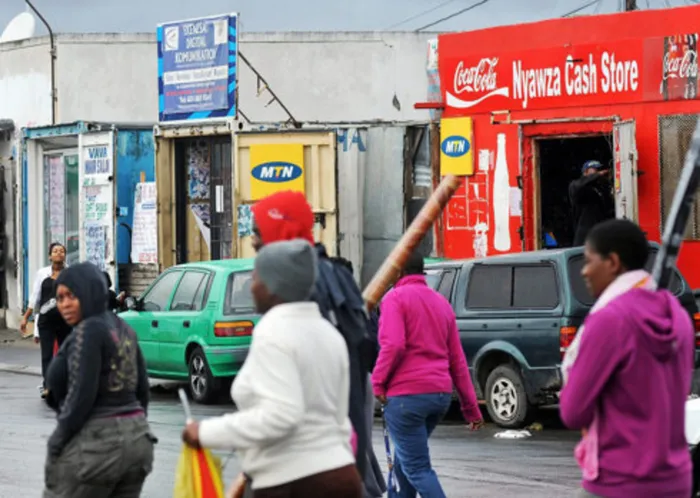
The township entrepreneur whether a small business owner in Soweto, a mechanic in Tembisa, or a social enterprise founder in Khayelitsha still faces significant barriers to accessing meaningful support, says the author.
Image: Independent Newspapers Archives
South Africa has introduced numerous initiatives aimed at expanding economic inclusion and accelerating the growth of black-owned small, medium and micro enterprises (SMMEs). On paper, these commitments signal strong intent to support entrepreneurship. In practice, however, the township entrepreneur whether a small business owner in Soweto, a mechanic in Tembisa, or a social enterprise founder in Khayelitsha still faces significant barriers to accessing meaningful support.
The core problem is that the systems designed to connect entrepreneurs to resources remain fragmented, complex and often misaligned with the realities of informal and early-stage businesses.
SMMEs are widely recognised as a cornerstone of South Africa’s economic growth strategy. Estimates indicate there are between 2.6 million and 3 million small and micro enterprises in the country, employing roughly 11 million to 13 million people and contributing between one-third and 40% of national GDP.
The sector also dominates numerically, accounting for about 91% of formal businesses. These figures explain why policymakers view SMMEs as the primary engine for job creation. The National Development Plan projects that small businesses could generate up to 90% of the country’s 11 million new jobs by 2030. With official unemployment exceeding 32% on the narrow definition, the stakes could not be higher.
Yet the structure of the sector complicates policy delivery. FinScope MSME Survey South Africa 2024 data suggests that roughly two-thirds of SMMEs function outside the formal economy, with millions of micro-enterprises lacking registration, tax compliance or formal financial records - while millions operate entirely in cash-based informal markets. This reality shapes the effectiveness of support initiatives, because most funding programmes are designed for formally compliant businesses.
The International Finance Corporation previously estimated South Africa’s unmet SMME financing need at about $30 billion, with formal institutions covering barely half that demand. Smaller loan requests face the greatest difficulty. Nearly half of funding applications are for amounts below R250 000, yet these modest requests are the most likely to be declined, even though they could have the greatest impact on survivalist businesses.
Over the past decade, South Africa has built a credible network of incubators, accelerators, university innovation hubs and corporate enterprise supplier development (ESD) programmes. These initiatives nurture early-stage entrepreneurs and have produced measurable successes, including the formalisation of township businesses and improvements in compliance and operational capability.
However, the ecosystem operates largely in silos. Incubators are not consistently linked to funding institutions. Corporate procurement pipelines often function separately from grassroots enterprise development. Enterprise databases are fragmented, forcing entrepreneurs to repeatedly submit the same documentation to different funders.
Without coordinated referral mechanisms and shared data systems, promising businesses struggle to transition from incubation to scale. The pipeline exists, but it is not integrated.
Support programmes have delivered tangible micro-level gains. Yet growth is typically incremental rather than exponential. Once businesses move beyond the startup phase, they encounter a new set of challenges: governance, cash-flow management, hiring, regulatory compliance and labour obligations designed for larger firms. For enterprises operating on thin margins, a single disruption can erase years of progress.
Market access remains one of the most significant constraints. Without reliable buyers or integration into supply chains, even well-funded businesses remain vulnerable. Access to procurement opportunities -particularly from large corporates and the public sector - often determines whether a business can scale.
Businesses that combine commercial activity with social impact face an additional layer of difficulty. South Africa lacks a clear legal framework recognising social enterprises as a distinct category. As a result, these organisations must operate under commercial regulations while pursuing public-interest objectives, without access to blended finance instruments tailored to their hybrid nature.
They often do not qualify for traditional loans because of lower profit margins, nor for grants because they generate revenue. This funding gap limits the growth of ventures that could address pressing social challenges while creating jobs.
Evidence from practitioners suggests that ecosystem-based support models outperform once-off interventions. Long-term mentorship from experienced entrepreneurs significantly improves survival rates. Funding linked to technical assistance, governance oversight and milestone-based disbursement tends to produce better outcomes than stand-alone grants.
Standardised due-diligence frameworks could also reduce friction. A shared national SMME database would streamline verification processes and improve matching between businesses, funders and procurement opportunities.
Most importantly, market access must be integrated into support programmes. Capital alone does not guarantee sustainability - predictable revenue streams do. South Africa’s townships are rich with entrepreneurial activity, resilience and innovation.
What remains missing is a coordinated system capable of connecting funding, mentorship, market access and regulatory support into a seamless pathway from startup to scale. Until that gap is closed, support will continue to appear abundant in policy frameworks yet distant from the entrepreneurs it is meant to empower. If alignment can be achieved, however, township enterprises will not merely survive - they will become the engines of inclusive growth that South Africa urgently needs.

Jason Bygate – Founder: Capacitate Social Solutions.
Image: Supplied
Jason Bygate – Founder: Capacitate Social Solutions
*** The views expressed here do not necessarily represent those of Independent Media or IOL.
BUSINESS REPORT