

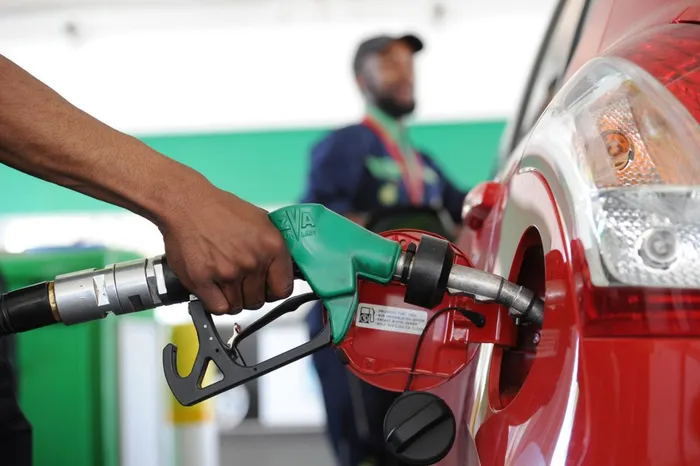
South African consumers face alarming fuel price hikes of R4 for petrol and R7 for diesel due to escalating geopolitical tensions. This article explores the potential economic fallout and the urgent need for government intervention.
Image: Karen Sandison / Independent Media
Media headlines warning of possible fuel hikes of R4 for petrol and R7 for diesel per litre in two weeks should sound alarm bells across the nation and the highest offices of government and Treasury.
These hikes resulting from the latest Middle East war and the spike in international oil prices should surprise none, least of those responsible for society’s well-being.
With the Persian Gulf supplying 20% of international oil supplies, things will get much worse, unless the war is brought to an immediate end.
It will be the working class who will pay the price for the war, be it villagers in Lebanon or schoolgirls in Iran.
It will be the working class in South Africa and across the world, from the United States to Iran, who will be handed the bill with skyrocketing petrol prices, galloping inflation and repo rate hikes.
This is a blow workers and society across South Africa can ill afford.
The economy has been battling to grow beyond 1% over the past decade with projections that we may only reach 2% in 2028.
Such hopes will now be shot out of the water, let alone reaching the 3% plus growth needed to begin substantially reducing our national ticking time bomb, our 41.1% unemployment rate.
South Africa has only just begun to emerge from the previous fall out due to the war in Ukraine and the subsequent spike in international oil prices, pushing our inflation rate up to a high of 7.8% and followed by 475 basis point hikes to the repo rate by the Reserve Bank, both suffocating economic growth and efforts to reduce unemployment.
Yet another fall out from geo-political anarchy is something South Africa’s weak economic growth and high levels of unemployment, poverty, inequality cannot absorb.
Whilst we can only pray that sanity prevails on the global stage and the war swiftly ends, including the realisation of the two-state solution, and the right of the Palestinian people to self-determination; government must move swiftly to cushion the nation from the dark economic clouds rapidly gathering.
First is to ensure with fuel suppliers that we have sufficient supplies in stock, and if needed that measures to ration them are developed.
Other countries will be doing exactly this, and we don’t want to be found wanting in the event of international shortages.
As was done during 2022, Treasury needs to provide temporary fuel tax relief to commuters and the economy to help mitigate the impact of the R4 and R7 a litre hikes.
This will have an impact upon the fiscus, but if left unmitigated, the blow it will inflict upon working and middle-class families and the economy will be far greater.
In the long term a comprehensive review of the fuel taxes that consume a third of the fuel price regime is needed to reduce the costs of transport and lower inflation.
We need to accelerate the roll out of electric buses, trains, cars, motorcycles and bicycles. Ultimately ending our dependence upon imported fuel will help protect the nation from the inevitable global turmoil and oil price shocks.
Converting our domestic motor manufacturing industry will help ensure its survival and open up space for its dramatic growth to meet domestic and international demand for electric vehicles.
Engagements need to take place with Eskom on measures to reduce the price of electricity in the short and long term.
Electricity tariff hikes have been the other major cause of domestic inflation and burden to consumers and albatross around the economy.
Creative solutions need to be found to stem the immediate spike in inflation, including drastically ramping up efforts to move all consumers to prepaid billing and tackling municipal debt and thus ending Eskom’s addiction to far above inflation tariff hikes.
Efforts to boost Transnet’s performance, including easing its debt burden, must be sped up to help shield food from inflation and thus protect workers’ ability to feed their families.
Similar support must be given to Metro Rail as it reopens lines and overhauls its infrastructure, including signalling. A fully operational Metro Rail provides 10 million urban commuters with a cheap and fast means to get to work, schools etc.
Fragile and jobs intensive sectors of the economy will need help. Such relief for consumers and businesses will be needed in the form of loan payments rescheduling by banks, easier access to capital and a stimulus package mobilising resources from the fiscus, developmental finance institutions and the private sector.
This must be the moment when the Unemployment Insurance Fund’s Temporary Employment Relief Scheme is finally fixed to assist embattled companies and prevent retrenchments.
The Presidential Employment Stimulus needs to be expanded to provide a pathway to the job market for millions of unemployed by providing them with the skills and experience needed to find permanent work.
Government needs to prepare to provide inflationary adjustments for social grants, including the SRD Grant, as these provide a life long for 27 million of our most impoverished compatriots. Their grants are so low that they cannot absorb a spike in inflation.
Cabinet needs to be seized with the urgency of this pending hammer blow to the economy. This is not something that can be done at government’s normal glacier speed. Supplementary Appropriation and Revenue Bills need to be drafted and tabled at Parliament as a matter of the highest urgency over the next few weeks.
Key to ensuring that the fiscus can fund supplementary allocations, is to give the South African Revenue Service additional resources to ramp up efforts to improve tax compliance, in particular customs enforcement. It needs to be given a target to improve tax compliance to 70% by 2027 and 75% by 2029 if the state is to have the resources necessary to respond to our many pressing needs.
COSATU will be seeking urgent engagements on this national emergency at Nedlac to ensure a comprehensive package of interventions is put in place to protect workers, society, the state and the economy.
COSATU President Zingiswa Losi.
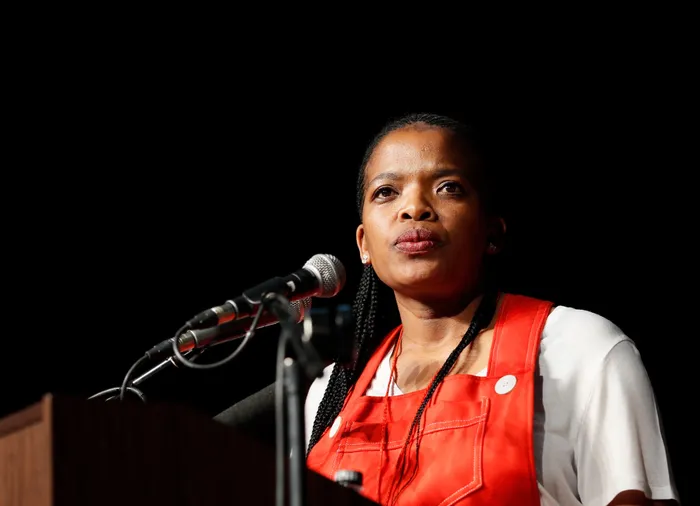
Zingiswa Losi is the president of Cosatu.
Image: Independent Newspapers
BUSINESS REPORT